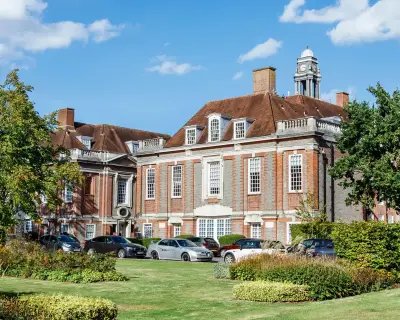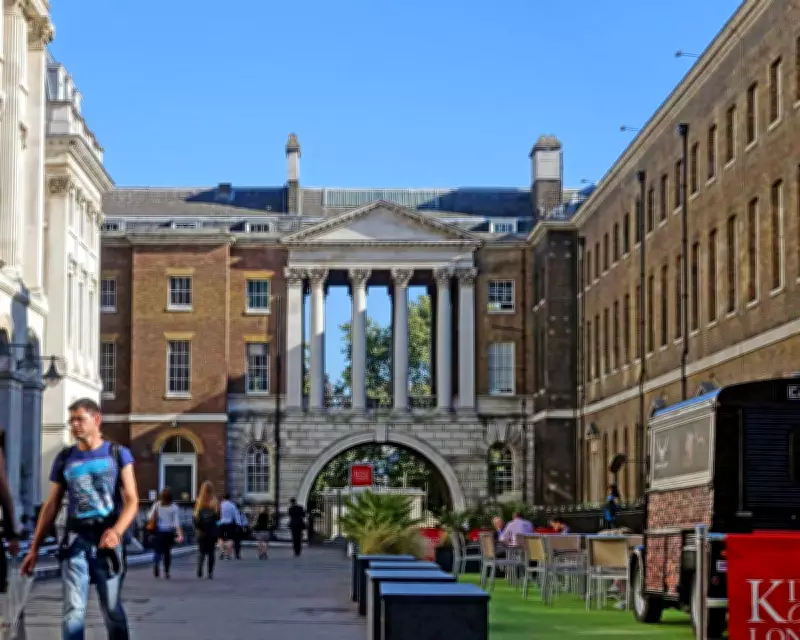
King's College London has agreed to merge with Cranfield University, creating a new UK "super-university" that will rival many international competitors in size and research output. The merger, expected to be completed by the end of summer 2027, will result in King's taking on approximately 5,000 additional students, mainly postgraduates, making it the second largest mainstream university in the UK with about 47,000 students. This will surpass the University of Manchester and place it behind only University College London.
Government Approval and Financial Context
The UK government has given preliminary approval for the merger, which comes at a time when the higher education sector in England is facing significant financial strain. The Office for Students (OfS) recently warned that universities remain under continued pressure due to volatile student recruitment patterns and rising costs. This merger follows a similar announcement last year between the University of Greenwich and the University of Kent.
Leadership Perspectives
Prof Shitij Kapur, King's vice-chancellor, who will remain in his role at the merged institution, stated: "The merger would bring new educational possibilities for students, new discoveries from academics and a clear focus on working in partnership with industry and government to support national resilience. This is a deliberate step to bring some of the best of the UK to compete with the best in the world."

Patrick Vallance, the government's science and innovation minister, described the merger as creating "an extraordinarily powerful university," bringing together two world-class institutions and giving King's a central role in one of the UK's most important regions for science and technology. He emphasized that it will drive innovation and growth while capitalizing on the complementary strengths of both universities.
Cranfield University's Profile
Cranfield University, based in Bedfordshire with an additional campus in Oxfordshire, was founded after World War II as a college of aeronautics. Over 90% of its students are postgraduates, focusing on technology, engineering, and management studies. Prof Karen Holford, Cranfield's vice-chancellor, said: "This merger is an exciting proposition for Cranfield, aligning our deep specialisms in engineering, technology, and management within KCL. It is an intentional step, which brings Cranfield University's outstanding applied research, nationally important facilities, sovereign capability, and longstanding industry links to King's, creating enormous potential."
Financial Outlook for the Sector
The OfS reported a slight improvement in university finances for 2024-25 but warned against persistent over-optimism. Fewer universities fell into deficit than anticipated, with 35.8% recording a loss compared to 43% forecasted. However, providers predict a further downturn in 2025-26 before a recovery from 2026-27, contingent on increased student recruitment. Philippa Pickford, OfS director of regulation, noted: "We're pleased to see more institutions are responding to the warning signs, but much of this work appears to be targeted at addressing short-term issues. Put bluntly, that isn't going to be enough."
Sector Challenges
Nearly a quarter of English institutions reported additional spending on restructuring, with mass redundancies and course closures driving restructuring costs up by 21% to £218.2 million. Looking ahead, the OfS warned of uncertainty as universities absorb the predicted £570 million cost of the government's new international student levy from 2028 and the unknown impact of the Middle East crisis on costs and recruitment. Libby Hackett, chief executive of the Russell Group, commented: "This new update confirms that large parts of the sector are under unprecedented financial strain. We need close collaboration and a joined-up policy approach to put universities back on stable footing so they can continue delivering for the UK's workforce, public services and communities."