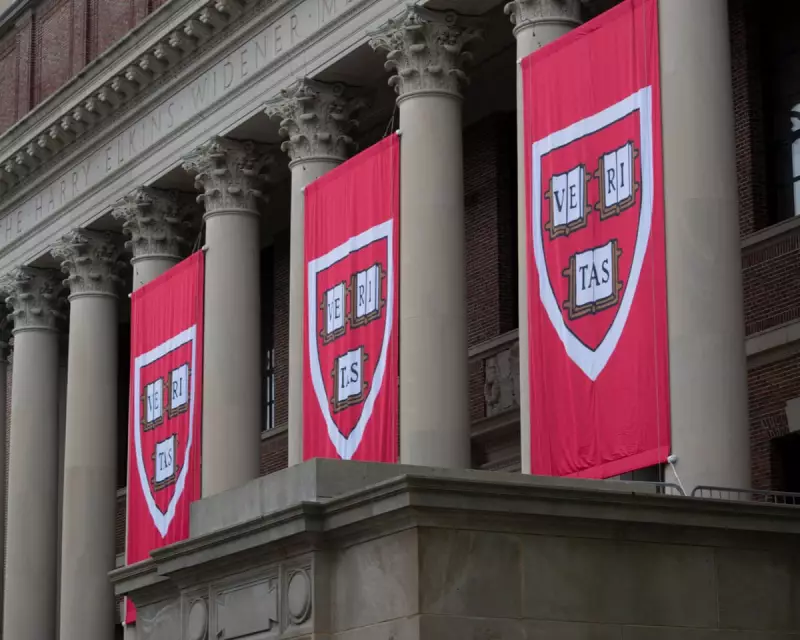
The prestigious Harvard School of Public Health is embroiled in a significant controversy following the forced departure of a leading public health scholar. The incident has ignited a fierce debate about institutional integrity, the limits of academic freedom, and the selective application of universal human rights principles.
The Ouster of a Renowned Health Leader
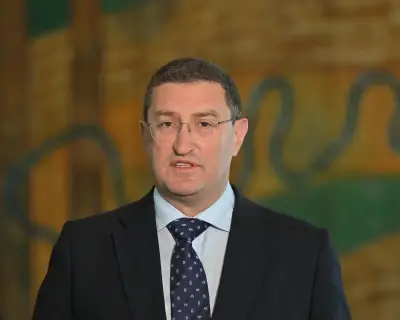
On a Tuesday afternoon, Dean Andrea Baccarelli sent a brief email to the Harvard community announcing that Dr Mary T. Bassett would 'step down' as director of the François-Xavier Bagnoud (FXB) Center for Health and Human Rights. The message, polite and bureaucratic, thanked her for her service and cited a new focus on children's health.
What the email omitted was crucial. According to a source from The Harvard Crimson, Dr Bassett had been asked to resign just two hours prior and instructed to vacate her office by the year's end. This was not a routine transition. It marked the culmination of a year of escalating pressure on the FXB Center, primarily due to its work examining the health and human rights of Palestinians.

Powerful figures, including former Harvard president Larry Summers, had condemned this work, accusing it of 'fomenting antisemitism'. Dr Bassett, a scholar celebrated for her lifelong commitment to racial justice and health equity, appears to have been removed not because her principles changed, but because applying those principles to Palestinians became politically untenable for the university.
A Crisis of Selective Universalism
Dr Bassett's dismissal, denounced by hundreds of Harvard faculty and students, is symptomatic of a deeper crisis. It exposes a fundamental hypocrisy in three domains that claim to uphold modern moral universalism: human rights institutions, global public health organisations, and elite universities.
These institutions have long presented themselves as neutral, transcending borders and partisan interests. However, when confronted with the political pressures surrounding Palestine, their commitments have proven to be highly conditional. Historians note that modern human rights frameworks emerged from a geopolitical order dominated by Western powers and have often been used to obscure, rather than confront, global inequalities.
Similarly, global health initiatives frequently operate without challenging the underlying political and economic power structures that create ill health. Elite universities, including Harvard, market themselves as bastions of free inquiry while their horizons are often shaped by donor relationships and political sensitivities.
The Palestinian Exception and Academic Capitulation
Under Dr Bassett's leadership, the FXB Center did what such institutions purport to do: it rigorously examined the health impacts of political violence and structural inequality, irrespective of political fallout. Its partnership with Birzeit University in the West Bank produced vital research on childhood development under occupation and documented the public health consequences of Israeli policies.
After the events of 7 October 2023, this work made the Center a target. Larry Summers publicly called for the dissolution of the Birzeit partnership. Following demands from the Trump administration, Harvard suspended the partnership in the spring and faced a freeze on federal research funding. An internal taskforce criticised the Center's programming.
While Harvard has publicly positioned itself as a defender of academic freedom against government overreach, critics argue its private actions tell a different story. The university has quietly curtailed programming on Palestine, censored faculty and students, and suspended key academic initiatives. Dr Bassett's removal, following her own published essays and statements condemning Israeli actions in Gaza, is seen as the clearest capitulation to these reactionary pressures.
This 'Palestinian exception' is not confined to Harvard. Across the United States, medical professionals, academics, and institutions face reprisals for speaking about Gaza. This pattern reveals that universalist rhetoric often depends on a tacit rule: it holds only until it threatens powerful interests.

The Stakes for Health, Rights, and Truth
The context in Gaza makes this institutional silence particularly grotesque. With over 90% of hospitals damaged or destroyed, medical workers killed in vast numbers, and famine spreading, scholars argue a genocide is being enacted through a deliberate public health catastrophe. Forbidding health and human rights experts from naming these realities demands that their entire fields abandon their foundational premises.
Dr Bassett's removal demonstrates what occurs when institutions prioritise short-term protection over intellectual and ethical integrity. A public health field that cannot describe the destruction of Gaza's health system forfeits its credibility. A human rights discourse that excludes Palestinians cannot defend anyone. A university that punishes scholars for naming political violence becomes a malign force.
The value of human rights, global health, and academia has always depended on the possibility of doing better. Their legitimacy requires the courage to widen the moral horizon, not shrink it. This work must begin by refusing to treat Palestinians as an exception and by insisting that fighting for Palestinian rights is the vanguard of any genuine claim to ethical legitimacy. The power of universal ideals lies not in their impure origins, but in their potential to expose their own limits and propel us to build something more just in their place.