Armed Police Flood Iranian Universities to Crush Student Protests Amid Nuclear Talks
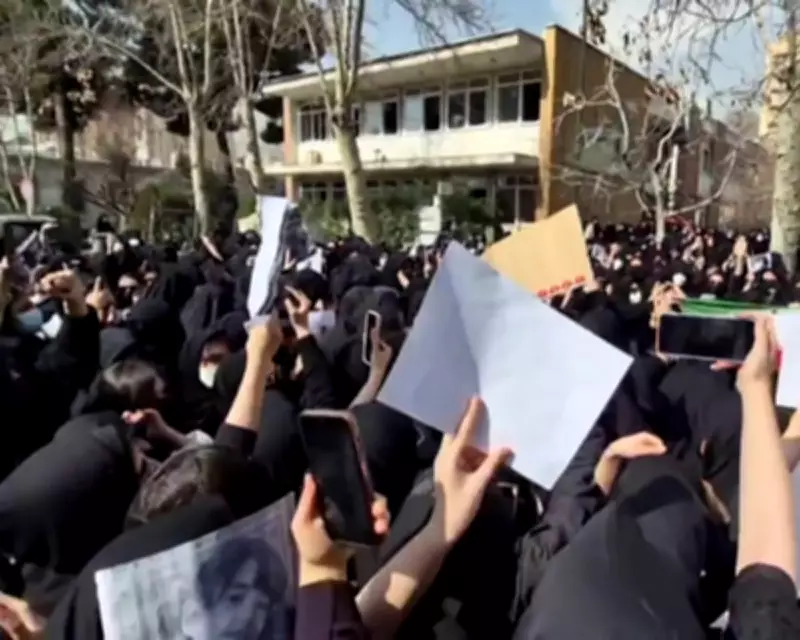
Plainclothes police and security forces, many heavily armed, have attempted to flood Iran's remaining open universities in a forceful bid to crush a fourth consecutive day of student protests against Supreme Leader Ali Khamenei. This aggressive crackdown provides an uneasy backdrop to the third round of nuclear programme talks scheduled for Thursday in Geneva between Iranian Foreign Minister Abbas Araghchi and US Special Envoy Steve Witkoff.
Intense Campus Clashes and Security Measures
Running battles were reported across multiple campuses, with social media videos capturing violent fistfights between the state-backed Basiji militia and students at the University of Science and Technology in Tehran. Disturbing photographs showed pick-up trucks mounted with machine-guns parked ominously outside the University of Tehran, while similar demonstrations erupted in Mashhad.
University administrators implemented severe restrictions, barring entry to students identified as participants in previous protests and announcing widespread closures of in-person classes. This move extends an existing policy where nearly 80% of Iran's universities already conduct virtual courses, partially designed to prevent student gatherings that could fuel anti-government demonstrations.

Defiant Student Chants and Government Response
From the University of Art in Tehran, videos captured a range of defiant chants including "We fight, we die, we take back Iran," "Political prisoners must be freed," and "Khamenei the Zahhak [serpent king], we'll bury you alive." Protesters also directed inflammatory comments toward the Basijis and the supreme leader's personal life.
Iran's Attorney General Mohammad Mohebi Azad demanded immediate retribution against protesters, stating: "The responsible agencies must quickly identify the related elements and take decisive and legal action against them. Whenever the system has been on the path of negotiations, certain currents, under the guidance of the enemy, have tried to inflame the domestic atmosphere."
Nuclear Negotiations and Regional Tensions
The indirect talks mediated by Oman occur as US President Donald Trump completes gathering formidable naval and air power in the region, creating conditions where military action against Iran remains possible. Success in negotiations hinges on whether the US will grant Iran tokenistic rights to enrich uranium for medical purposes within its borders.
Trump has insisted a war against Iran would be winnable, dismissing reports that Joint Chiefs of Staff Chair Dan Caine advised against attack due to lack of regional support and insufficient munitions. In a social media post, Trump warned that without a deal, "it would be a very bad day for that country and unfortunately for its people"—a statement interpreted within Iran as recognition that military action wouldn't benefit ordinary citizens.
Historical Context and Human Rights Documentation
Ali Hashem, associate research fellow at the Center for Islamic and West Asian Studies, noted that Khamenei has shifted rhetoric from "tactical restraint" to "confrontation through the lens of Karbala," referencing the Shia narrative of Imam Hussein's martyrdom against unjust rule. This framing presents resistance as a moral imperative challenging US diplomatic approaches.
The human rights organization HRANA this week published "Red Winter," documenting detailed identities of 7,070 confirmed dead from January protests, while the Iranian president's office acknowledges 2,986 identified victims with a total death toll of 3,117. The discrepancy highlights ongoing challenges in accurate documentation amid government suppression.
As armed police maintain their presence on campuses and nuclear negotiations proceed under tense conditions, Iran's student protest movement continues to challenge authorities despite severe crackdowns, creating complex domestic and international pressures.