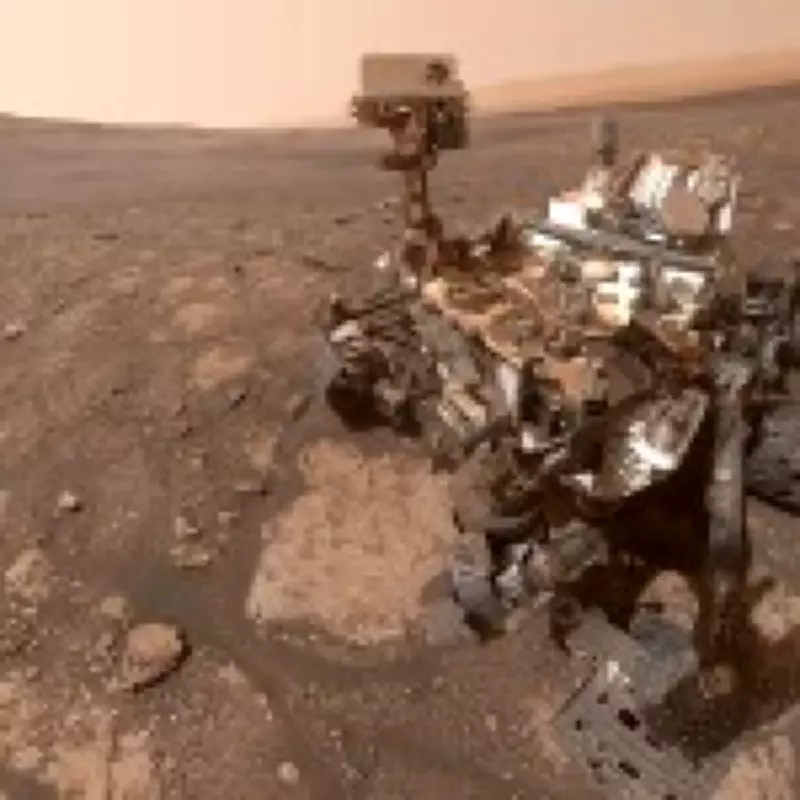
NASA's Curiosity Rover Uncovers Ancient Organic Compounds on Mars
Humanity has taken a significant leap forward in the search for extraterrestrial life. NASA has announced the detection of organic molecules on Mars, including chemicals widely recognized as fundamental building blocks for the origin of life on Earth. This groundbreaking discovery brings scientists closer than ever to finding evidence of past biological activity on the Red Planet.
Discovery in Gale Crater
The space agency's rover, Curiosity, which has been exploring Mars since its landing in 2012, made this remarkable find in the Gale crater. Scientists believe this location once offered favorable conditions for supporting ancient life. Within clay-rich sandstone formations, the robotic explorer identified five new molecules that bear a striking resemblance to the raw materials that spurred the development of life on our own planet.
However, the analysis conducted by Curiosity cannot definitively determine whether these organic compounds are linked to ancient Martian life or non-biological processes, such as meteorite impacts. The experiment's lead researcher, Professor Amy Williams, an astrogeologist at the University of Florida, emphasized this point.

Surviving Hostile Conditions
Professor Williams stated, 'We think we're looking at organic matter that's been preserved on Mars for 3.5 billion years. Is it life? We can't tell, based on this information.' In total, twenty-one molecules have been discovered, all of which have endured the planet's extreme environment. Mars experiences nighttime temperatures plunging below -100 degrees Celsius and is constantly bombarded by intense solar radiation.
Williams added, 'For a long time, we thought that all organic matter would be seriously degraded by that harsh radiation environment. It's really exciting to see that large, complex material can survive in the subsurface environment.' The rover's findings were corroborated using other instruments onboard, which recently detected carbon compounds associated with biological processes.
Building Blocks of Life
The experiment also provided hints of another compound with a structure similar to early forms of DNA. Williams clarified, 'There are several steps between what we found and DNA. It is definitely a building block to how DNA is made now. But it is truly just the bricks, not the house. You can generate these molecules geologically.'
Scientists believe these observations from Curiosity could complement discoveries from NASA's other active Mars rover, Perseverance. Furthermore, the European Space Agency's upcoming Rosalind Franklin mission, scheduled for launch in 2028, will drill to depths of two meters and perform more sophisticated tests on any compounds it encounters.
This discovery marks a pivotal moment in astrobiology, offering new insights into the potential for life beyond Earth and the resilience of organic molecules in space.