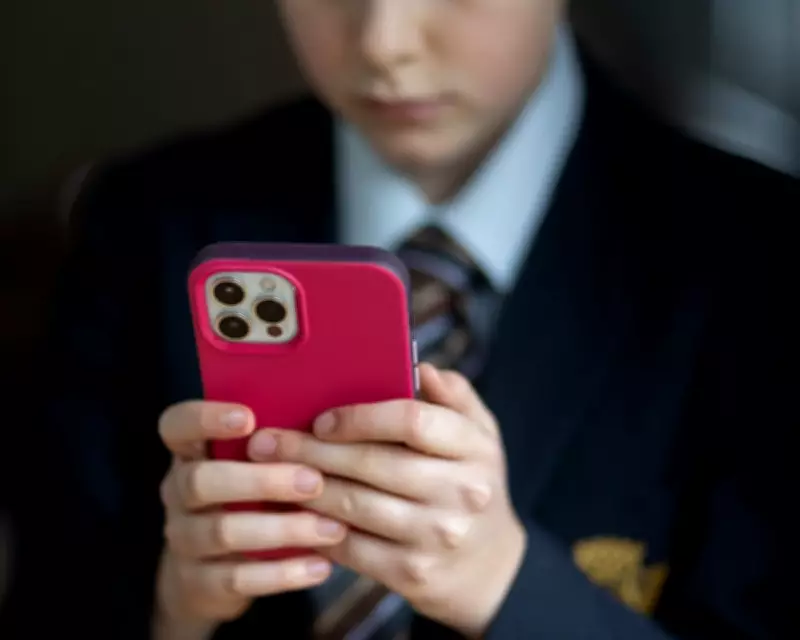
UK Government to Enforce Statutory Mobile Phone Ban in Schools
In a significant policy shift, the UK government has announced plans to introduce a statutory ban on mobile phones in schools across England. This move aims to replace existing non-statutory guidance with a legal requirement, ensuring uniform implementation nationwide.
Legislative Amendment and Political Context
The government will table an amendment to the children's wellbeing and schools bill in the House of Lords, following delays caused by opposition peers. Education Minister Jacqui Smith stated, "We recognise the strength of feeling on this issue, both in this house and beyond." She emphasized that the amendment will place current guidance on a statutory footing, creating a clear legal mandate for schools to prohibit mobile phone use during the school day.
Previously, ministers had resisted such a measure, arguing that most schools already had bans in place. However, they have now described the change as "a pragmatic measure" to facilitate the bill's passage. The legislation is considered a major child protection initiative, including provisions for a register of children not in school, crackdowns on profiteering in social care, and a unique identifier for tracking child welfare.

Existing Policies and School Responses
Research from last year revealed that 90% of secondary schools and 99.8% of primary schools in England already had policies limiting or restricting mobile phone use. Despite this, the statutory ban is expected to provide clarity and support for headteachers facing challenges from parents.
Pepe Di'Iasio, General Secretary of the Association of School and College Leaders, noted, "A statutory ban on mobile phones in schools doesn't really change very much. Most schools already have policies in place." He called for government funding to assist with secure storage solutions, such as lockers or pouches. Similarly, Paul Whiteman of the National Association of Head Teachers welcomed the move, stating it would eliminate ambiguity in school policies.
Political Reactions and Funding Concerns
The decision has sparked mixed reactions. A government spokesperson criticized opposition parties for blocking child protection measures, accusing them of "a dismal failure of some of the most vulnerable children in our country." In contrast, a Liberal Democrat spokesperson hailed the ban as a victory for pupils and teachers, urging the government to provide necessary support and funding for implementation.
Education Secretary Bridget Phillipson had previously emphasized the importance of phone-free schools, but until now, guidance remained non-statutory. The Department for Education reiterated its stance, stating, "We have been consistently clear that mobile phones have no place in schools."
This statutory ban marks a pivotal step in UK education policy, aiming to enhance student focus and safety while addressing longstanding debates over technology in classrooms.