The story of Oscar Murphy, a 28-year-old leukaemia patient, made headlines this week as he became the first to receive a groundbreaking personalised immunotherapy on the NHS. This remarkable medical advance, however, is more than just a single patient's good news. It symbolises the immense potential of a specific area of London to become a global leader in life sciences, creating tens of thousands of jobs and billions in economic value.
From Lab to Lifesaving Treatment: The Kings Cross Ecosystem
The journey of Oscar's CAR-T therapy, where a patient's own immune cells are modified to fight cancer, began over a decade ago with research at UCL's Cancer Institute. This academic work was commercialised by UCL Business, forming the spinout company Autolus. The firm has since raised $1.1bn, employs 450 people, and operates a cutting-edge UK manufacturing plant.
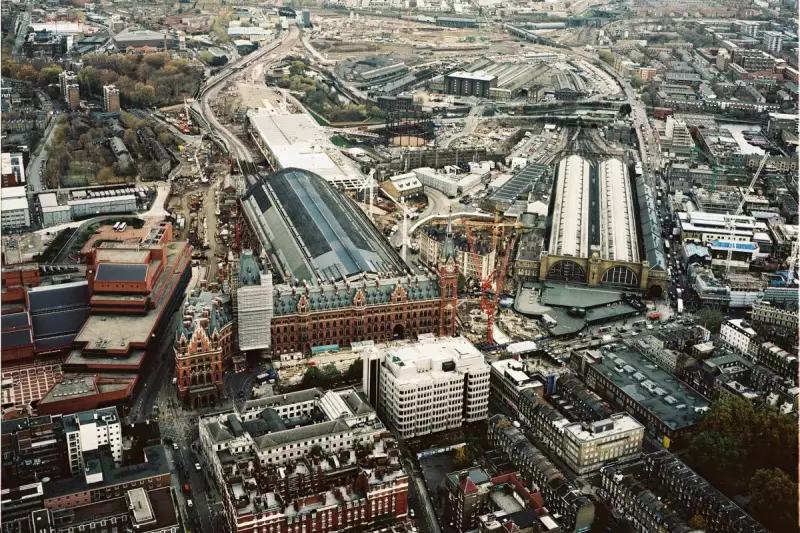
This success story is intrinsically linked to its location. The innovation district encompassing King's Cross, Euston, and Bloomsbury has evolved organically over two centuries. With UCL at its heart, joined by neighbours like the Francis Crick Institute and the Alan Turing Institute, it has created a unique melting pot. Here, mathematicians, AI specialists, engineers, biologists, and clinicians collide, sparking the ideas that drive modern medicine.

"This isn't a curated science park," notes Professor Geraint Rees, UCL's Vice-Provost. "It's an ecosystem that evolved with demand, which is precisely why it works." The proximity is a business model in itself, exemplified by firms like Isomorphic Labs, an AI drug discovery company spun out from DeepMind, whose researchers can literally walk down the street to collaborate with experts in other fields.
The Road to Becoming the UK's Kendall Square
The district's ambition is to become the United Kingdom's answer to Boston's Kendall Square, the world's most renowned life sciences cluster. The foundations are strong. The area, packed into just 1.5 square kilometres, already houses 12,000 life sciences workers and generates over £8bn annually—equivalent to the entire economic output of Cambridge.
Recent analysis by Public First projects staggering growth potential. If the district matches the trajectory of Kendall Square, it could add £3.5bn in annual economic value and create 20,000 new high-value jobs over the next decade. The momentum is already visible: London overtook San Francisco, New York, and Boston in life sciences and AI investment last year, with funding hitting $766m so far this year.
The location offers compelling logistical advantages for biotech firms: direct rail links to European regulatory hubs, four international airports for global recruitment, and immediate access to world-class NHS hospitals for clinical trials.
Seizing the Opportunity: The Challenges Ahead
Despite this promise, significant competition looms. Singapore is investing heavily in biotech recruitment, Boston benefits from vast federal research spending, and the EU is streamlining regulations across 27 nations. To press its natural advantages—an integrated health system, world-leading universities, and a mature ecosystem—London must address key friction points.
Professor Rees argues for better coordination in three critical areas:
- Specialist visas processed in weeks, not months.
- Capital allowances for lab construction that cover the cost of modern clean-room facilities.
- Streamlined clinical trial approval across NHS trusts.
This growth is not a zero-sum game for the UK. The data shows a powerful spillover effect. Last year, Manchester biotech firms received £127m in London venture capital, supporting 840 jobs locally. Leeds-based medical device companies using London hospital networks generated £43m in economic activity for their city.

Oscar Murphy's story encapsulates this national benefit: a London-born spinout, a manufacturing plant in Stevenage, and a smiling patient in Manchester. The pieces are in place for the Kings Cross innovation district to accelerate. The question now is whether planning, infrastructure, and regulation can keep pace with its potential.