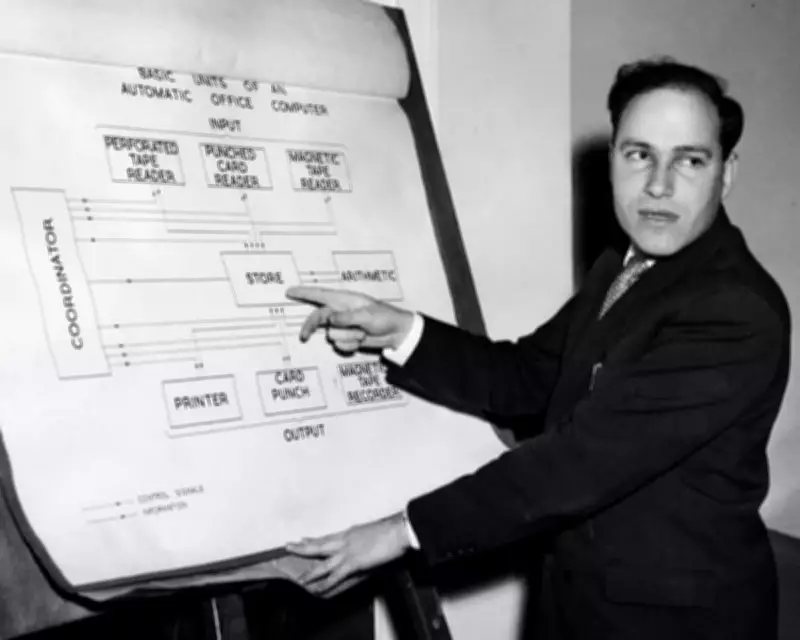
Frank Land, a pioneering figure in business computing who was instrumental in the development of the Lyons Electronic Office (Leo) and later became the UK's first professor of information systems, has died at the age of 97. His work helped shape the modern approach to integrating technology with business needs.
Early Career with Leo
In 1953, Land joined the programming team at J Lyons & Co, then the UK's largest catering firm, to work on the Leo computer. One of his first tasks was to program Leo to calculate tax tables for the Inland Revenue (now HMRC) immediately after the chancellor of the exchequer's budget speech. He also wrote a suite of programs to manage the blending of Red Label and Green Label tea. Reflecting on that time, Land said: "There was a buzz. There was not a single day when you didn't do something which had never been done before."
Pioneering Business Computing
Lyons had already made history on 29 November 1951, when the Bakery Valuations job became the world's first commercial job run on a stored program computer. The Leo I, though unreliable with thermionic valves and mercury delay lines, attracted outside customers quickly. In 1954, Lyons formed Leo Computers Ltd to manufacture computers, and Land became senior consultant, analyzing client needs and designing custom programs. He emphasized a user-driven approach, but as the market became more competitive, Land felt the need to think more deeply about how computers should be used.

Academic Legacy
In 1967, Land accepted a research fellowship at the London School of Economics (LSE), soon becoming the UK's first professor of information systems. He developed postgraduate courses that integrated technical computer knowledge with business understanding, a key part of the Leo legacy. After his formal retirement in 1998, he continued as an emeritus professor, co-editing the book User Driven Innovation in 1996 and actively serving as a trustee of the Leo Computers Society.
Personal Life and Activism
Born in Berlin in 1928 to a Jewish family, Land fled to the UK in 1939 after the Nazis confiscated their property. He studied economics at LSE, where a careers adviser suggested changing his surname from Landsberger to Land. He married Ailsa Dicken in 1953, and they had three children. Land remained a lifelong Labour party member and spoke out against antisemitism and Palestinian oppression. He maintained a fitness regime well into old age, even doing a tandem parachute jump at 82 to raise funds for cancer research.
Land died in hospital from an infection, survived by his twin brother Ralph, three children, seven grandchildren, and four great-grandchildren. His contributions to computing and information systems remain influential.