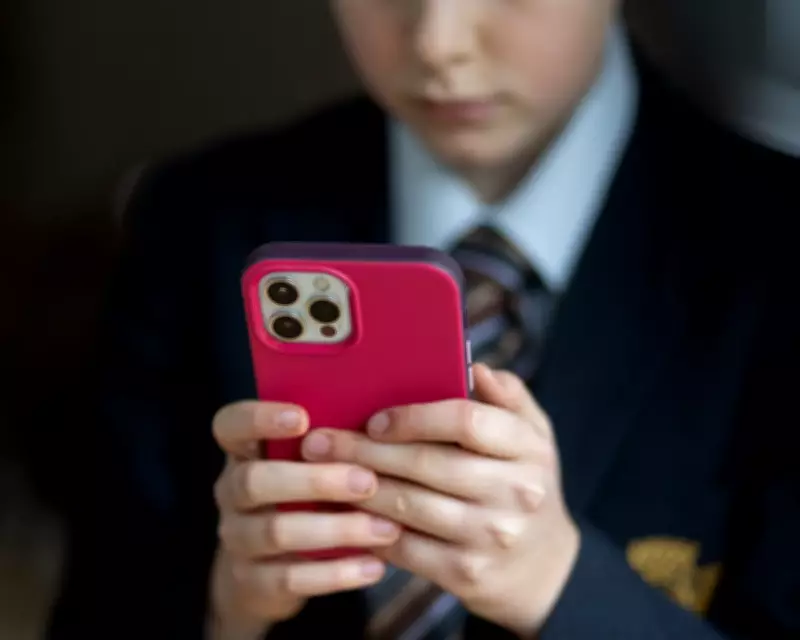
A new study from US universities, including Stanford and Duke, has found that strict bans on mobile phones in schools have "close to zero" impact on student learning and show no evidence of improvements in attendance or online bullying. Researchers examined nearly 1,800 US schools where students' phones were kept in locked pouches and compared outcomes to similar schools without such bans.
The report, published by the National Bureau of Economic Research, concluded that "for academic achievement, average effects on test scores are consistently close to zero." The findings come as a disappointment to teaching unions and campaigners in England who supported the government's recent move to restrict mobile phone use in schools, with a ban expected next year.
However, Prof Thomas Dee of Stanford University's graduate school of education, a co-author of the report, warned against abandoning phone bans. "One of the concerns I have about this study is that it might encourage people to walk away from phone bans as a compelling reform. And I think that would be a major mistake," Dee told NPR. "There are some encouraging results in the midst of these mixed findings. They are driving down phone usage, and as schools have longer experiences with phone bans, we're seeing a shift towards more positive outcomes."

The study focused on secondary schools requiring students to place phones in magnetic pouches, finding a substantial fall in phone activity by the third year of a ban, based on GPS data. But lower phone use did not translate into measurable improvements in student attainment or other non-academic outcomes. "Average effects on standardized test scores are close to zero and precisely estimated, with similarly small and null effects on attendance, classroom attention, and perceived online bullying," the researchers stated. There were "modest positive effects" on maths scores among older students and negative effects on younger pupils.
The study also found a rise in suspensions and a dip in students' feelings of wellbeing in the first year after a ban as schools adapted. "Over time, however, disciplinary impacts fade and wellbeing rebounds, becoming positive in subsequent years," the report said.
Last month, the UK's Department for Education announced legislation to make phone restrictions a statutory requirement for England's state schools. Recent research by England's children's commissioner found that over 90% of schools already have policies barring phone use, but new rules will likely require phones to be handed in or locked away during the school day. The Girls' Day School Trust, which runs 25 private and state schools, has announced a ban on phones for pupils up to year 11 from September, citing harmful effects on girls.
Philip Purvis, the trust's director of education, said: "There is a growing body of research showing the potential harms of mobile phones and social media use, along with recent large-scale studies highlighting the specific impact on teenage girls, from addiction to poor mental health and wellbeing."
As exam season approaches, England's exam regulator has warned students not to take phones or smart watches into exam halls after over 500 candidates were disqualified last year. Ian Bauckham, chief regulator of Ofqual, said: "Being found with a smart device during an exam can have serious consequences, including loss of marks or disqualification from the subject. Do not become one of those statistics and risk your qualification and your future prospects. Keep your phone out of the exam hall."