In a thought-provoking new book, teacher Brendan James Murray explores what he calls 'one of the greatest invisible tragedies' of modern childhood: the loss of imagination. He argues that Western society systematically suppresses imaginative thinking, treating it as a childish phase to be outgrown rather than a vital human faculty.
The Painting That Captures a Lost World
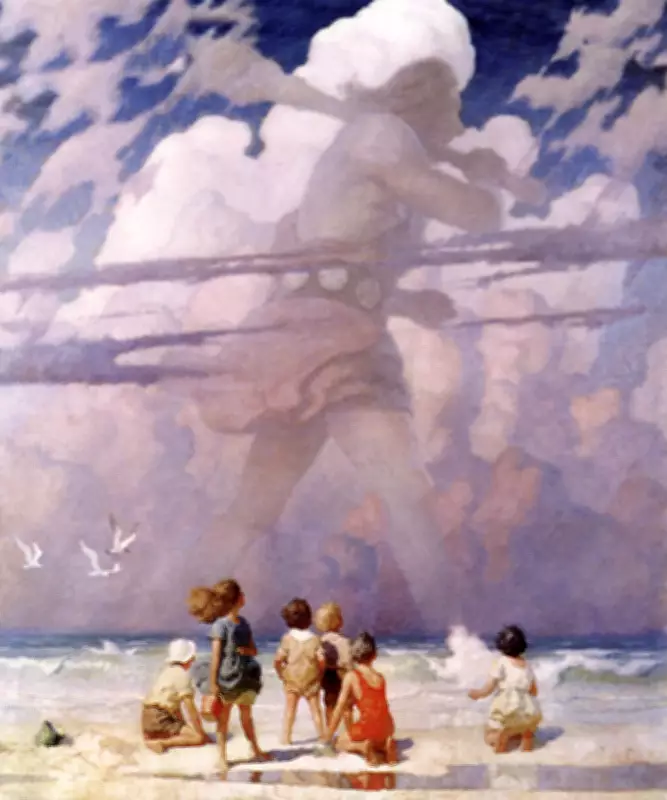
Murray references NC Wyeth's 1923 painting The Giant, which depicts six children at the waterline, gazing at a giant striding past the horizon. The children's faces are turned away, allowing viewers to imagine themselves in their place. This image, Murray says, captures the fleeting nature of childhood imagination—a time when 'giants made of cloud seem possible.' Yet, he laments, this sense of wonder is almost universally lost by adolescence.
The Language of Imagination
Murray points out that the word 'imagination' nearly disappears from Victorian education curriculum documents before high school. In adult contexts, the term carries negative connotations—being called a 'dreamer' is rarely a compliment, and phrases like 'in one's dreams' mock not just hopes but the act of dreaming itself. This language, he argues, is a pragmatic attempt to steer people toward 'the real' and 'the useful.'

The Tragedy of Lost Potential
While very young children possess rich imaginations, most lose this faculty by their mid-teens. This loss is accepted as inevitable, but Murray insists it is a tragedy that leads to squandered potential and diminished lives. He believes imagination can be sustained and developed, offering profound protection and empowerment.
Imagination as a Radical Act
In today's world, true imagination—untethered dreaming for self-nourishment—has become 'a radical act, as radical as trespass.' Murray blames a culture that prioritizes productivity over dreaming. Even the concept of 'creativity' is co-opted, as it implies creating something for external validation. Imagination, by contrast, is an end in itself.
The Role of Education
Murray, an English teacher, critiques modern education's obsession with criteria, assessment, and measurable outcomes. He argues that this creates 'the most stifling and sanitised imaginative space conceivable.' Every activity demands a product, and every product is judged against rigid criteria, leaving no room for free exploration. This, he says, destroys imagination rather than nurturing it.
A Personal Anecdote
Murray recalls his grandfather inviting him to dream about stones in a rock garden, with no expectations or demands. This experience, he says, was not mere 'play' but a profound act of imaginative dreaming. He contrasts this with the anxiety adults feel when children 'achieve nothing'—an anxiety that stifles wonder.
The Cost of Losing Imagination
Without imagination, speculative possibilities wither. Murray argues that loss of imagination is, by definition, a loss of hope. He calls on parents, teachers, and society to revalue imaginative dreaming as a vital, life-changing practice.
This is an edited extract from Childhood by Brendan James Murray, published by Picador Australia.