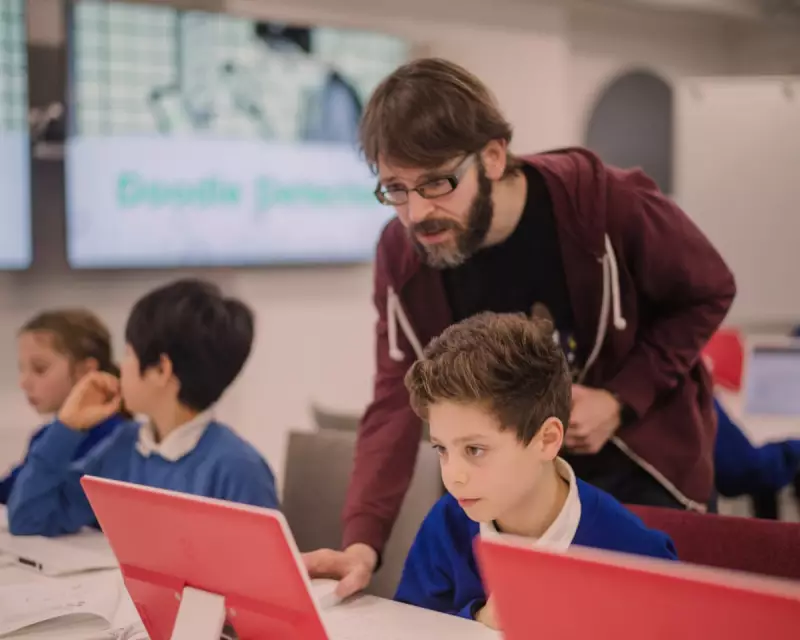
In a Cambridge classroom, ten-year-old Joseph is already an adept trainer of artificial intelligence. He corrects his model when it confuses a drawing of an apple for a smile, demonstrating an intuitive grasp of machine learning that eludes many adults. He and his peers at St Paul’s C of E primary school's coding club are growing up as true AI natives, a generation for whom this transformative technology is a fundamental part of their world.
The Looming Threat of a 'Big Split' in Society
This scene of youthful expertise, however, masks a growing national concern. Philip Colligan, chief executive of the digital education charity the Raspberry Pi Foundation, has issued a stark warning. He fears a "big split" in society between those who understand how AI systems work and can challenge their decisions, and a disempowered cadre of AI illiterates.
Colligan argues that as AI automates more decisions in critical areas like housing, welfare, health, and criminal justice, a lack of understanding becomes dangerously disabling. "AI literacy must become a universal part of education on a par with reading and writing," he told The Guardian. His warning is echoed by Simon Peyton Jones, a leading computer researcher who helped create the national computing curriculum. He advocates for a new digital literacy qualification to ensure children can use AI critically, rather than viewing it as an impenetrable "black box" of magic.

Falling Numbers Amidst an AI Surge
These urgent calls come against a worrying backdrop: a decline in students taking computing at GCSE level. Entries for 2025 are down across the UK, with three times more pupils now opting for history. This decline coincides with a 78% surge in the use of AI systems nationwide, according to Ipsos polling.
Part of the problem, experts suggest, is a narrative pushed by some tech leaders and politicians that coding is becoming redundant. Keir Starmer, as opposition leader in 2023, questioned the focus on making "every kid a coder," suggesting AI would "blow that future away." AI companies like Anthropic claim their models now automate a high percentage of their own coding.
Colligan strongly refutes this, calling the message "not only flawed it is dangerous." He reports that teachers globally are already asking if they can drop computer science. "If you don't understand how those decisions are being made by automated systems, you can't advocate for your rights," he stated, emphasising that future citizens must be able to critically evaluate the automated decisions governing their lives.
Preventing a Future of Passive Subjects
The core fear is that this skills gap will deepen existing socioeconomic divides. Children with access to strong computing education will become empowered citizens, while others risk becoming passive subjects of automated systems they cannot question.
Back in the Cambridge coding club, the lessons are clearly resonating. Joseph, wise beyond his years, understands the double-edged nature of the technology. "I'd like to be in charge of the AI," he said. "If the AI is in charge of us, we wouldn't really be able to control what we're doing and that would be bad." His insight encapsulates the very challenge experts are raising: ensuring the next generation retains agency in a world increasingly shaped by the algorithms they are now learning to command.