The Greening of Career Education: US Students Learn New Skills as Climate Crisis Intensifies
Across the United States, school districts are fundamentally transforming career and technical education programs to address the pressing realities of climate change. While some districts are launching entirely new programs focused on clean energy and sustainability, others are integrating environmental lessons into traditional career pathways like culinary education and construction.
Hands-On Learning in Renewable Energy
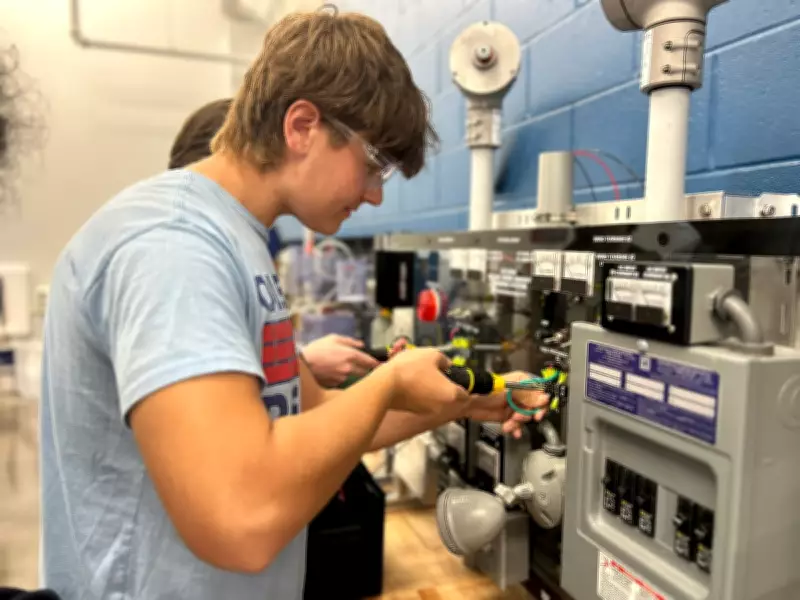
In Greenville County, South Carolina, high school students are getting firsthand experience with renewable energy technology. At the district's Innovation Center, which opened in 2023, students like junior Bill Rhodes work with wind turbine simulators while others monitor hydropower plant models and drip irrigation systems growing vegetables.
"It's an extremely important thing to study, especially now with all the new technology coming," said 11th-grader Beckett Morrison, who pointed out new growth in a plant bed he helped build. The Innovation Center cycles different career training programs every few years based on local business needs, with clean energy technology being one of five current offerings.

Delaware's Comprehensive Approach
Delaware has emerged as a national leader in this educational transformation. The state plans to incorporate environmental lessons into all middle and high school career and technical education courses within the coming years. Rather than creating separate environmental career pathways, Delaware is integrating sustainability concepts across existing programs.
"Every job is a green job," emphasized Denise Purnell-Cuff, a contractor who worked on Delaware's statewide education plan. "There is no disconnecting how we move forward in any area – there is no separating it from the environment."
Jon Wickert, Delaware's director of career and technical education and STEM initiatives, explained that students in every field – from carpentry to teacher training – should understand sustainability principles. Business accountants should consider energy reduction strategies, while carpentry students need to know about the environmental impact of materials like wood, plastic, and fiberglass.
Growing Demand and Political Challenges
This educational shift comes despite political polarization around climate issues. Even as former President Donald Trump has called climate change a "hoax" and cut related funding, school systems in both Democratic and Republican states are expanding environmental education. The trend reflects several converging factors:
- Industries embracing emerging technology to remain globally competitive
- Young people increasingly concerned about climate impacts after experiencing extreme weather events
- Growing recognition that traditional jobs are adapting to environmental demands
Dan Hinderliter of Advance CTE noted that "They want to make sure the world is safe and clean for foreseeable generations." His organization represents state and school leaders in career and technical education.
Program Expansion Across States
In Illinois, Buffalo Grove High School northwest of Chicago created a Sustainability Academy in 2023 that has grown more than fivefold to about 80 students. The program includes courses like Introduction to Sustainability, Applications of Sustainability, and Advanced Placement Environmental Science.
"We felt like it was important to engage in these conversations with the students and to get them to think about policy," said science teacher Michael McPartlin. "They're going to be the generation that's shaping what the next steps look like."
Even in conservative states where climate change isn't a priority, communities recognize the economic benefits of sustainable career programs. Ohio, for instance, now has three major metropolitan areas with climate literacy plans and environmental-focused programs.

Industry Connections and Career Pathways
In Greenville, where automotive and energy plants like BMW and GE Vernova dominate the local economy, students learn about electric vehicles and renewable energy sources. About 25 high school students are enrolled in the clean energy technology program at the Innovation Center, where they complete three-year programs culminating in senior projects.
Last year, one student built a piezoelectric plate that generates electricity when stepped on, proposing to install them in pedestrian areas to produce small amounts of electricity for Greenville. Students regularly present their work to industry leaders in the community.
Katie Porter, director of the CTE Innovation Center, noted that "All manufacturing has a sustainability component." Local industries helped determine which courses the center would offer when it opened three years ago.
Student Perspectives and Future Impact
For students like Beckett Morrison, these programs provide both career preparation and environmental solutions. Morrison is currently learning about algae that can be converted into biofuel when exposed to ultrasonic frequencies.
"It's one of the most important things," Morrison said about renewable energy education. "There's no way to completely reverse our effects, but renewable energy is something that can help, will help and has helped."
Students completing these programs can pursue various paths – some heading to engineering programs in college, others entering electrician training at community colleges, and many finding that environmental considerations will be part of their careers regardless of industry.
The expansion of climate-focused career education represents a significant shift in how American schools prepare students for a workforce increasingly shaped by environmental concerns, technological innovation, and global economic pressures.