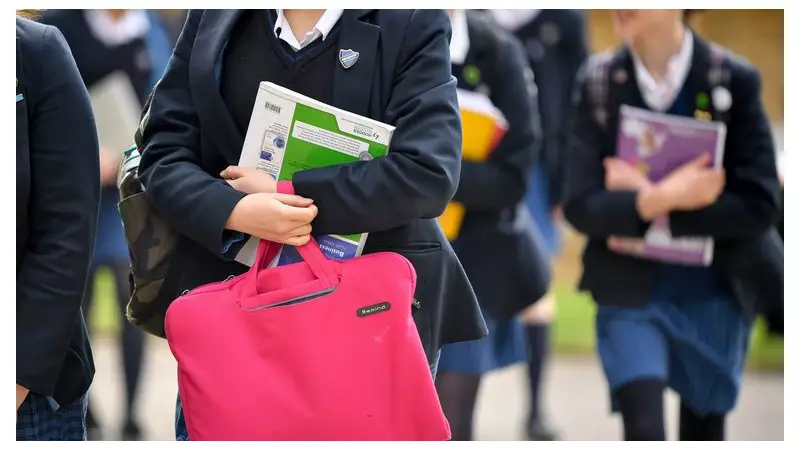
Government Turns to AI to Solve School Attendance Crisis
The Department for Education has announced a controversial new initiative that will see artificial intelligence used to set individual attendance targets for every school across England. This radical approach aims to address what officials describe as a growing classroom absence crisis that continues to plague the education system.
New figures reveal the scale of the challenge facing schools. Persistent absence rates - defined as pupils missing 10% or more of their classes - reached a worrying 22.3% during the 2021/22 academic year. While this figure has shown some improvement since then, the number of students missing more than half their lessons continues to rise and remains substantially higher than before the COVID-19 pandemic.
How the AI Attendance System Will Work
The government's plan involves using sophisticated algorithms to analyse attendance patterns and establish minimum improvement targets for each school. These benchmarks will be based on the performance of schools with similar characteristics, taking into account factors such as:

- Levels of deprivation in the local area
- Geographical location
- Specific needs of the student population
Schools will receive their individual targets as soon as possible and will be expected to meet them by the end of the current academic year. In a significant concession, the Department for Education has confirmed that these targets will not be made public, and school watchdog Ofsted will not have access to them during inspections.
As part of the initiative, schools will receive AI-generated reports showing other institutions with similar circumstances that have successfully improved attendance. They will be encouraged to contact these schools directly for advice and support.
Education Unions Voice Strong Opposition
The announcement has been met with immediate criticism from teaching unions and school leaders, who argue that the approach fails to address the root causes of poor attendance.
Paul Whiteman, general secretary of the NAHT school leaders' union, stated that schools are already working tirelessly to improve attendance and that "yet more targets" would not help the situation. Instead, he called for greater investment in community services that provide support to struggling families.
Pepe Di'Iasio, general secretary of the Association of School and College Leaders, was equally critical, describing the targets as "yet more diktats dreamt up in Whitehall." He emphasised that many factors contributing to pupil absence are beyond schools' direct control and that setting individual targets simply piles additional pressure on already strained staff.
The Department for Education has also revealed plans to establish 36 new attendance and behaviour hubs that will provide support to schools. These centres will offer resources to help maintain student engagement during the crucial transition from primary to secondary education.
Education Secretary Bridget Phillipson defended the initiative, stating: "By working jointly with schools to set individual targets, we're tackling variation head-on. Our best schools already have a brilliant approach to attendance, and now we're driving that focus everywhere."
With one in three schools currently failing to improve attendance according to government figures, the success or failure of this AI-driven approach will be closely watched by educators and policymakers alike.