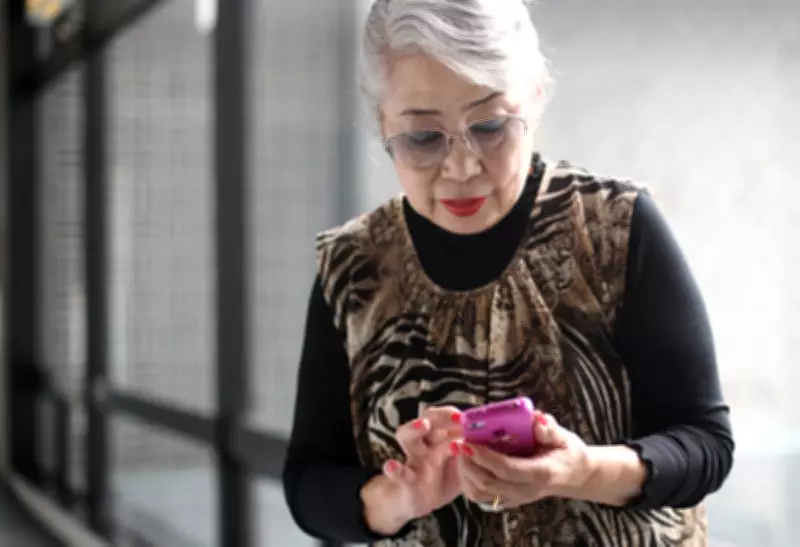
Japanese telecommunications firms have terminated support for older mobile networks, compelling senior citizens to become proficient with smartphones. This transition has created a pressing need for digital education among the elderly population.
Navigating the Digital Divide
It is not solely the younger generation that remains fixated on small screens. In Tokyo, a group of elderly individuals is learning to click and scroll, though these actions are far from instinctive for them. "I struggle with the numerous apps that appear," one participant admits. Another inquires, "How can I be certain I have ended a call properly?"
These are typical worries expressed by the four women and one man attending a beginner's smartphone workshop at a public center for older residents in Nerima, located in the northwestern suburbs of Japan's capital. They have a patient instructor in Yasushi Nishioka, who guides them through the complex functions and settings that can transform a smartphone into a gateway to enhanced connectivity or a source of digital frustration.
Patient Guidance in a New Digital Era
"Do not feel pressured to memorize everything," advises Nishioka, a retired IT programmer. "It is simply about holding the device and becoming accustomed to it." The attendees, predominantly in their seventies, confess to feeling daunted by their devices—three iPhones and two Android handsets. However, they are resolved to avoid analogue isolation in their later years following the shutdown of Japan's 3G network.
The country's telecom providers have systematically discontinued older networks. The 2G service was completely deactivated by 2012, and by 2022, the carrier au had ceased 3G operations, with competitor SoftBank following in 2024. At the end of March, NTT Docomo became the final provider to terminate 3G, citing the necessity to retire inefficient base stations to reduce electricity usage.
Impact of the Network Transition
Although some flip phones remain compatible with 4G, this shift impacted an estimated half a million individuals and over 400 phone models. It also affected early car navigation systems, vending machines utilizing 3G for cashless payments, and unstaffed parking facilities that rely on the network for remote management, as reported by the Mainichi Shimbun news site.
Docomo and other carriers are assisting subscribers—including steadfast flip phone users and those anxious about smartphones—by offering instructional classes. These sessions cover topics such as capturing photos and videos and conducting secure online shopping. Without adopting smartphones, which operate exclusively on 4G and 5G networks, flip phone loyalists will lose voice-call and email capabilities, and their contracts along with phone numbers will be cancelled.
Historical Context and Modern Challenges
Japan's garakei phones—a blend of Galápagos, indicating their domestic market exclusivity, and keitai denwa, meaning mobile phone—were widespread before the inaugural iPhone launched in Japan in 2008. During a two-hour class, Nishioka leads his students through fundamental skills: powering devices on and off, adjusting volume, and techniques for scrolling and zooming. He then addresses cashless payments, QR codes, and subjects of particular interest to the group, such as health trackers and weather forecasts.
"If you use your phone solely for administrative tasks, it will rapidly become dull," he remarks, assuring that future sessions will explore entertainment, social media, and photo and video content. All participants express concerns about security—a escalating issue in Japan, where the substantial over-65 population is frequently targeted by online scams. "If you have any suspicions, simply disregard the message or call," Nishioka recommends, before introducing an app that blocks dubious contacts.
Personal Journeys and Motivations
"When I purchased my smartphone and activated it, the plethora of icons was so bewildering I had no clue what to do," shares Hiroko Kanda, a class attendee. "It is taking me some time to adjust." Another participant, who chose to remain anonymous, reluctantly acquired her first smartphone three months prior. "I lacked the confidence to make the switch," she says, with her flip phone placed beside her iPhone. "I still use my garakei on 4G, but I genuinely appreciate the weather and travel planner applications on my new device."
Their reasons for embracing smartphones mirror those that keep younger generations tethered to their devices: booking tickets for musicals, joining WhatsApp groups, studying foreign languages, and organizing travel. "Among the frustrations that often lead people to abandon smartphones, one issue is particularly prominent," Nishioka reveals, highlighting a grievance shared by users of all ages: "Managing their passwords."