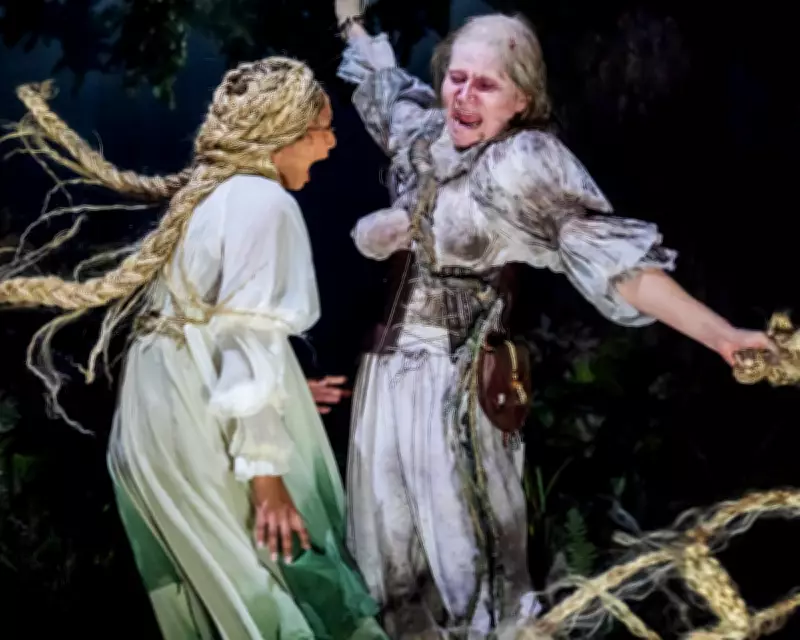
Theatre Union Demands Separate Awards for Choreographers and Movement Directors
A leading theatre union group is calling for major awards ceremonies to establish separate categories specifically for choreographers and movement directors, arguing that these professionals are currently undervalued and overlooked in recognition programs.
Recognition Gap in Major Awards
The Equity Choreographers and Movement Directors Network has highlighted what it describes as a significant gap in how theatrical movement professionals are acknowledged. While last weekend's Olivier Awards included a best theatre choreographer category, which was won by Fabian Aloise for Evita at the London Palladium, the network points out that movement directors working on nominated productions received no equivalent recognition.
"If we celebrate the impact of physical storytelling, we must acknowledge the artists behind it," stated the CMDN in a recent declaration. The group emphasized that awards ceremonies "open up a bigger conversation about what language we use to describe how theatre is made, and questions who gets named in that process – especially when it comes to movement and choreography."
Distinct Roles in Physical Storytelling
The network draws an important distinction between choreography and movement direction in theatrical productions. While choreography typically refers to specific dance sequences, movement direction encompasses the creation of the entire physical language of a production, enhancing storytelling, character development, and dramatic impact.
"Movement direction sits in a nuanced space: not always 'dance,' not always credited as choreography, yet essential to how a show lives and breathes," explained the CMDN. Many professionals work in both capacities, though productions often employ different individuals for each role.
Spotlight on Overlooked Professionals
The network specifically highlighted several movement directors whose work has been integral to acclaimed productions this year but who went unrecognized in awards categories. These include Leanne Pinder for Punch, Sarah Golding for Kenrex, Imogen Knight for the opera Dead Man Walking, Jenny Ogilvie for the Olivier-winning Into the Woods, Sung Im Her for The Glass Menagerie, Lucy Hind for Inter Alia, and Kloé Dean for The Boy at the Back of the Class.
Current Awards Landscape
The CMDN praised the Black British Theatre Awards for expanding their choreography category in 2022 to include movement direction. However, the group noted that neither the UK Theatre Awards nor the Critics' Circle Theatre Awards typically feature dedicated categories for choreography or movement direction.
The network was established in 2023 by movement director and choreographer Polly Bennett to ensure her professions "to be seen, recognized and respected." With more than 200 members, the group continues to advocate for greater acknowledgment. In 2025, steering group member Ellen Kane questioned why major screen awards lack choreography categories, asking: "Why aren't there Oscars for choreography? Why aren't there Baftas? Why aren't we being credited?"
Broader Industry Recognition Efforts
This call for movement director recognition follows similar advocacy efforts within the theatre industry. Last month, professionals across the sector signed a petition urging the Olivier Awards to include a dedicated video design category to better reflect the evolving nature of performing arts.
Under the current system, video designers share eligibility with other disciplines. This year's Olivier Awards saw Tom Pye and Ash J Woodward win best set design for Paddington: The Musical, while Aideen Malone and Roland Horvath received best lighting design for Into the Woods, with both awards including video design contributions.
The CMDN's advocacy represents a growing movement within the theatre community to ensure all creative contributions receive appropriate recognition in an industry where physical storytelling plays such a crucial role in production success and artistic impact.