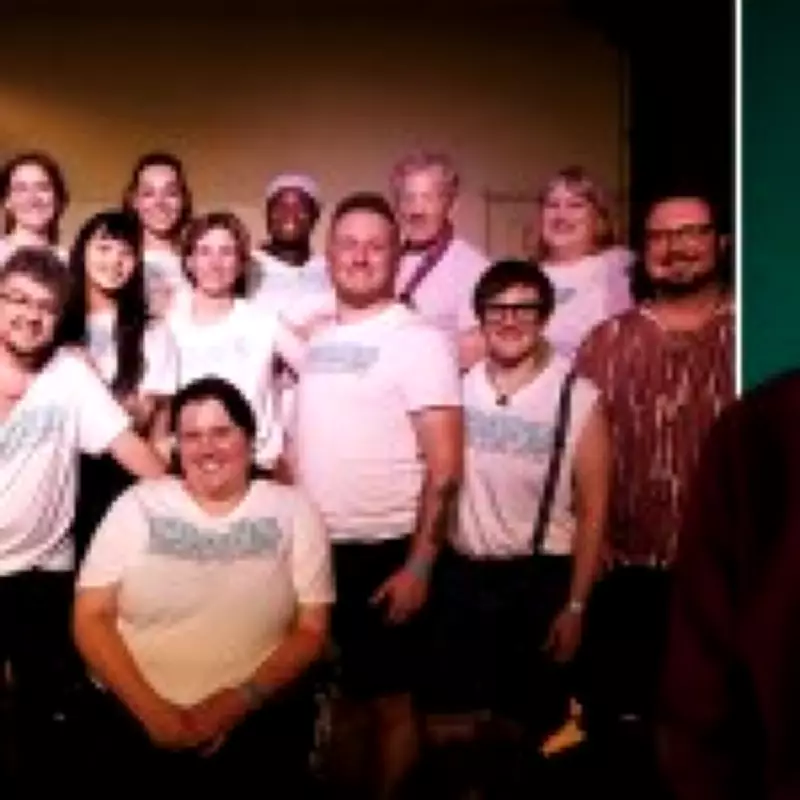
Trans Theater Company Reimagines Shakespeare with All-Trans Cast and Elliot Page
When Phoebe Kemp first heard rumors that acclaimed actor Elliot Page might introduce their latest theatrical production, the news seemed almost too extraordinary to believe. "It still feels incredibly surreal to me," Kemp admits with a laugh. "We initially thought, 'That will never actually happen.' Then he confirmed his participation."
That confirmation represents a significant milestone not only for Kemp personally but for Trans What You Will theater company, the grassroots organization dedicated exclusively to staging William Shakespeare's works with entirely trans and non-binary casts. This July, their most ambitious undertaking to date arrives: a groundbreaking production of As You Like It at The Space Theatre, scheduled for July 22–24 with global livestream availability, featuring Page introducing the premiere remotely from New York.
From Community Roots to International Recognition
The company's journey began modestly but has expanded remarkably. Their breakout debut occurred last year with a rehearsed reading of Twelfth Night, introduced by legendary actor Ian McKellen, which sold over 2,300 tickets and raised substantial funds for trans charity Not a Phase. What originated as a small community-focused initiative has since gained international traction, including performances in Barcelona and livestream events reaching New York audiences.
Kemp's approach to As You Like It transcends merely inserting trans performers into traditional Shakespearean frameworks. Instead, the production fundamentally reshapes the emotional core and narrative logic of the play itself. "In numerous interpretations, Rosalind can be perceived as non-binary," Kemp explains. "However, when every cast member identifies as trans or non-binary, the dynamic shifts completely. Rosalind no longer appears as the exceptional outlier. The narrative transforms into a collective community journey."
Exploring LGBTQ+ Experiences Through Shakespearean Settings
Kemp utilizes the play's contrasting environments—the rigid, formal court versus the liberating, natural forest—to explore experiences familiar to many LGBTQ+ individuals. "The court world represents restriction and conformity, where specific behaviors are demanded," Kemp observes. "Conversely, the forest symbolizes freedom, self-discovery, and community. This mirrors the journey many trans people undergo: initially being told how to exist, then discovering alternative ways of being."
In this innovative production, that transformative journey becomes shared across the entire ensemble. "Every character gradually realizes alternative possibilities for existence," Kemp adds. "It becomes a communal experience rather than an individual struggle."
Minimalist Production Emphasizing Sound and Movement
The production intentionally employs minimalist staging: a script-in-hand performance without conventional sets or elaborate costumes, where meaning emerges primarily through soundscapes, physical movement, and collective presence. Kemp describes creating distinct sonic atmospheres for the two worlds. "The court might feature quiet, strict, individual voices," they explain. "Meanwhile, the forest incorporates music, close harmonies, and communal singing."
Movement vocabulary further distinguishes these environments. "Court scenes might follow rigid, grid-like patterns," Kemp notes. "Forest sequences adopt more circular, fluid choreography."
Navigating Shakespeare's Problematic Elements
Not all aspects of Shakespeare's text align comfortably with contemporary sensibilities, and Kemp addresses these challenges openly. "Certain language, particularly regarding female characters, can feel reductive or even misogynistic," they acknowledge. "We're carefully considering how to approach these elements."
Structural constraints also exist, with specific roles requiring particular gender alignments for key plot developments to resonate effectively. "There are moments where Shakespeare's perspectives on gender and sexuality feel restrictive," Kemp admits.
Creative dilemmas persist as well. "The intense closeness between Rosalind and Celia could be interpreted as queer—yet they're cousins," Kemp reflects. "Do we emphasize that dimension or not? I haven't finalized that decision." Rather than attempting to resolve all tensions, Kemp prefers to sit with these contradictions, allowing them to remain visible and thought-provoking.
Maintaining Community Focus Amid Growing Attention
Despite increasing visibility from Page's involvement, Kemp remains committed to keeping the company community-oriented. "Our connection with The Space Theatre remains crucial," they emphasize. "This isn't West End commercial theater. It's fundamentally community-focused."
This ethos extends beyond performances, including dedicated matinees for LGBTQ+ individuals under 25, youth workshops, and ongoing support for fellow trans artists through company initiatives. "Numerous trans and non-binary creatives exist," Kemp states. "But professional opportunities aren't always accessible." They recall a poignant moment before last year's Twelfth Night performance: "We paused and recognized, 'Everyone in this room is trans.' Such experiences remain rare."
Centering Trans Joy as Political Statement
At the project's heart lies a focus on joy—a dimension Kemp identifies as equally politically provocative as narratives of trans hardship. "Being trans grows increasingly challenging in the UK and globally," Kemp notes, referencing escalating legal and social pressures. "Many stories we encounter emphasize trauma, which matters. But that shouldn't be the exclusive narrative."
Instead, As You Like It creates space for "joy, playfulness, and freedom," Kemp asserts. "We're demonstrating diversity—that transness manifests in multiple ways. We deserve existence without perpetual struggle." They continue: "Hopefully, a weight lifts when everyone present identifies as trans or non-binary. Then we can share that experience globally and ask: Why not this?"
Building Legacy Beyond "Firsts"
While proud of the company's expanding reputation, Kemp remains cautious about labels like "landmark." "I aspire for us to be 'first, but not only,'" they clarify. "This should become something that happens regularly." Performers from previous productions have already advanced to major institutions like the Royal Shakespeare Company. For Kemp, such progression represents the genuine legacy: opening doors for others.
When asked what they hope audiences will remember, Kemp's response is straightforward: "The brilliance and diversity of trans people," they state. "That we embody multiplicity just like anyone else."