Utopia Theatre's production of Wole Soyinka's The Swamp Dwellers at the Crucible Theatre in Sheffield is a masterful revival that brings the 1958 play's themes of corruption, displacement, and rural-urban divide into sharp contemporary focus. Directed by Mojisola Elufowoju, the play runs until July 25.
A Timeless Tale of Rural Struggle
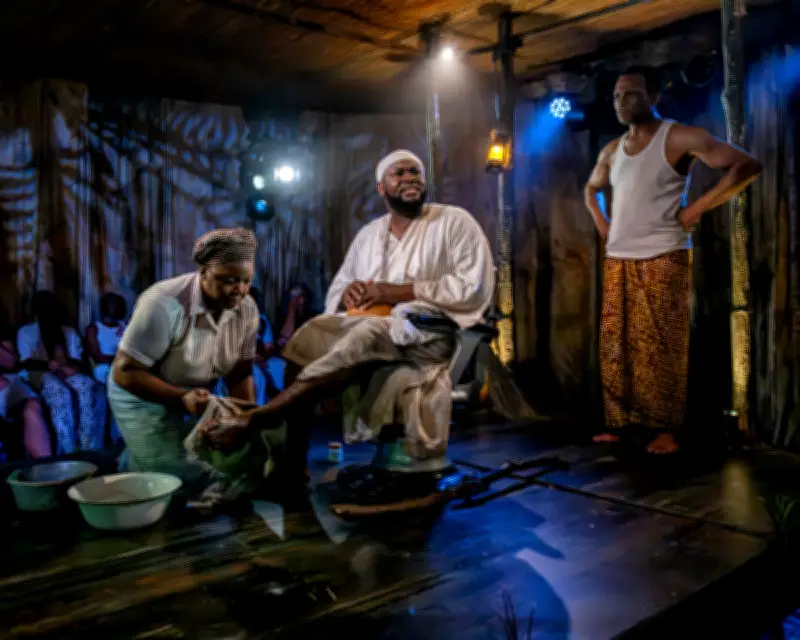
The story follows an elderly swamp-dwelling couple, Alu and Makuri, who await the return of their son Igwezu, who left for the city years ago. Their wait is interrupted by a blind beggar and a corrupt priest, Kadiye, who exploits the villagers' fears. Soyinka's text, written before Nigerian independence, critiques the exploitation of rural communities by urban elites and religious hypocrisy.
Elufowoju's direction emphasizes the play's relevance today, highlighting issues of land rights, migration, and environmental degradation. The set design by Mayou Trikerioti transforms the Crucible's stage into a flooded swamp, with water reflecting the characters' emotional turmoil.
Stellar Performances Bring Depth
Debbie Korley as Alu conveys maternal anguish with subtlety, while Patrice Naiambana as Makuri embodies weary resilience. The standout is David Fenn as the blind beggar, whose poetic speeches resonate with spiritual authority. According to the director, "Soyinka's play is a cry against the betrayal of the poor by those in power, and it feels more urgent than ever."
The production runs at 90 minutes without an interval, maintaining a taut, immersive atmosphere. The sound design by Nicola Chang uses water drips and distant drums to evoke the swamp's eerie presence.
Critical Acclaim and Audience Response
Early reviews have praised the production's emotional impact and visual storytelling. The Guardian's critic noted that "the play's critique of systemic corruption lands with devastating force." The production has also sparked discussions about the role of African diaspora theatre in the UK, with Utopia Theatre aiming to amplify underrepresented voices.
With a total of 24 performances, the show has already sold out several dates, indicating strong public interest in Soyinka's work. The play's themes of environmental destruction and economic inequality resonate deeply with contemporary audiences.