The Great Wave Opera Review: A Beautiful Yet Dramatically Inert Hokusai Tribute
Scottish Opera has unveiled the world premiere of The Great Wave at Glasgow's Theatre Royal, a new opera exploring the life of the renowned Japanese artist Katsushika Hokusai. Composed by Dai Fujikura with a libretto by Harry Ross, this production offers a visually stunning and sonically rich experience, yet it struggles to deliver compelling drama, leaving audiences with a sense of artistic meditation rather than narrative urgency.
Aesthetic Brilliance and Musical Elegance
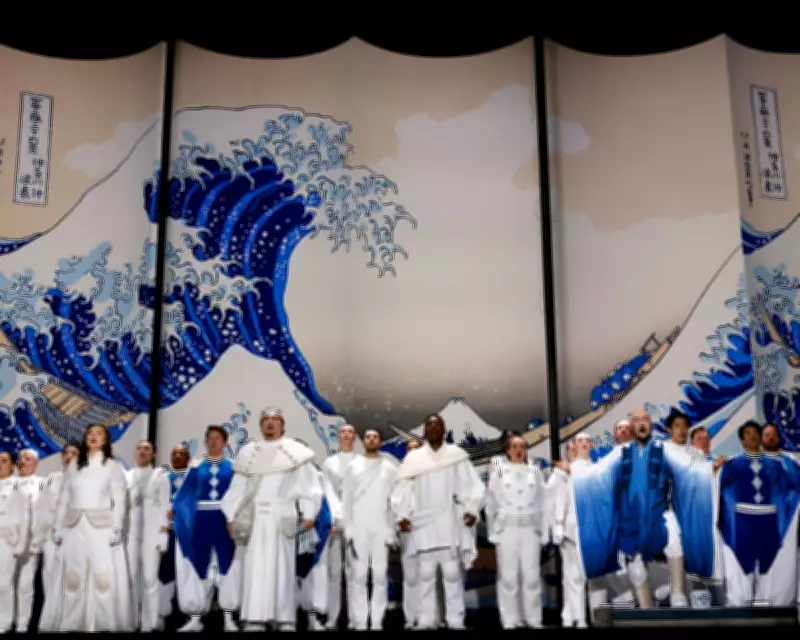
Directed by Satoshi Miyagi and featuring an all-Japanese creative team, The Great Wave immerses viewers in Hokusai's world through breathtaking projections of his iconic artworks on bamboo set walls designed by Junpei Kiz. The stage reflects the artist's barrel-shaped coffin, creating a poignant visual metaphor for his legacy. Musically, Fujikura crafts a light-infused soundscape centered around the shakuhachi, a traditional flute played by Shozan Hasegawa, evoking openness and simplicity reminiscent of Copland, enhanced by delicate orchestral textures.
Baritone Daisuke Ohyama portrays Hokusai with a commanding presence, supported by a strong ensemble including Julieth Lozano Rolong as his daughter Ōi, whose radiant soprano voice steals the spotlight. The cast begins in white, symbolizing blank canvases, and gradually becomes stained with Prussian blue pigment, highlighting themes of artistic creation and forbidden trade in 19th-century Japan.
Lack of Dramatic Tension and Narrative Depth
Despite its aesthetic achievements, The Great Wave falters in storytelling. Structured over five acts with flashbacks and dream sequences, including an encounter with the wave from Hokusai's famous print, the opera feels strangely inert. Key events such as house fires, execution risks from trading with the Dutch, and family conflicts are mentioned but lack emotional weight, failing to generate real jeopardy or character development.
Hokusai is depicted as a contented artist solely focused on his craft, while Ōi's potential inner turmoil as a divorced assistant is largely unexplored. This results in a series of extended vignettes rather than a cohesive life story, akin to a Philip Glass-style meditation that prioritizes atmosphere over action.
Strong Performances and Production Value
The vocal performances are a highlight, with Rolong's portrayal of Ōi showcasing generosity and vocal prowess. Supporting roles, including Shengzhi Ren as Hokusai's agent and a sweetshop owner, and Luvo Maranti as the grandson, add depth with their nuanced acting and singing. Under the baton of Stuart Stratford, the orchestra and chorus deliver with absolute conviction, enhancing the opera's musical integrity.
Scottish Opera, despite financial constraints, has executed this project admirably, supported by funding that allowed for an exhibition in the foyer and a program book filled with insightful essays on Hokusai. This educational aspect enriches the experience, though the opera itself may not fully convey the artist's story on its own.
Final Verdict and Future Performances
The Great Wave is a testament to artistic collaboration and visual innovation, offering much to admire in its execution. However, its subdued drama may leave some viewers craving more emotional engagement. For those interested in Hokusai's legacy, the supplementary materials provide valuable context. The production continues at the Festival Theatre in Edinburgh on February 19 and 21, following its Glasgow run on February 14.
In summary, this opera is a beautiful but flawed tribute, perfect for enthusiasts of classical music and Japanese art, yet it may not satisfy those seeking a traditionally dramatic operatic experience.