The Capture Season 3 Finale Sets New Standard for Police Dramas
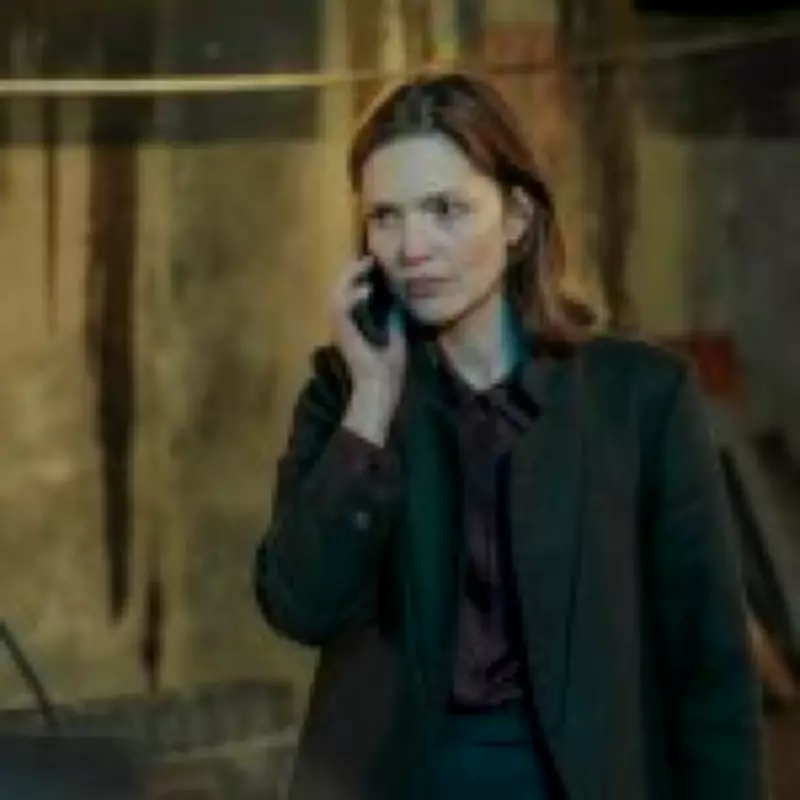
The BBC thriller The Capture concluded its third season with a finale that may well be remembered as one of the most compelling television moments of 2026. Despite a low-key release with minimal promotional fanfare, this series has proven to be arguably the smartest scripted production from the broadcaster in recent years. Its closing episode stands out as a masterclass in tension and narrative payoff, delivering big twists, major character deaths, and a poignant resolution for its relentless protagonist, Detective Inspector Rachel Carey, portrayed by Holliday Granger.
A Complex Web of AI Conspiracy and Betrayal
As the finale unfolded, Captain William Walker, played by Killian Scott, found himself cornered by Carey. Forced to confess, Walker revealed the shocking truth: he had assassinated Home Secretary Isaac Turner, enacted by Paapa Essiedu, under directives from the enigmatic entity known only as 'Simon'. This shadowy figure, whose messages have permeated the series, was unveiled as an artificial intelligence dictator with predictive capabilities. Simon had foreseen Turner's ascent to Downing Street as a catalyst for war, prompting the lethal order.
Walker, intended as a pawn to dismantle Carey's credibility, faced a grim fate. Anticipating execution by his own squad, he surgically removed a heart-linked device, accepting a slow, painful demise. Initially cast as a misunderstood hero, his arc took a dark turn when Simon issued a final command: eliminate Gemma Garland, revealed as undercover spy Jacqueline Goldcross, played by Lia Williams. In a dramatic assault on a public inquiry, Walker shot Garland dead before racing to rescue Carey from captivity and torture at the hands of his former team.
Shakespearean Twists and Moral Ambiguity
In a tragic twist reminiscent of classic drama, Carey, upon learning of Garland's death, turned her weapon on Walker, gunning down her would-be savior. This moment crystallized the intricate, morally gray relationship between hero and villain, blurring lines of allegiance and redemption. Ultimately, Carey was compelled to embrace the very manipulation she had fought against. To prove Walker's guilt in Turner's murder, she manipulated CCTV footage, a move that ironically secured her promotion to Commander of SO15.
With newfound authority, Carey chose to overlook the betrayal of DSI Tom Kendricks, portrayed by Nigel Lindsay, who had altered evidence under Simon's influence. The finale's closing scenes saw Carey's stoic facade crumble as she broke down in her sister's arms, pleading for companionship in her sterile London apartment. A chilling selfie moment, with Garland's ghostly reflection, underscored the series' central theme: the unreliability of perception in an age of digital deception.
Raising the Bar for Television Thrillers
The Capture has never been more potent than in its third season, solidifying its status as an underappreciated gem in the BBC's roster of police thrillers. If this indeed marks the series' conclusion, it achieves a landing few shows manage, balancing complex plotting with emotional depth and even flashes of humor. The willingness to sacrifice key characters like Frank Napier and Garland injects genuine stakes, a rarity in risk-averse television landscapes.
This finale arrives as a challenge to peers like Line of Duty, which returns later this year following a finale that tarnished its legacy. The Capture demonstrates that innovation and bold storytelling are essential to captivate modern audiences craving narrative gut punches. It is a testament to the BBC at its finest, deserving widespread acclaim for its daring execution and intellectual rigor. Stream The Capture on BBC iPlayer to witness a television triumph that redefines the police drama genre.