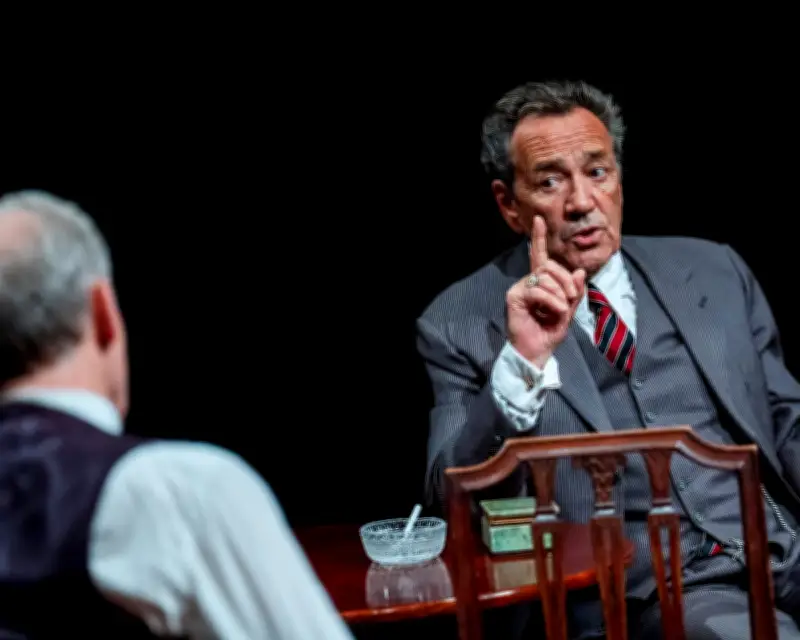
Robert Lindsay delivers a standout performance as Franklin D. Roosevelt in Richard Nelson’s new play Springwood, currently running at Hampstead Theatre in London. The production revisits the 1939 diplomatic visit by King George VI and Queen Elizabeth to Roosevelt’s summer home, a story previously adapted by Nelson for a 2009 BBC radio drama and the 2012 film Hyde Park on Hudson.
Historical Context and Modern Resonances
Nelson’s play arrives amid the 250th anniversary of American independence, adding layers of meaning to a narrative where a British monarch seeks US support for an impending European war. The production also echoes contemporary concerns about NATO’s stability under President Donald Trump, whom King Charles recently met during a state visit. The play highlights the delicate balance of a diplomatic relationship often perceived as more special by the UK than by the US.
Through Nelson’s direction, the contrast between raw political power and symbolic significance is crystallized on stage. The royal couple’s body language conveys unease as they find themselves in the position of supplicants to a civilian leader. Lindsay’s FDR, physically frail from polio, exudes geopolitical strength and sharp intellect behind a quiet voice. However, the president’s hidden affair with distant cousin Daisy Suckley (Rachel Pickup) and his media-driven concealment of his disability reveal a man who is, in some ways, a fake.
Key Themes and Performances
Andrew Havill portrays King George VI, struggling with a stutter and imposter syndrome after being thrust onto the throne by the abdication of his brother, whom some subjects still prefer. The play’s central phrase, “people see what they want to see,” spoken by both leaders, is intended by Nelson to apply to modern populist figures.
Rebecca Night’s portrayal of Queen Elizabeth echoes Claire Foy’s performance in The Crown, reflecting the influence of Netflix’s series on contemporary depictions of royalty. Jemma Redgrave’s Eleanor Roosevelt, though deserving more stage time, effectively shows the first lady suppressing her true self, suggesting the role is even more challenging than the vice presidency.
Subtle Double Perspectives
The play constantly presents subtle double perspectives. The king remarks, “My brother and I don’t talk to each other,” referencing the split caused by an American divorcee and a paedophile financier. These layered dynamics enrich the narrative, which runs at Hampstead Theatre until 25 July.
According to the Guardian review, Lindsay’s performance is one of his best, resisting the temptation to play FDR as a rebuke to Trump. Instead, the production offers a timely reflection on a diplomatic relationship that remains as complex today as it was in 1939.