Sophie Rundle Electrifies in National Theatre's Revival of Gorky's Summerfolk
An incandescent performance by Sophie Rundle serves as the undeniable high point in the National Theatre's luxuriant revival of Maxim Gorky's sprawling classic, Summerfolk. This production, running from March 18 to April 29, 2026, at the National Theatre on London's South Bank, marks a rare staging of an esoteric work that has seen only three UK productions ever, with this being the first this century.
A Chekhovian Drama with a Feminist Edge
Summerfolk delves into the lives of dissolute nouveau riche Russians spending a frivolous summer arguing as societal storm clouds gather, drawing clear parallels to Chekhovian themes. The play's enormous cast and prodigious uncut running time have historically limited its staging to major institutions like the National Theatre and RSC. This new adaptation by Nina and Moses Raine trims a full hour from the 1999 National Theatre version, yet it remains overwhelming at first, plunging audiences into a sprawling existential soap opera teeming with characters and plotlines.
Gradually, Robert Hastie's revival takes shape through luxury casting, with Sophie Rundle's gorgeous, disaffected Varvara railing with mounting fury against the rootless insubstantiality of her peers, the men who adore her, and her awful husband Sergei, played with entertaining boorishness by Paul Ready. The production offers three hours of compulsive people-watching, featuring characters from the toxic mutual loathing of Adelle Leonce's Yulia and Arthur Hughes's Pyotr to the sweet love between Alex Lawther's Vlass and Justine Mitchell's Maria.
Feminist Themes and Existential Scepticism
The Raine siblings' adaptation accentuates the play's feminist edge, as Varvara's righteous exasperation grows against the idiot men in her life, including her husband's crude self-interest and the feebleness of her suitors. Beyond this, Summerfolk is marked by a raging scepticism about the point of existence, often humorously expressed as characters decry the meaninglessness of their lives. This theme reaches a potent boiling point at the climax, with Varvara condemning her peers as empty and transient "summerfolk," hinting at the turmoil in early 20th-century Russian society.
Production Strengths and Shortcomings
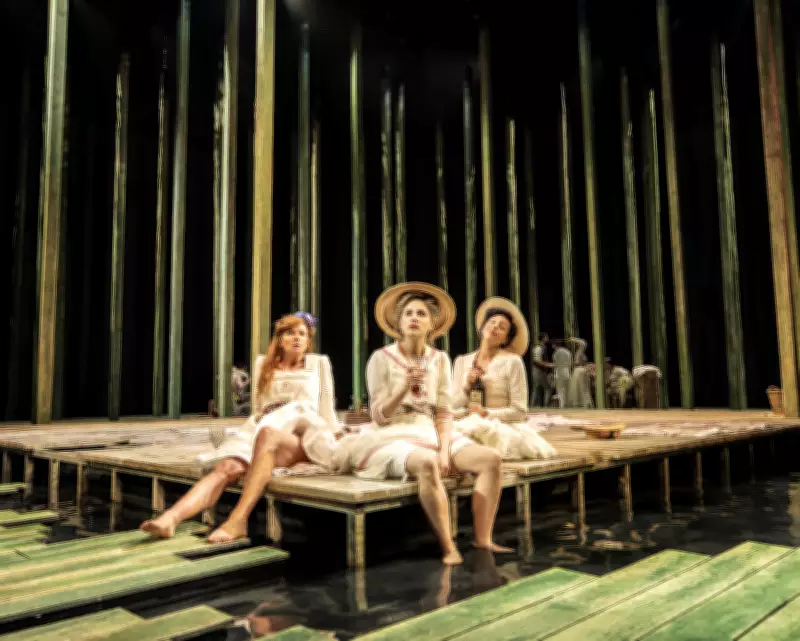
Blessed by a gorgeous wooden set by Peter McKintosh, surrounded by dappled water in the second half, Hastie's production achieves a bucolic but beautifully deadpan rhythm. However, it sometimes struggles with control over the large ensemble cast; while Rundle electrifies the stage, other moments can feel like a freewheeling blur of similarly dressed people bickering. The adaptation feels modern and witty but somewhat inbetween-y, neither fully set in 1904 Russia nor the present, leaning towards generic English-theatre-company-stages-Chekhov vibes.
Comparisons to Chekhov are inevitable, yet Summerfolk distinguishes itself when it feels broader or angrier. As a generational production likely not to be staged again for decades, this revival showcases the National Theatre's capacity for luxury revivals, making it a must-see despite its flaws.
Details: National Theatre, South Bank, London SE1 9PX. Transport: Rail/Tube: Waterloo. Price: £20-£89. Runs 2hr 50min. Performances include matinee and evening shows from March 18, 2026, onwards.