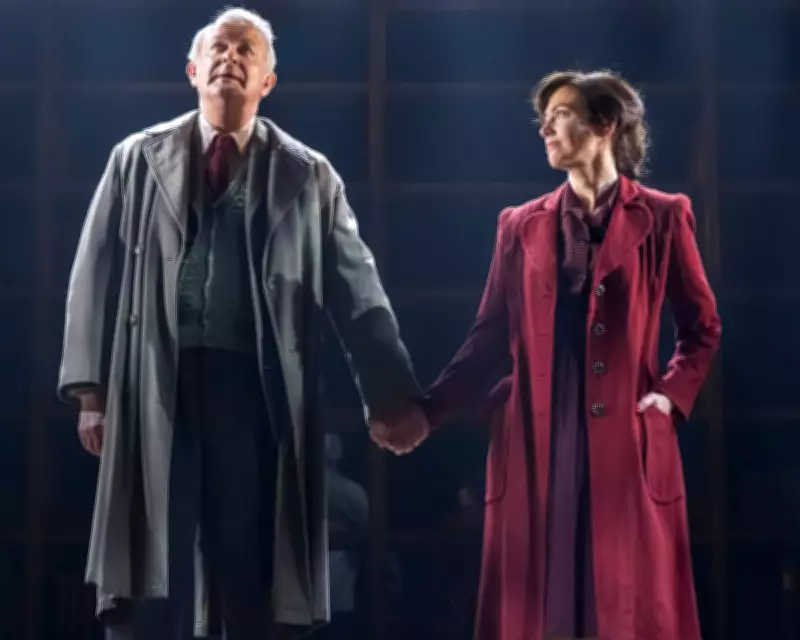
Hugh Bonneville brings his signature warmth to the stage in Shadowlands, William Nicholson's dramatization of CS Lewis's marriage to American divorcee Joy Davidman. Currently playing at London's Aldwych Theatre until 9 May, this production, originally from Chichester Festival Theatre, aims to tug at heartstrings with its tale of late-found passion, terminal illness, and a crisis of faith. However, it often feels as creaky as the wood-panelled library set that serves as its backdrop.
A Story of Love and Loss That Struggles to Connect
Shadowlands recounts the real-life romance between Lewis, the celebrated writer and Christian apologist, and Davidman, an American fan who corresponds with him before they meet and fall in love. The narrative unfolds from their initial letter exchange to Lewis's slow emotional thawing and Davidman's tragic descent into illness. Directed by Rachel Kavanaugh, the production plods from scene to scene, with a sleepy pace that contrasts oddly with the breezy emotional tone. The love story seems disconnected from Lewis's profound musings on faith and suffering, which are delivered in university podium lectures, creating a jarring divide between personal drama and intellectual discourse.
Performances That Shine but Lack Depth
Hugh Bonneville, known for roles like the Earl of Grantham in Downton Abbey and the cautious dad in Paddington, is a lovely presence on stage. He excels at portraying emotionally reserved Englishmen, channeling Lewis's awkwardness with aplomb. Bonneville emanates a palpable warmth, giving the character an almost physical sense of being a big, bear-hug of a presence despite Lewis's inhibitions. However, he lacks the hard, anguished depths needed to fully convey Lewis's stunting shyness and repression, leaving the performance feeling somewhat surface-level.
Maggie Siff delivers an excellent performance as Joy Davidman, bringing sharp edges and ardour to the role. Her portrayal is nuanced and compelling, yet the chemistry between her and Bonneville is too fond and gentle, missing the fiery passion that might have ignited the stage. The supporting cast, including Lewis's fellow dons at Oxford University, come across as cardboard characters, merely mouthing viewpoints on God, women, and Joy, whom they dismiss as an aggressive American. Peter McKintosh's set design does little to build this world, leaving the stage woefully empty and creating a vacuum in atmosphere.
Moments of Penetration Amidst the Creakiness
Despite its flaws, Shadowlands has scenes that truly penetrate. The exhilarating moment when Lewis and Joy declare their love for each other, circling around one another in a dance of emotion, is a highlight. The rapport between Lewis and his older brother, played by Jeff Rawle, adds a touch of amusement and humanity to the production. As a story of love and grief, it should leave audiences in bits—love found so late, an emotionally remote man thawed by it, and then lost again, his love an open wound. Yet, it fails to feel as eviscerating as it should, often coming across as a made-for-TV tear-jerker rather than a gripping stage drama.
Nicholson's script, adapted from his own Bafta award-winning TV film, contributes to this feeling. At times, it seems better suited for the small screen, lacking the visceral impact needed for live theatre. While the production charms and pulls you into its sadness, it ultimately feels old-fashioned and creaky, missing the emotional depth required to fully resonate. For fans of Hugh Bonneville or CS Lewis, it offers a pleasant but unremarkable evening, but those seeking a powerful exploration of love and loss may find it wanting.