ROI (Return on Investment) Review: A Hectic Venture Capitalism Drama
Aaron Loeb's new play ROI (Return on Investment) delivers a heady brew of medical technology concepts and knotty ethical dilemmas at Hampstead Theatre in London. The production, directed by Chelsea Walker, combines quickfire dialogue with ambitious themes, though it sometimes struggles under the weight of its many ideas.
Plot and Setting: Science Meets Silicon Valley
The story begins when earnest research scientist Willa, portrayed by Letty Thomas, arrives at a sleek venture capitalist firm to pitch her groundbreaking discovery. Using old-school index cards, she presents a method to predict cancer in the human body—a medicalized version of the "precrime" technology from Philip K. Dick's Minority Report, set in modern-day San Francisco rather than a futuristic landscape.
Initially dismissed by young gun May, played by Millicent Wong, Willa's idea quickly gains traction when May realizes its potential as a rare, high-value startup, known as a "unicorn." May, the ambitious protege of company boss Paul (Lloyd Owen), sees an opportunity, but the marriage between Willa's cutting-edge medical technology and Paul's profit-driven business brings significant ethical conflicts.
Dialogue and Direction: Mamet-Esque Sparring
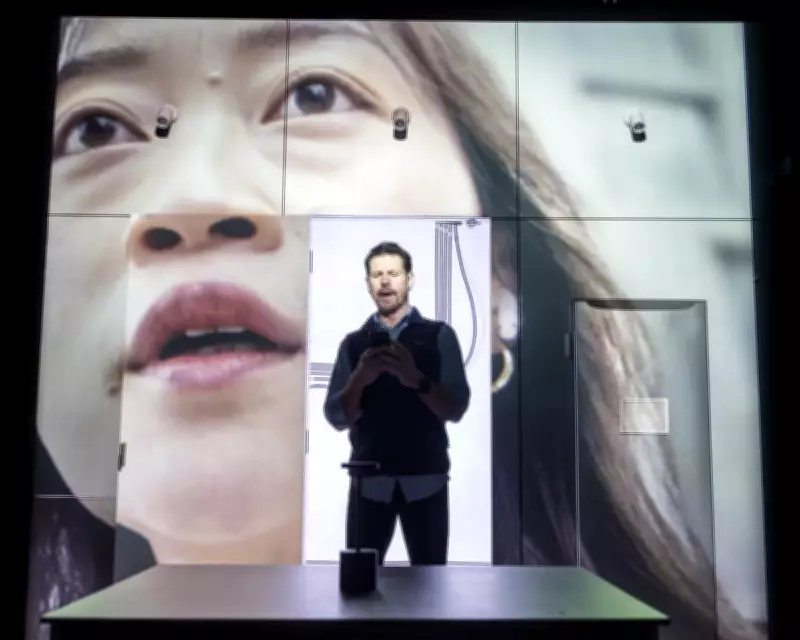
Loeb, a US businessman-turned-playwright, infuses the play with rapid-fire patter between May and Paul, reminiscent of David Mamet's Glengarry Glen Ross. The aim is to explore what happens when a major scientific breakthrough is funneled through the machinery of venture capitalism. Directed at a brisk pace by Chelsea Walker, the action mostly unfolds in Paul's Silicon Valley-style office, complete with a sofa, smoothie-maker, and slick screen interfaces.
Rosie Elnile's stage design cleverly reconfigures itself in seconds as scenes jump from the Covid era to an undefined near future. This dynamic setting supports the play's fast-moving plot, which introduces medical discoveries at a rapid clip, including cures for cancer and Alzheimer's, as well as "precures." The narrative also touches on the capability within Willa's breakthrough to create designer babies, adding another layer of ethical complexity.
Themes and Ethical Dilemmas: Profit vs. Idealism
The plot delves into the ethical and political fallout of such advanced science, with a US congressional committee getting involved. Additional elements include an extramarital affair and a character with early onset dementia, though these personal stories are often too brief to fully engage the emotions. In around 100 minutes, the play packs more than a headful of ideas, making it challenging to digest.
Paul starts as an idealist, telling May he wants to save the world, but his drive for profit quickly overrides that idealism. However, the play avoids simplistic villainy; Willa, the scientist, espouses deeply problematic views and conspiracy theories on race and genetics, leading her toward rightwing forces. This complexity serves as a reminder that pure scientific discovery can never remain entirely "pure" when entangled with human motivations and systems.
Performance and Critique: Strong but Sketchy
The characters are strongly performed but remain somewhat sketchy, with some portrayals feeling hackneyed, such as Paul with his yoga mat and smoothies. Despite this, the cast, including Letty Thomas, Millicent Wong, and Lloyd Owen, delivers compelling performances that highlight the play's central tensions.
Ultimately, ROI is an ambitious attempt to critique the intersection of science and capitalism, though its hectic pace and overload of concepts may leave audiences wanting more depth in character development. The play runs at Hampstead Theatre in London until 11 April, offering a thought-provoking, if frenetic, theatrical experience.