A major revival of a rarely performed Terence Rattigan play is set to shed new light on the celebrated British dramatist's most personal struggles. 'Man and Boy' opens at the National Theatre's Dorfman space on 30 January, running until 14 March.
A Playwright's Last Stand for Seriousness
Written in 1963, 'Man and Boy' was of monumental importance to Rattigan himself. He conceived it as his final opportunity to prove he was a serious dramatist, at a time when his reputation was at a low ebb due to the rise of a new generation of playwrights from the Royal Court. The play is a tense father-and-son drama set in 1934, inspired by the real-life Swedish financier and swindler, Ivar Kreuger.
It tells the story of Gregor Antonescu, a Romanian financier on the brink of ruin, who hides out in his estranged son's Greenwich Village apartment. In a shocking act of manipulation, Antonescu attempts to lure the chairman of American Electric into a merger, ruthlessly exploiting his own son's sexual allure to secure the deal. Rattigan was adamant that the character was "as evil as Iago," and famously dug his heels in when stars like Rex Harrison and Laurence Olivier sought to soften the text or rejected the project outright.
The Deeply Personal Father-Son Dynamic
Beyond its financial thriller plot, the play is a profound exploration of a fractured familial relationship, a theme deeply rooted in Rattigan's own life. His father, Frank Rattigan, was a diplomat forced to resign after a scandalous affair with a Romanian princess. Biographers note that Terence Rattigan's work repeatedly grappled with this complex paternal relationship.
In earlier plays like 'Adventure Story' and 'Who Is Sylvia?', he alternately glorified and critiqued his father's character. With 'Man and Boy', he created his most intense examination yet, weaving a narrative full of social antagonism, political intrigue, and painful interdependence between a father and son.
Rattigan's Discreet Exploration of Homosexuality
Another significant thread running through the play, and much of Rattigan's work, is the theme of homosexuality. Despite being a deeply discreet man in an era when homosexual acts were illegal, Rattigan returned to the subject with remarkable frequency. Critics have noted covert gay dynamics in plays from 'The Browning Version' to 'Separate Tables'.
In 'Man and Boy', the exploitation of the son's sexuality carries a potent charge. Rattigan's willingness to present such themes in 1963, years before the partial decriminalisation of homosexuality in 1967, demonstrates a quiet courage and an acute sense of shifting public attitudes.
Why 'Man and Boy' Resonates Today
While the play was a personal mission for Rattigan, its themes continue to echo in the modern world. Contemporary audiences will likely see intimations of more recent financial and familial scandals, from the fall of Robert Maxwell to the crimes of Jeffrey Epstein. The central character, Gregor Antonescu, is a compelling theatrical monster—heartless, exploitative, and dishonest, yet possessed of a dynamism that fascinates.
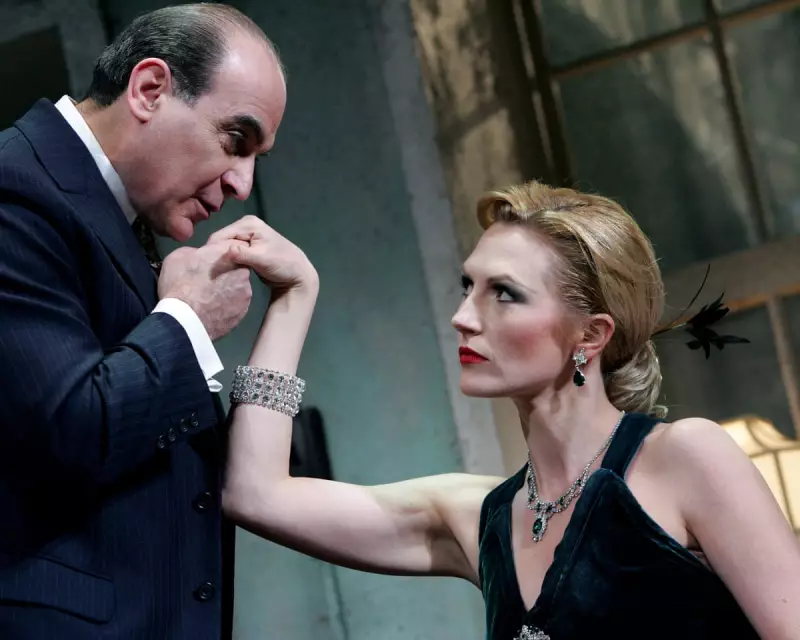
The play has had only brief outings since its premiere, most notably a 2005 London production at the Tricycle Theatre (now the Kiln) starring David Suchet in a mesmerising performance as Antonescu. This new production at the National Theatre offers a fresh chance to evaluate a crucial but overlooked piece of British theatrical history, revealing the hidden depths of one of its most successful playwrights.
'Man and Boy' runs at the Dorfman Theatre, National Theatre, London, from 30 January to 14 March.