Media Coverage of Violence Against Women Reaches 'Pitiful' Low in Global Analysis
A comprehensive new report has revealed that media coverage of violence against women and girls has reached alarmingly low levels worldwide, with researchers describing the situation as "dismal" and "pitiful." The analysis of 1.14 billion online stories published globally between 2017 and 2025 found that articles containing terms related to misogynistic abuse dropped to just 1.3% of all global online news in 2025, marking the lowest level recorded during the entire study period.
Coverage Peaked During #MeToo Movement
The research indicates that coverage of violence against women peaked at 2.2% in 2018, coinciding with the height of the #MeToo movement. Since then, there has been a steady decline in media attention to these critical issues, despite a proliferation of high-profile cases involving men abusing women and children, and a concerning rise in AI-assisted violence against women and girls.
Professor Julie Posetti, chair of the Centre for Journalism and Democracy at City St George's, University of London, expressed shock at the findings. "It is shocking, particularly considering the scale of the problem and the ways in which violence against women and misogyny have been weaponised by authoritarian actors as part of the rollback of rights," she stated. "It signals a failure by the press ... how little progress we've made and how far we have to go."
Epstein Coverage Lacks Gender Inequality Lens
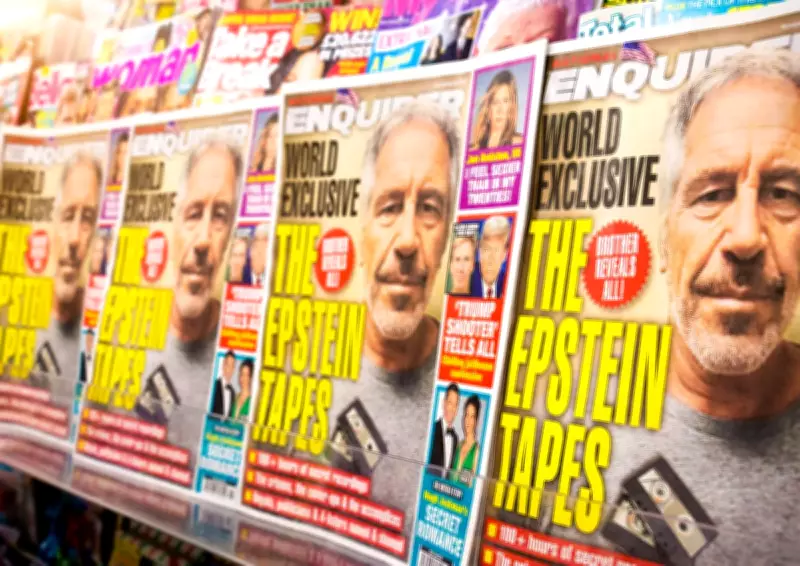
The groundbreaking report, which the Guardian received exclusive access to before its April 18 launch, included specific analysis of Jeffrey Epstein-related coverage from 2017 to February 2026. Among nearly one million Epstein-related articles, researchers discovered that the term "violence against women" appeared in a mere 0.1% of them. In stark contrast, 25% of these articles mentioned "victims," while 26% referenced terms like "power," "money," "elites," or "corruption."
Luba Kassova, lead author of the report, emphasized the significance of this finding. "What we concluded by doing this analysis is that the gender-inequality lens is all but missing from coverage of the Epstein story. This means that news coverage does not get to the root causes of the problem."
Regional Disparities and Digital Violence Concerns
The report uncovered troubling regional disparities in coverage. In Africa, where multiple conflicts have involved extreme levels of sexual violence, coverage sank to a nine-year low of 1.18% in 2024. This decline occurs despite the high incidence of sexual violence in many countries, creating what researchers describe as a profound mismatch between reality and media attention.
As the world becomes increasingly digital, the spaces and methods for perpetrating gender-based violence are expanding at an alarming rate. Millions of women and girls experience online violence annually, with research suggesting up to 60% of women worldwide have encountered this type of gendered abuse.
Male Voices Dominate Coverage
When misogyny-related stories do receive coverage, the research found that men's perspectives and opinions dominate the narrative. The study revealed that 1.5 men are quoted for every one woman in stories about misogyny, and this gender gap appears to be growing.
Sarah Macharia from the Global Media Monitoring Project, the largest longitudinal study on gender in world media, has extensively researched this aspect of coverage. "These stories hardly ever appear and when they do, we have seen that it is a male voice that prevails," she explained. "We found that of the experts quoted in stories about gender-based violence, 24% were men compared with 17% women."
Macharia added, "It is dismal in various respects – in terms of who speaks in the stories as well as the narratives that continue to sexualise and objectify girls and women who are survivors of this atrocity."
Disturbing Trends in Terminology
To assess the level of misogyny-related coverage in online news, researchers tracked 12 specific terms including sexual violence, femicide, and rape. While overall coverage mentioning any of these terms declined significantly, references to "gender ideology" – a contested term dating back to the 1990s that has been promoted by the global anti-gender equality movement – soared by a factor of 42 between 2020 and 2025, largely driven by US media.
Macharia noted she first began hearing about the impact of the term "gender ideology" in Latin America around 2010. "It was being used to normalise and spread misogyny. We've seen political rhetoric that undermines women and trivialises them. We see this in leadership in certain quarters and when that happens, it seems to spread like a contagion."
Recommendations for Improvement
The report offers several recommendations for improving coverage of violence against women and girls. Among the key suggestions is placing female journalists and editors in charge of shaping coverage, and centering victims and survivors of violence at the heart of stories.
When reporting on high-profile cases involving men who have perpetrated serial abuse against women and girls, publications should provide explanations that uncover the root causes of the problem by exposing the gender inequality that contributes to abuse of power, patriarchal norms, and misogynistic culture.
Professor Posetti, who led a study for UN Women on the escalating crisis of online violence against women in public life, acknowledged that some pockets of excellence and specific initiatives exist within media organizations addressing violence against women. However, she emphasized that wide-scale change remains necessary. "It continues to alarm and confound me that we have not been able to shift the discourse and norms more effectively," she said. "Until the mainstream press is fully equipped and willing to shift these norms, we're not going to change anything."
The report's findings highlight a critical disconnect between the scale of violence against women worldwide – with one in nine women experiencing violence from men in the last 12 months and one in three women subjected to physical or sexual violence in their lifetime – and the media's attention to these urgent issues.