Metropolitan Opera Premieres Groundbreaking Opera About School Shooting Trauma
The Metropolitan Opera in New York presents a powerful examination of gun violence through an international lens with the premiere of Innocence, the final opera by acclaimed Finnish composer Kaija Saariaho. This groundbreaking production challenges the perception that school shootings are exclusively an American phenomenon by exploring the aftermath of a fictional mass shooting at a Finnish international school.
A Multilingual Exploration of Collective Trauma
Performed in nine languages including English, Swedish, and Spanish, Innocence delves deeply into themes of guilt, grief, anger, and the persistent nature of trauma. The opera's conductor, Susanna Mälkki, emphasizes how the production demonstrates that "even if there are things that aren't spoken about openly, it doesn't mean they've disappeared." The work questions whether guilt ever truly concludes and explores the possibility of forgiveness and new beginnings after catastrophic violence.
Dual Timeline Structure and Musical Innovation
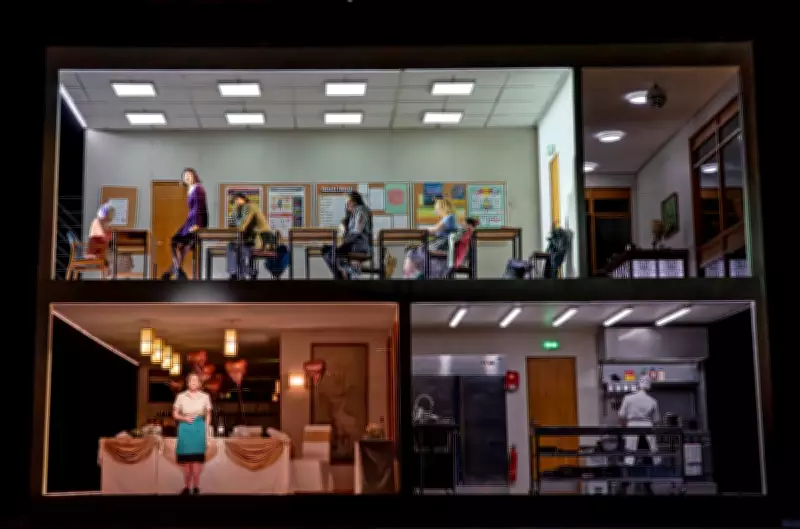
This five-act, one-hour-and-forty-five-minute opera unfolds across two distinct timelines and locations. The narrative alternates between the present-day wedding of the shooter's brother and flashbacks to the school where the tragedy occurred a decade earlier. Saariaho employs contemporary music to underscore scenes featuring the shooting's survivors and victims, while utilizing more classical operatic melodies for the wedding sequences.
Mälkki explains this musical choice creates "two different universes" that illustrate how people connected by the same tragedy can experience wildly different realities as time progresses. This structural approach powerfully demonstrates that "you can't always relate to the other person's point of view" when processing collective trauma.
Focusing on Victims Rather Than Perpetrators
Librettist Sofi Oksanen, a Finnish novelist known for exploring gender-based violence, deliberately centers the narrative on the victims and those closest to the tragedy. The shooter appears only once in a brief flashback scene without any spoken lines. Oksanen explains this choice counters the cultural fascination with perpetrators that she has observed in both American and Finnish coverage of mass shootings.
"It's so unfair and so I'm trying to give the victims as much space as possible as I can as an author," Oksanen states. "That's one form of justice." Director Simon Stone adds that society often exhibits a "fascination with evil" through media that focuses on criminals' perspectives, while victims' experiences remain underrepresented despite their profound suffering.
Finnish Context and Global Relevance
Despite Finland's population of just 5.6 million people, the country has experienced several devastating mass shootings, including school shootings in 2007 and 2008 that claimed 17 lives total, a 2009 mall shooting near Helsinki that killed five people, and a 2024 incident where a 12-year-old student killed one classmate and injured two others. Oksanen notes that "gun violence is not uncommon at all" in Finland, a reality that surprises many international observers.
Originally debuting in Aix-en-Provence, France in 2021 and having its first United States performance at San Francisco Opera in June 2024, Innocence has since been staged worldwide in locations including Australia and London. Mälkki hopes the opera's global reach demonstrates that despite geographical boundaries, "we're all in the same boat" when confronting violence and its enduring trauma.
Saariaho's Final Artistic Statement
This production represents the final completed opera by Kaija Saariaho, who passed away from brain cancer in 2023. The composer's innovative score features piano and wind instruments accompanying survivors' statements about how the shooting deaths of ten classmates and one teacher continue to affect their daily lives years later, hindering their ability to work, visit public spaces like movie theaters, or even sit without positioning themselves defensively.
Oksanen describes the libretto's challenge as requiring "something that is a big story but you squeeze it into the size of a walnut," with tight word counts necessitating profound emotional and narrative compression. The resulting work offers audiences a powerful meditation on collective healing and the universal human experience of processing violence, regardless of national context or cultural background.