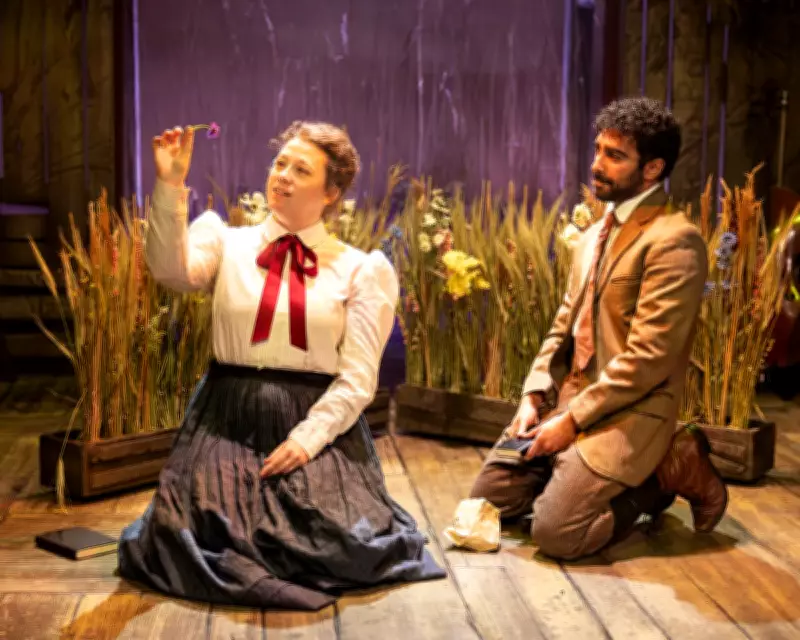
Lark Rise to Candleford Stage Review: A Tender and Evocative Tribute to Rural Lives in Transition
Flora Thompson's beloved autobiographical novels, which chronicle her upbringing in the late 19th-century Oxfordshire countryside, have found a new and poignant life on stage. Hammerpuzzle theatre company's adaptation at the Watermill theatre in Newbury focuses intently on Laura's personal journey, offering a tender and evocative tribute to rural lives on the brink of change.
A Focus on Laura's Coming-of-Age Story
This music-laced production shifts the spotlight firmly onto Laura, the central character whose name rhymes with Flora, as she navigates a childhood where her future seems limited and her passion for reading is actively discouraged. Jessica Temple delivers a nuanced performance as Laura, capturing a delicate balance of sensitivity, cleverness, and unworldly charm. Her portrayal is both game and tender, drawing the audience into her emotional world.
Director Bryn Holding skillfully orchestrates a five-strong ensemble of actor-musicians who seamlessly transform into entire communities. From comical schoolchildren reciting a backwards alphabet to lively pubgoers performing an infectious drinking song, the cast creates a vibrant tapestry of village life. The ensemble also embodies Laura's family, with Christopher Glover transitioning smoothly from a forbidding father to an understanding uncle, and Alex Wilson offering searing empathy in dual roles as brother Edmund and an Irish labourer.
Immersive Setting and Thematic Touches
Anna Kelsey's immaculately dressed set provides the perfect backdrop for Laura's move from the humble hamlet of Lark Rise to the comparative whirl of Candleford. It is here that Laura secures a job at the Post Office under the energetic supervision of Dorcas Lane, played with bustling warmth by Rosalind Ford. The production's attention to period detail enhances the evocative atmosphere, making the past feel vividly present.
Tamsin Kennard's script lightly touches on themes such as feminism, with Laura and Dorcas portrayed as "odd" women akin to George Gissing's spinsters, and politics, through Laura's liberal father who opposes enclosures. However, these elements are not deeply explored, as the narrative maintains a gentle pace. The story reminds us that "all times are times of transition," yet the structure, which takes an unexpected turn in the second half, leaves the future direction somewhat ambiguous.
Quiet Beauty and Lasting Impressions
Despite this, the production excels in capturing quiet beauty and genuine emotion. Zrey Sholapurkar's journalist is an awkward delight in touching encounters, though these moments often lead to homilies about life's inevitable compromises. The combination of Thompson's rich prose—such as describing rain "plashing like leaden bullets into the leaden water"—and the Watermill theatre's period surroundings creates an affectionate and memorable experience.
This adaptation serves as a heartfelt tribute to the people of rural Oxfordshire, who, in Thompson's words, truly deserve to be remembered. Running at the Watermill theatre in Newbury until 14 March, it invites audiences to spend time in a past that feels both distant and intimately relatable.