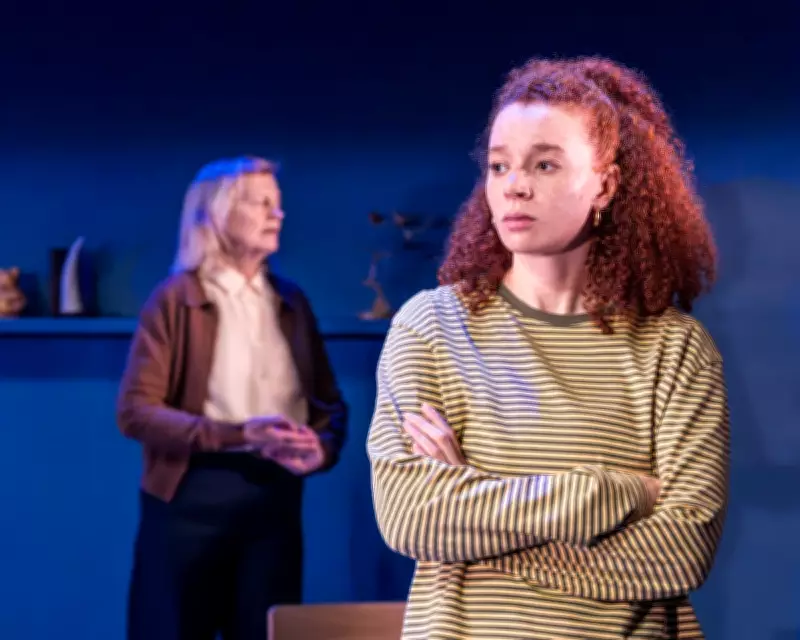
Erin Kellyman's Blazing Stage Debut in Evening All Afternoon at Donmar Warehouse
Erin Kellyman delivers a sensational stage debut in Anna Ziegler's spare, sensitive two-hander Evening All Afternoon at London's Donmar Warehouse. The 28 Years Later star joins the impressive Anastasia Hille in this psychologically charged exploration of grief and complex family relationships.
A Spiky Stepdaughter and Buttoned-Up Stepmother
Kellyman portrays Delilah, a bolshie, half-American daughter mourning her mother's death from cancer at age thirty-nine. She brings unspoken rage mixed with grief to her encounters with Jennifer, her ever-so-English stepmother played by Hille. Delilah bristles at Jennifer's maternal interloping, taunts her with games of one-upmanship, and remains granite-like in rejecting Jennifer's overtures.
Yet Kellyman allows audiences to see her character's vulnerability and fragmentation, creating a compelling emotional push-and-pull toward Jennifer. Hille delivers an equally impressive performance, drawing out the quiet regret of her character's life as a socially awkward woman who finds marriage in middle age after caring for her late mother.
Artful Direction and Innovative Staging
Diyan Zora's artful direction presents the play as both a telling and an enactment of the women's developing relationship. The characters narrate in third person while interacting within a revolving circle on stage, creating a powerful visual metaphor for their psychological orbit around each other.
Basia Bińkowska's set design adds beautiful whimsy with shadow-play and clever use of props initially arranged on a shelf. The monochromatic wash suggests a Maggie Nelson kind of blue, representing both the madness of grief and a dream-world cast with melancholic dye.
Modern Hamlet with Emotional Complexity
The play takes its title from Wallace Stevens' poem Thirteen Ways of Looking at a Blackbird, dealing with perspectives on the same scene. It creates an emotional Rashomon effect as audiences try to determine who is right or wrong, victim or villain.
In its best moments, Evening All Afternoon resembles a modern version of Hamlet, complete with the ghost of a parent seeking revenge and the paralysis of a grieving child. The play explores liminal spaces between dream, psychosis, and reality, between fiction and its creation, and between the tragedy of death and the capacity for healing found within it.
Strengths and Limitations
While the play features many ingenious ideas and incredibly original focus, some elements feel underdeveloped. Jennifer's character sometimes seems too much of a type, excruciatingly understated in her Britishness and self-deprecating to the point of cliche. John, Delilah's father, remains off stage and never fully convinces as a character.
Humour lightens the tone but occasionally seems to soften the edges of the story too much, getting in the way of the delicately captured emotional drama between the women. A melodramatic plot line enters the territory of psychosis without delivering a sufficient payoff.
Despite these limitations, Evening All Afternoon offers substantial riches through its exploration of grief, family dynamics, and the complex spaces between reality and perception. Kellyman's blazing debut and Hille's nuanced performance create a compelling theatrical experience that resonates long after the curtain falls.