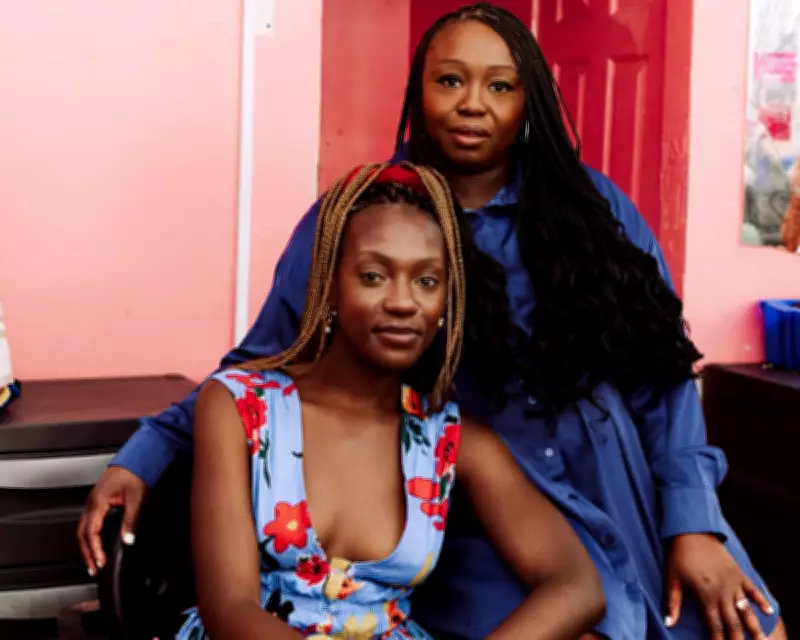
Jaja's African Hair Braiding Brings Immigrant Story to London Stage
On an uncomfortably hot morning in Harlem, New York, two women open the shutters of a braiding salon, beginning what seems like an ordinary day. Yet, by nightfall, playwright Jocelyn Bioh promises audiences will find themselves in a profoundly different place than where they started. Her Tony award-winning 2023 play, Jaja's African Hair Braiding, takes theatregoers through twelve transformative hours at the eponymous salon, where predominantly West African staff navigate a country where immigration is often misunderstood and politically weaponized.
From Harlem to Hammersmith: A Transatlantic Resonance
This month, the play makes its London debut at the Lyric Hammersmith, directed by Monique Touko, who previously collaborated with Bioh on School Girls; Or, The African Mean Girls Play at the same theatre. "The opportunity to work with Jocelyn for the second time was something I couldn't say no to," Touko says. "The legacy of School Girls lives on!" While School Girls explored colorism and beauty politics through young girls in a 1980s Ghanaian boarding school, Jaja's African Hair Braiding delves into the lives of an older generation who emigrated from the same region, set in 2019.
Both plays probe Black female identity within a single setting, but Jaja's intensifies this by confining the narrative to one working day. "I knew the play was going to start at 9am and end at 9pm – a really life-changing 12 hours," Bioh explains. The salon's location just off 125th Street, also known as Martin Luther King Jr Boulevard, is significant as a central point of African American culture and politics. Bioh, a Harlem resident, aimed to "show the diversity of who we are," especially during the Trump administration's tightening of immigration laws.
Cultural Familiarity and Responsibility
For British audiences, the story may resonate differently, but Touko notes that many, especially Black women, will find acute familiarity with the environment depicted. "The equivalent is Peckham or Brixton," she says, referring to south London areas that have long been key hubs for Afro-Caribbean communities, with Black salons often run by African women attracting clients from across the city. "We have a responsibility to get it right," Touko emphasizes. "Audiences are going to know if we've got it wrong because of how much it's part of our culture."
Bioh adds, "I literally don't know a single Black woman who's never had their hair braided at least once in their life." She hopes the play brings life to "the people behind the policies," showcasing the multiplicity of women in the salon alongside the "complexity, humour, joy and difficulty in the immigrant experience."
Characters and Themes: Questioning the American Dream
Jaja, the salon's owner, is mostly absent but spoken about by other characters. "There's a lot of talk about how she gave them all an opportunity," Touko explains. Her teenage daughter, who helps run the shop and excels in school despite unstable documentation, offers insight into Jaja's life beyond the salon. When Jaja finally appears, she is dressed in an extravagant wedding dress, preparing to marry a white landlord. "This will be my last dress as an African and my first as an American," she exclaims, eager to "get all of this nonsense immigration stuff out of the way so I can really make a name for myself here."
Jaja embodies an American dream that Bioh suggests is illusory. "It's been canonized as money, 2.5 kids, a white picket fence, a beautiful house, and that you just live and never have a care in the world," she says, adding that she doesn't know "a single American" who has achieved that. The play explores tensions not only in what it takes to live in the U.S. but also between African Americans and African immigrants. By the end, audiences may question whether Jaja's pursuit of a better life within a system seemingly set against her could lead to downfall.
Urgency and Relevance in Today's Climate
Landing in the UK as immigration dominates U.S. headlines, the play's stark reality feels even more urgent than when it was written. "The American dream is questioned here," Bioh states. "I don't present it as the American dream, period. I present it as the American dream, question mark." Jaja's African Hair Braiding runs at Lyric Hammersmith from 18 March to 25 April, offering a powerful exploration of identity, resilience, and the complexities of the immigrant journey across the Atlantic.