Cynthia Erivo's Dracula: A Hi-Tech One-Woman Show Divides London Critics
Cynthia Erivo takes on the monumental task of portraying all 23 characters in a technologically advanced stage adaptation of Bram Stoker's classic novel Dracula at London's Noël Coward Theatre. Directed by Kip Williams, this production has sparked a wide range of reactions from theatre critics, with opinions varying from enthusiastic praise to pointed criticism.
A Multi-Faceted Performance in a High-Tech Setting
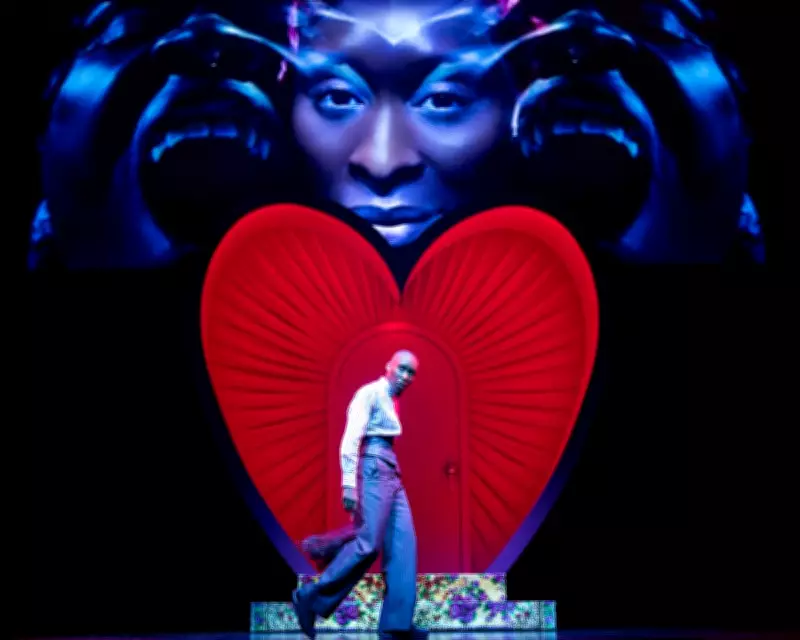
Erivo, best known for her Tony Award-winning performance in The Color Purple and her role in Wicked, demonstrates remarkable versatility as she transitions between characters with rapid costume changes and vocal adjustments. She portrays everything from Jonathan Harker's fiancée Mina to the vampire hunter Van Helsing, utilizing wigs, spectacles, and different vocal registers to distinguish each role. The production employs extensive video technology, with camera operators and stage crew frequently visible on stage, creating what some reviewers describe as a hallucinatory experience.
Clive Davis of The Times noted that the integration of live and recorded elements is mostly seamless, though the theatre's shallow rake sometimes forces audience members to watch the action on an overhead screen rather than directly on stage. Nick Curtis from The Standard praised Erivo's ability to navigate the complex technical requirements, stating that one sometimes loses track of which character is being broadcast live and which is pre-recorded.
Critical Reception: From Brilliant to Frustrating
The critical response to this ambitious production has been decidedly mixed. Arifa Akbar of The Guardian expressed disappointment, suggesting that Williams' adaptation lacks the originality of his previous work like The Picture of Dorian Gray. She questioned whether the production successfully captures the essence of Stoker's novel.
Alice Saville from The Independent offered a more positive perspective, highlighting how Erivo gets to own her queerness on stage through her portrayal of characters like Lucy, who displays sexual thrall to an androgynous Dracula. Saville particularly praised the final scenes where Erivo embodies Dracula's power on a bare stage, unobscured by technology.
However, Sam Marlowe of The Stage criticized Erivo's performance as hesitant and ill-at-ease with the material, suggesting that individual character voices are not always properly differentiated. Andrzej Lukowski from Time Out described Erivo as essentially doing her best as a cog in Williams' elaborate machine, but questioned whether even a superstar actor could salvage a faulty directorial vision.
Technical Elements and Design
The production's technical aspects have received more consistent praise. Patrick Marmion of the Daily Mail called the show mind-bogglingly complex, noting the impressive video effects by Craig Wilkinson that include a vampire flying and Dracula crawling down walls. The soundtrack incorporates diverse musical elements from Tchaikovsky's Nutcracker to Björk and electro-trance music.
Sarah Crompton from WhatsOnStage commended the assiduous work of camera operators, wig providers, and stage managers, along with Marg Horwell's flexible scenic design and Nick Schlieper's dramatic lighting. However, she noted that Clemence Williams' score becomes increasingly over-emphatic as the production progresses.
Thematic Interpretation and Legacy
Dominic Cavendish of The Telegraph observed that the multi-faceted approach reflects how Stoker originally told his story through multiple first-person perspectives using documents and letters. He suggested that Williams' boundary-breaking artistic toolkit emphasizes how the predatory count both stokes fears and embodies deep-rooted desires.
Despite the divided critical reception, this production represents a significant experiment in theatrical form, blending traditional stagecraft with contemporary technology in an attempt to reimagine a classic Gothic tale for modern audiences. The show continues its run at the Noël Coward Theatre, inviting audiences to decide for themselves whether this innovative approach to Dracula represents a bloody brilliant reinvention or a toothless interpretation of the iconic vampire story.