Cynthia Erivo's Dracula: A Technical Marvel That Tests Limits
If a car becomes stuck in a ditch, you could assemble ten people to pull it out through steady, collective effort. Alternatively, you could step back and observe a single Herculean figure straining every muscle, determined to demonstrate they can accomplish it alone. In both scenarios, the vehicle eventually returns to the road. In one version, the task vanishes and the journey proceeds; in the other, the labor itself transforms into the main attraction. This analogy has always captured my reservation about one-person theatrical productions. No matter how remarkable the achievement, the sheer magnitude of the exertion can overshadow the narrative that audiences came to experience. Instead of immersing themselves in a story, theatergoers often find themselves watching the trapeze artist while half-expecting a potential fall.
A Relentless Performance of 23 Characters
That underlying tension resonates powerfully throughout the West End's new adaptation of Dracula at the Noël Coward Theatre, where Cynthia Erivo portrays not just one role but an astonishing twenty-three characters. Over two relentless hours, she transitions between Van Helsing, Mina, Jonathan Harker, Lucy, Renfield, Seward, and Dracula himself, scarcely pausing for breath and never substantially exiting the stage. The production, which premiered on February 16, is directed by Kip Williams, a theater-maker renowned for his innovative fusion of live performance and video design. Here, that signature style is pushed to its most extreme boundaries.
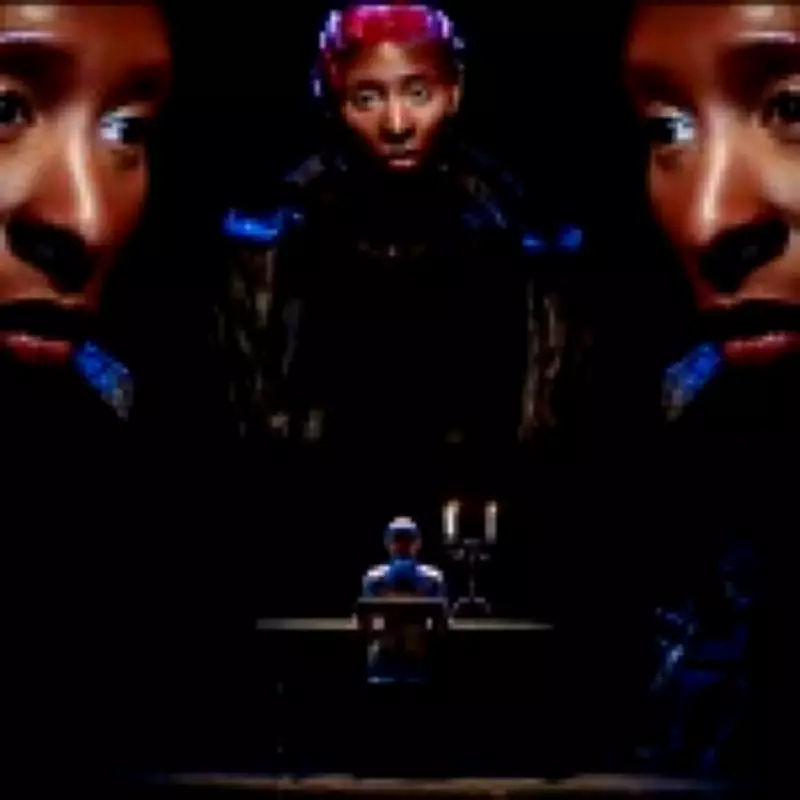
Williams constructs the show around a complex dialogue between live action and pre-recorded film, requiring Erivo not only to craft distinct physical and vocal identities for each character but also to hit cues with forensic precision so that filmed versions of herself can respond in perfect synchronization. Cameras follow her constantly, capturing footage that is projected instantly onto a towering screen, while other sequences have been pre-shot and must align seamlessly with her live delivery. Certain characters exist solely in the filmed realm, never quite sharing the same physical space as the live performer before us—a subtle nod to vampiric lore where some creatures cast no reflection in mirrors.
Visual Beauty and Narrative Structure
Visually, the result is frequently beautiful, and the solo concept dovetails neatly with the novel's epistolary structure: whoever is 'writing' a journal entry or letter exists live before us, while the recipients materialize on the vast screen behind, flickering into being like thoughts made visible. That interplay between presence and projection creates a hierarchy of perspective where only one viewpoint feels fully corporeal at any given moment, anchoring us always to a single consciousness, one pen scratching across paper, while others hover just beyond reach.
Additionally, the scale of the projection ensures there are few bad seats in the theater, and the interplay between live and filmed action enables artistic flourishes that would be impossible in a conventional staging. For instance, a dreamlike sequence between Dracula and Lucy layers recorded and live movement to disorienting effect, while a brief moment where Erivo steps to the edge of the stage and sings as Dracula, stripped of technological scaffolding, feels quietly spellbinding precisely because it breaks the established pattern.
Erivo's Excellence and Technical Demands
Unsurprisingly, Erivo's excellence remains the least shocking element of the evening. She is magnetic, meticulous, and emotionally lucid throughout, discovering flashes of humor and menace even while juggling an almost unmanageable technical load. At their peak, her transformations between characters can be startling, with Jonathan's nervous energy giving way to Mina's controlled intelligence with such clarity that it briefly becomes possible to forget they share the same body.
Simultaneously, the feat inevitably encounters limitations. There are moments that could be deeply resonant in the hands of an actor of Erivo's caliber but instead seem rushed or superficial. Some male characters, particularly Seward and Harker, blur at the edges, and the first appearance of Van Helsing in long white hair and beard drew involuntary giggles. There is something faintly cartoonish about certain disguises, and in those instances, you can sense how precarious the entire enterprise truly is.
Walking the Knife's Edge
The production exists on a knife's edge between audacious and absurd, occasionally wobbling and threatening to tip from bravura into unintended comedy, partly because the technical demands are so formidable. Each exchange with her on-screen counterparts depends on near-perfect timing, and as a result, over the course of the evening, there were perhaps a dozen noticeable slips: a stumbled word, a rushed beat, a pause hanging slightly too long. In another context, these might feel disruptive; here, it seemed remarkable that there were not more, given that Erivo is effectively reciting the better part of a novel while executing intricate blocking and rapid costume changes.
Thematic Resonance and Human Cost
Nevertheless, one could argue that the one-person concept does more than showcase stamina; it reframes the story in a way that feels thematically pointed. Dracula is a tale of repression, contagion, and desire pushing against propriety, of identities fracturing under pressure. Observing a single performer embody predator and prey, purity and corruption, shifts the drama inward. Mina and Dracula sharing a face makes their connection feel less like a battle across a room and more like a struggle within one psyche. The constant doubling—a live body here, a filmed apparition there—reinforces that sense of fragmentation, as though we are witnessing a mind at war with itself. With Erivo, openly queer and fluid in her masculinity and femininity, inhabiting every role, the novel's homoerotic undertones surface with a clarity that feels both modern and radical.
By the final stretch, however, I found myself increasingly aware of the human cost, and when the standing ovation arrived—thunderous and prolonged—the applause carried a note of secondhand exhaustion. In the foyer afterward, conversations revolved less around Lucy's tragedy or Mina's ordeal than around how Erivo could possibly sustain this for the duration of the run. Ultimately, the car does get moved out of the ditch. The narrative lands, the imagery lingers, and the audience leaves impressed—but I would be curious to see this adaptation distributed among a full cast, released from the tension of its own audacity, with some breathing room for a towering talent like Erivo to truly act.
Still, if you arrive at the Noël Coward Theatre prepared to marvel at the feat as much as to lose yourself in the tale, you may find the sheer audacity of Erivo's undertaking is worth the price of admission.