How Black Watch Conquered the Globe: The Epic Iraq War Play's Journey
In 2006, the National Theatre of Scotland (NTS) launched a theatrical phenomenon that would resonate across continents. Black Watch, a gripping drama inspired by tragic events at Camp Dogwood in Iraq, masterfully portrayed young soldiers on the frontline. With a pool table transforming into a tank, audiences were transported from a Fife pub to a war zone, where a letter from home became the most heartbreaking moment.
The Genesis of a Masterpiece
Vicky Featherstone, the founding artistic director of NTS, recalls the spark of inspiration. "On my first day in 2004, I saw a Glasgow Herald front-page article about Tony Blair merging Scotland's regiments into the Royal Regiment of Scotland," she says. "On page three, a sad story detailed three Black Watch soldiers and an Iraqi translator killed by an IED. The gap between those pages held a story that demanded to be told." Featherstone immediately contacted playwright Gregory Burke to explore this narrative.
Burke, whose voice mirrored the soldiers from Fife and Tayside, embraced the challenge. "The Black Watch soldiers were the people I grew up with," he explains. "I didn't know them personally, but in our first meeting, one recognized me from school." The play was rooted in Scottish theatrical traditions, drawing from works like Bill Bryden's The Ship and John McGrath's The Cheviot, the Stag and the Black, Black Oil, blending tears, laughter, music, and surprise.
Creative Challenges and Breakthroughs
Director John Tiffany aimed to revive the big Scottish theatre event show, but initial rehearsals revealed uncertainties. "I had no idea how to do it," Tiffany admits. The team struggled to find the right interviewees—soldiers who were young, had served in Iraq, were articulate, and not too institutionalized. A pivotal moment came during a late-night session with movement director Steven Hoggett, where red wine helped clarify their vision.
Designer Laura Hopkins faced the task of creating a versatile set. "The pool table allowed us to switch between the pub and war scenes," she notes. "We tried building a tank on top, but nothing worked until we realized the tank's interior dimensions matched the table's footprint. Having soldiers emerge from inside the pool table was the breakthrough."
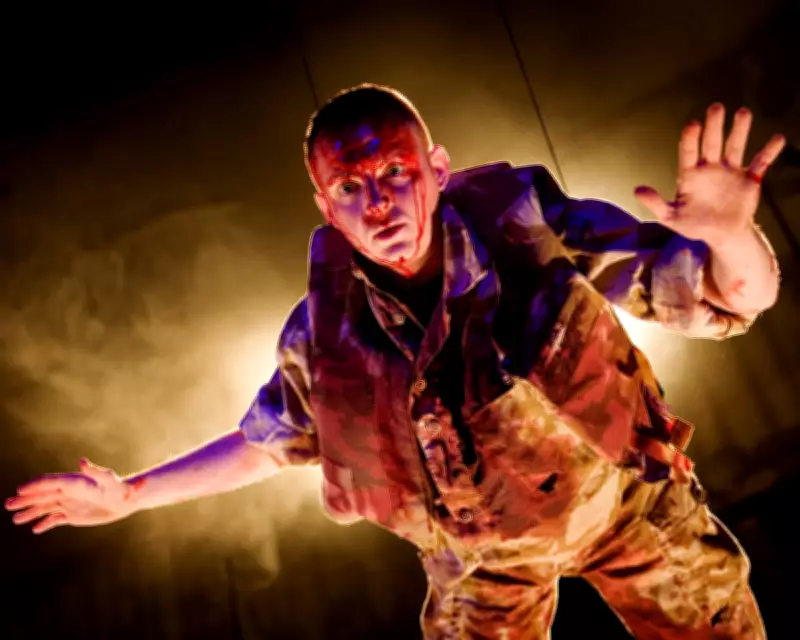
The cast, including actors Brian Ferguson and Emun Elliott, underwent rigorous training to embody soldiers authentically. Ferguson's character, Cammy, was based on a real soldier whose story added depth. "Meeting him changed everything," Ferguson says. Elliott adds, "We had to look like soldiers, not actors. Steven Hoggett's grueling workouts got us into the best shape of our lives." They even learned to march from a Black Watch regimental sergeant major, whose initial brutality gave way to pride.
The Premiere and Global Impact
Despite doubts before the dress rehearsal, the first preview was a triumph. Burke recalls, "When the knife came up through the pool table, audiences gasped. John and I exchanged a look—we knew we were onto something." Tiffany describes how the audience owned the play, leaping to their feet in a moving display of connection.
Featherstone reflects, "Producers immediately wanted it. The impossible Black Watch, never intended to tour, went on a seven-year global tour." In Glenrothes, families of fallen soldiers attended, with one mother thanking the team for bringing her son back for two hours. Elliott shares a poignant moment: a father gave him a keyring with photos of his son, a gesture both tragic and beautiful.
The play's reach extended to New York, where Burke heard Lou Reed and Rupert Murdoch attended the same night. "In the US, where military veneration is strong, the play landed well, especially in places like Austin, Texas, with its veterans program," he says. Featherstone acknowledges the SNP government used it as soft power but emphasizes, "We were asking difficult questions about Scottish identity without censorship. It was a platform that exceeded expectations for a national theatre in its second year."
Legacy and Influence
Black Watch opened doors for its cast and inspired a generation of talent. Elliott notes, "It gained me American management and an agent. Even today, auditions mention how much they enjoyed the play." Ferguson adds that directors recognize Black Watch actors for their confidence and vitality with text.
Jackie Wylie, current artistic director of NTS, states, "Black Watch inspired a generation. Jack Lowden, who played Cammy at 20, started his career with it. The play put Scottish theatre on the global map and defined our company." From its humble beginnings to international acclaim, Black Watch remains a testament to the power of theatre to confront hard truths and connect humanity.