After Miss Julie Review: Class Warfare Overshadows Passion in Marber's Update
Patrick Marber's 1995 adaptation of August Strindberg's classic tragedy Miss Julie receives a compelling revival at London's Park Theatre, where the production emphasizes British class conflict over sexual tension. Originally written for television, Marber's version condenses the drama into a compact 75 minutes while transporting the action to a country estate on the historic night of the Labour Party's 1945 election landslide.
A Shift from Strindberg's Original Vision
Strindberg famously claimed he wrote Miss Julie during a month of "enforced celibacy" in 1888, resulting in a play brimming with snarling, pent-up sexual energy. Marber's adaptation, however, redirects this intensity toward a meticulous exploration of very British class warfare. The production unfolds in an intimate, in-the-round staging designed by Eleanour Wintour, creating an atmosphere where every subtle interaction feels magnified.
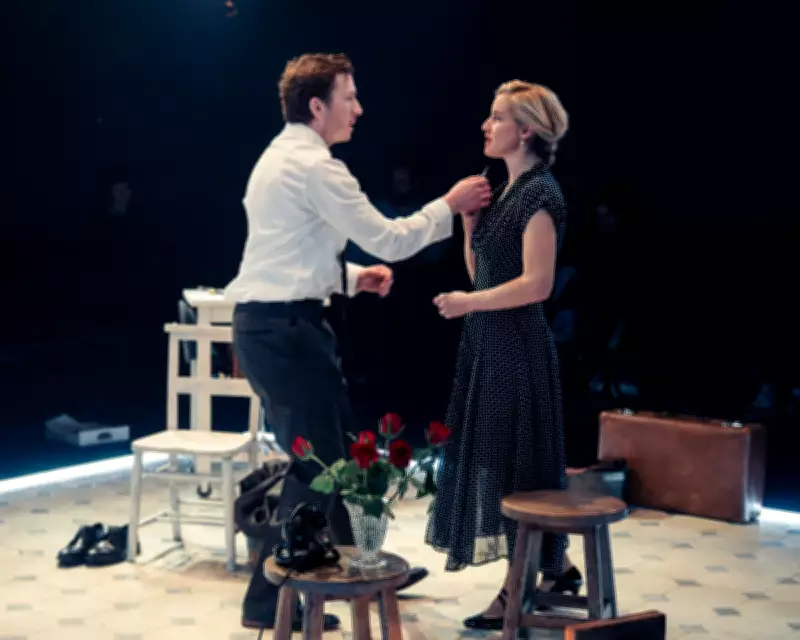
Director Dadiow Lin brings a malicious clarity to the psychological dynamics at play. The set design cleverly reveals telling details, such as John's red fingermarks on Julie's shoulder, symbolizing the physical and emotional imprints of their fraught relationship.
Characters Trapped in Social Hierarchies
The story centers on John, the chauffeur played with simmering resentment by Tom Varey, and Julie, the daughter of a Labour peer portrayed with wheedling vulnerability by Liz Francis. As the staff celebrates the election victory offstage with tunes like Chattanooga Choo Choo and In the Mood, John helps himself to his master's finest burgundy, cynically comparing it to Churchill: "robust, full-bodied – and finished."
Julie descends to the servants' quarters in a full-skirted black frock, demanding attention with a voice described as "thin-beaten silver." Francis masterfully portrays Julie as both provocateur and victim, drinking heavily and flirting shamelessly while asking, "Do you think I'm a dreadful lush?" and "Do I shock you?" John's retort – "Not as much as you'd like to" – sets the tone for their combustible relationship.
The Psychological Underpinnings of Class Conflict
John is engaged to Christine the cook, played with excellent weariness by Charlene Boyd, yet he and Julie spiral into a night of passion followed by a bleak morning after. Marber's writing shares the rebarbative gleam of his earlier works like Dealer's Choice and Closer, with dialogue that turns particularly sharp when at its meanest. John sneers, "You'd shame a two-bit tart in Piccadilly," while Julie derides his beer-swilling habits and "demob disaster" of a suit.
Despite these barbs, the production doesn't fully capture Strindberg's unhinged, poisonous desire. While Julie might be "off her rocker," the tragic elements don't land with the inevitable force of the original. Instead, the drama finds its pulse in class animosity. The 1945 election might promise societal change, but these characters remain trapped in long-ingrained patterns of deference and command.
A Country on the Cusp of Change
Varey's performance particularly shines in moments of mortification, as his eyes narrow with suppressed rage. He jumps to attention with shoe polish and coffee grinder whenever his master calls, embodying the servitude that persists despite political upheaval. Marber delineates the psychological pile-up of Julie's upbringing, highlighting how being "daddy's special girl" has shaped her fragile identity.
The production ultimately suggests that while Britain stood on the brink of transformation in 1945, individual characters couldn't escape their social conditioning. After Miss Julie runs at Park Theatre until 28 February, offering audiences a thought-provoking examination of how class divisions can prove more enduring than political promises or personal passions.