Aether, the dizzyingly clever Edinburgh Fringe smash that has now landed at London's Jermyn Street Theatre, presents a dense, intellectually fizzing exploration of women's forgotten contributions to science. Written and directed by Emma Howlett, this production frames the universe as an uncaring expanse where human consciousness is merely a fleeting speck.
A Lecture on Cosmic Scale
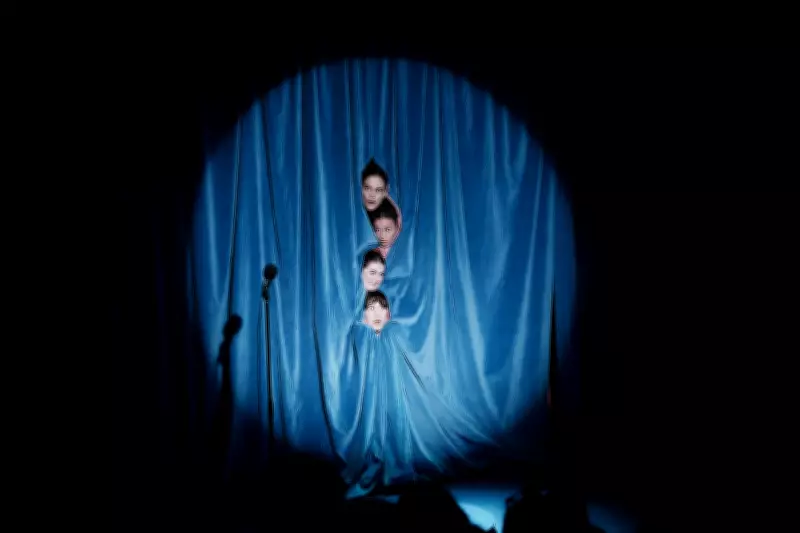
The play opens with four particles taking the stage to declare humanity's insignificance in the vast cosmos. Structured as an interactive lecture, audience members receive whiteboards and are asked mid-performance to sketch Ptolemy's geocentric model of the universe. Within this innovative conceit, Howlett weaves a patchwork of vignettes that intercut across time, gender, scientific discipline, and cosmic scale.
Historical Figures Brought to Life
The talented ensemble cast transforms through accents, physicality, and drawn-on moustaches to portray real women who wrestled with the universe's secrets. These include Hypatia, the philosopher murdered in 415 AD for her pagan scholarship; Vera Rubin, whose evidence for dark matter was denied proper recognition; and Adelaide Herrmann, the illusionist who took over her husband's act after his death to become one of her era's most celebrated performers.
Each historical figure has been carefully selected to illustrate the continued cost of curiosity, particularly within the context of systemic sexism in STEM fields. Beyond the play's broader commentary on gender discrimination in science, these portrayals highlight the personal sacrifices made by women throughout history in their pursuit of knowledge.
Character-Driven Moments Shine
Where Aether finds its strongest footing is in its character-driven moments rather than its thematic ambitions. Gemma Barnett delivers a dazzling performance across multiple roles, with her portrayal of Hypatia before her death proving particularly searing. It's in these intimate character studies that Howlett's writing has the most room to breathe and resonate with audiences.
The Central Relationship
The emotional core of the production revolves around a present-day relationship between Sophie, a PhD student searching for answers through formula and data, and her girlfriend. Their heated argument about Plato's allegory of the cave represents the play's central tension: Sophie wants to drag everyone into the light of understanding, while her girlfriend finds beauty in embracing the unknown.
This relationship's gradual corrosion under the weight of Sophie's obsessive pursuit of answers feels both inevitable and earned by the play's conclusion. The personal stakes ground the production's more abstract intellectual explorations in recognizable human experience.
Production Elements
Howlett's direction demonstrates noticeable assurance, with creative use of the full stage and audience interaction lending the production a fun restlessness. Stylish, tightly choreographed dance sequences provide rhythm and texture, though they also contribute to the production's essential choppiness and fragmented structure.
The lighting design by Ed Saunders and sound design by Sarah Spencer perform considerable heavy lifting given the minimal set, though the genuinely talented ensemble cast carries much of the production's weight through their versatile performances.
Intellectual Density
The production's most significant challenge lies in its heavy intellectual density. The script moves at a twisty, pacey clip that can sweep audiences along without always providing clear orientation about where they've ended up or why particular moments matter. This can create a sense of disorientation that mirrors the play's cosmic themes but occasionally obscures its narrative throughlines.
Despite this structural challenge, Aether and its creative team demonstrate genuine, loving sincerity in their better moments. The production runs for 1 hour and 5 minutes at Jermyn Street Theatre through early April 2026, with tickets priced at £25 (£22 concessions). Performances continue through March with both matinee and evening showtimes available.