Julia Kochetova's Intimate Lens on Ukraine's War
Ukrainian photographer Julia Kochetova brings a deeply personal perspective to documenting Russia's invasion of Ukraine, capturing the conflict with a blend of frontline intensity and human vulnerability. Her work, featured in the exhibition "War Is Personal" at Foam in Amsterdam from March 6 to May 25, 2024, offers a unique view from within her homeland, where she lives in Kyiv and has organized more funerals than anyone should in a lifetime.
A Photographer Rooted in Conflict
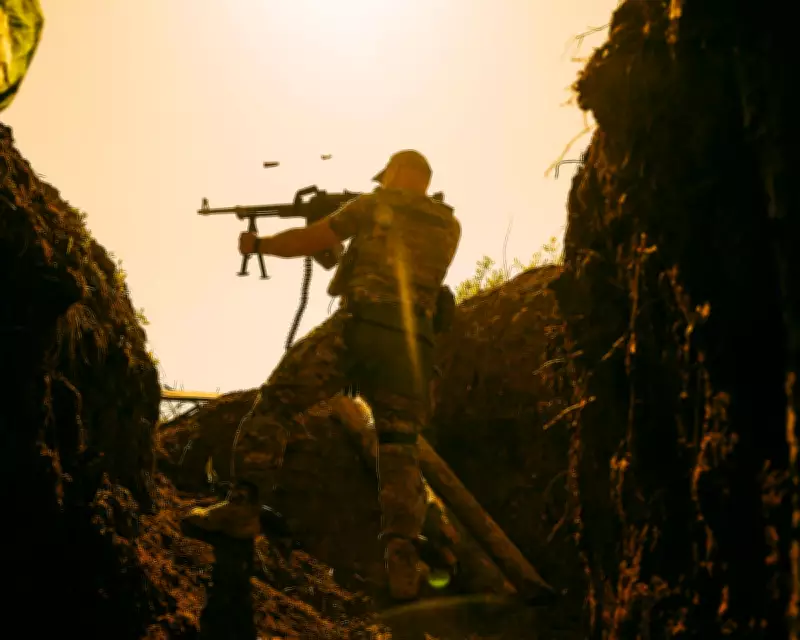
Born in Vinnytsia and now 32 years old, Kochetova's life is intertwined with the war that escalated in February 2022. Unlike foreign journalists, she shares the scars of those she photographs, having planned to study art in Germany but turning to photojournalism as the conflict consumed her country. Her assignments range from ballet dancers at Kyiv's opera house to trenches in Donetsk, where she provides battlefield first aid if needed.
Kochetova's driving style is chaotic yet shrewd, and she balances her work with small comforts like manicures in Kyiv. Her existence is marked by relentless Russian attacks on infrastructure, often waking without electricity in freezing homes. This personal stake infuses her images with an authenticity that challenges the distance of traditional war reporting.
Capturing Moments of Love and Loss
One of her most poignant photographs shows a soldier comforting a woman in an underground car park during a drone attack in Kyiv. For Kochetova, this image symbolizes love and resilience, as strangers protect each other amid chaos. She recalls the terrifying novelty of Shahed drones and the sense of indomitability she felt while taking the shot.
Another haunting image from a funeral in Kyiv depicts a girl staring into the coffin of two-year-old Anhelina Halych, killed in a Russian missile strike. Kochetova describes this as a moment where breathing feels impossible, capturing the shared pain of a war where children bury children. She emphasizes gentleness in her approach, avoiding close-ups to preserve dignity.
The Human Cost and Artistic Response
Kochetova's work extends beyond photography to include poems, drawings by artist friend Oleksandr Komiakhov, and immersive elements in her exhibition. She rejects the idea that her photos can change history but believes in documentation as an antidote to Russian false narratives. For instance, her images of mass graves in Izium convey the untold stories of victims, with sunlight and pine trees creating a paradoxical calm.
Her portraits of soldiers reveal vulnerability, such as a tearful man receiving oxygen in Chasiv Yar or a wounded soldier with swollen eyes reminiscent of religious paintings. Kochetova explores themes of dreams and dignity, asking what these men see when their eyes are closed. She also captures lighter moments, like soldiers with Hello Kitty patches during training, highlighting the youth forced into conflict.
Roots and Resilience
Kochetova sees herself as a tree with roots in Ukraine, refusing to leave despite the war. A self-portrait from February 2022 shows her alone and terrified in a hotel room, later reimagined in a drawing by Komiakhov that positions her camera as a companion. This reflects her belief in connection through art, even in the darkest times.
Her photographs, such as one of a soldier amid blue and yellow flowers in Donetsk, find beauty and hope amid devastation. Kochetova's work is not just about war but about blooming on ashes, building anew after ruin. Through her lens, she invites viewers into an intimate understanding of Ukraine's struggle, making the personal universal.