Andreas Schager: The Accidental Wagnerian Hero Making His Royal Opera Debut
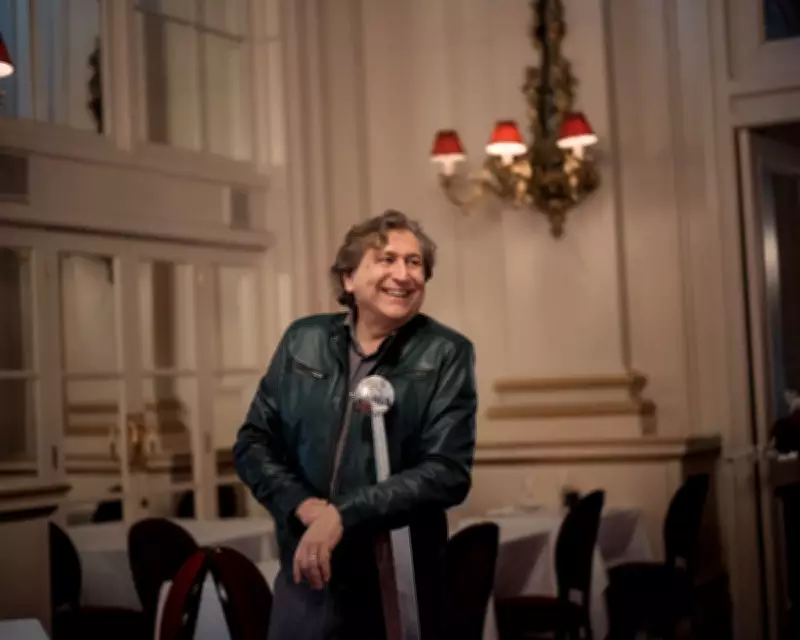
Andreas Schager bursts into a cluttered back office at London's Royal Opera House, his handshake firm and energetic. "Sorry I'm sweaty," he grins. "I've been forging Nothung!" For the world's most sought-after Wagnerian tenor, hammering out a magical sword is just part of a typical morning. Currently in rehearsals for Siegfried – the third installment of Covent Garden's new staging of the Ring Cycle – Schager is poised to slay dragons and rescue maidens, all before lunch.
An Unconventional Rise to Opera Stardom
At 54, Schager defies the norms of the opera world. Unlike most Wagner singers, whose careers evolve gradually over decades, Schager's ascent was meteoric. In 2013, he transitioned from minor Wagner roles in small houses to the Berlin State Opera. Booked initially for Götterdämmerung, he was unexpectedly thrust into the lead role in Siegfried with only minutes' notice, delivering a flawless performance that earned a roaring ovation from a notoriously demanding audience.
Veteran agent Boris Orlob notes that Wagner singers typically "take the stairs, not the elevator" to success. Schager, however, shot straight to the penthouse. His reputation solidified with performances at Milan's La Scala and the BBC Proms, quickly filling his schedule with prestigious engagements. "There are not many Siegfrieds and Tristans around," Schager reflects, "so my schedule became very busy, very fast-paced."
From Farm Life to Operetta: A Humble Beginning
Schager's journey to opera stardom was entirely accidental. Growing up on a farm in rural Austria, music was a family pastime, but he never considered it a career. He studied history and theology at university in Vienna before joining a chorus, where his curiosity about vocal technique sparked his passion. "I heard someone with a fantastic voice," he recalls, "and asked, 'How do you do that?' That was how it started."
His early career was in operetta, performing roles like Orpheus in Orpheus in the Underworld and Ottokár in The Gypsy Baron. This decade of light, frothy productions taught him to act, dance, and sing simultaneously – skills that would later prove invaluable. "I never had sharp elbows," Schager admits. "I never thought, 'I've got to get to the top and be the best singer in the world.'" But when an audition for Siegfried arose in 2012, he embraced the challenge, viewing the epic role as equivalent to two operetta performances.
Embracing Siegfried: The Operetta Hero of the Ring Cycle
Schager sees Siegfried as the "operetta hero of the Ring Cycle." "He wants to have fun, kill the dragon, meet the girl," he explains. "He doesn't even know what a woman is yet, but he still wants one! Everything is exciting for him." This perspective allows Schager to infuse the character with joy and activity, drawing on his operetta background to make Siegfried relatable and dynamic.
Despite Siegfried's reputation as a "bullying adolescent" – a view shared by scholars like Michael Tanner – Schager finds sympathy in his purity and emotional depth. "He's a young man full of emotions," Schager says. "He discovers that Mime has been lying to him his whole life. That's a very difficult psychological situation." The character's evolution from innocent to cynical warrior is conveyed through raw emotion, not forced technique. "It's important not to shape the tone," Schager emphasizes, "but to let the emotions produce it."
Looking Ahead: A Grueling Schedule and Historical Honours
With over a decade of Wagner experience and more than 10 Ring Cycles completed, Schager continues to seek fresh interpretations. In London, he collaborates with conductor Antonio Pappano and director Barrie Kosky, whose staging he describes as "old-fashioned in a very good way," allowing the music and story to shine.
The coming months are packed with five different Wagner roles, including the title role in Rienzi at the Bayreuth Festival – a historic first for Wagner's own opera house. Schager acknowledges the opera's charged political history but stresses, "Wagner is not responsible for what other people have done with his music."
As rehearsal calls, Schager dashes off, his sandwich untouched. An accidental hero perhaps, but one whose passion and talent ensure those dragons won't slay themselves. Siegfried runs at the Royal Opera House from 17 March to 6 April, marking another milestone in Schager's extraordinary career.