Orchestras have eagerly embraced this year's anniversary of American Independence, or "Freedom 250" as marketers dub it, with a repertoire of big names and broad appeal. A year of Gershwin, Barber, Bernstein, Adams, and Glass promises full halls. Kazuki Yamada and the audience of Friday night's generously filled Symphony Hall in Birmingham experienced this firsthand.
John Adams' Harmonium as centrepiece
John Adams' 1980 landmark experiment in maximal minimalism, Harmonium, was the advertised centrepiece, set to travel to the Proms with the City of Birmingham Symphony Orchestra later this month. The framing, however, was a curiosity conceived by Yamada as two facing musical panels.
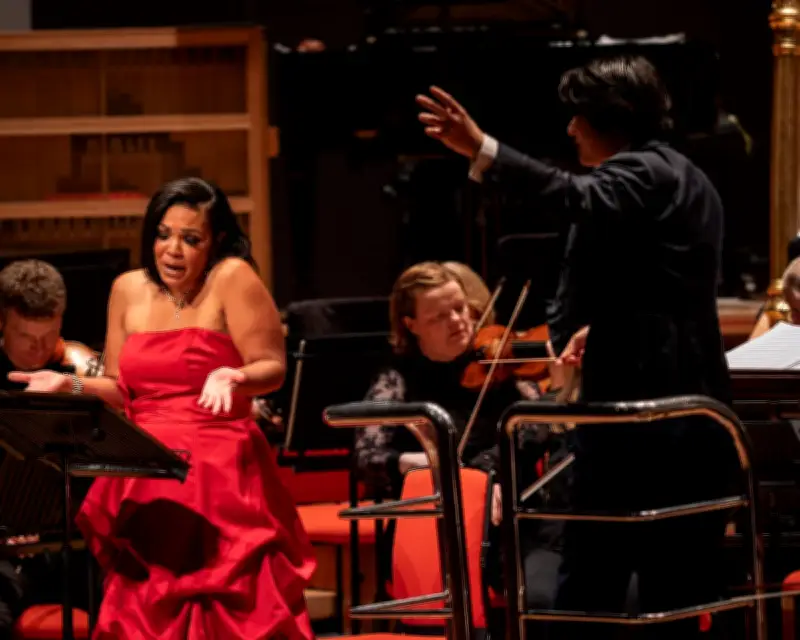
Elegantly, the craggy monumentality of Aaron Copland's Fanfare for the Common Man ran straight into the composer's Lincoln Portrait. President Lincoln's own words, delivered with poised emphasis by soprano Janai Brugger, sat against a misty backdrop of middle-distance strings and yearning woodwind solos. Beautifully balanced and paced, it stirred a hall of Britons to borrowed patriotism.

Parallel sequence with Tower and Price
The parallel sequence prefaced the European premiere of Florence Price's 1941 song-cycle The Heart of A Woman, newly orchestrated by Lior Rosner, with Joan Tower's Fanfare for the Uncommon Woman from 1987. Noisier than the Copland, the Tower is an unapologetic feminist statement, a musical refusal to apologise for taking up space in the classical concert hall. Thematically, it was the perfect curtain-raiser for the Price; stylistically, it was a judder from boisterous modernity to parlour sentimentality steered by texts of cloying, coupleted sweetness, many by Langston Hughes.
The cycle captures Price on the cusp of music theatre, tipping over almost entirely into Broadway in the flirtatious, upbeat "Don't you tell me no," offering full glorious Technicolor in the rhapsodic "My dream" and gleaming fantasy "To my little son." It is pleasant enough, especially when richly sung by Brugger, but the additional orchestral scale puts pressure on these miniatures that their slight substance cannot fully support.
From micro to macro in Adams' Harmonium
From micro to macro, the thrilling scale of the Adams work emerges. Harmonium is essentially a concerto for choir and orchestra, a not-so-short ride in a machine that bends time: freeze-framing in "Because I could not stop for Death" and fast-forwarding dizzily in "Wild Nights." Yamada's incisive energy is a good fit, but as yet the CBSO Chorus feels timid, on the back of the beat. The Proms await for the full sonic juggernaut.