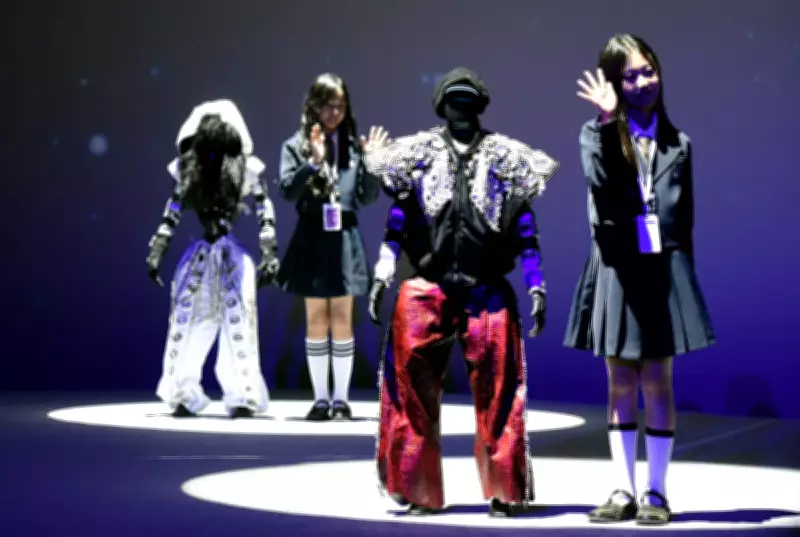
Four child-sized humanoid robots take the stage at an arena in eastern Seoul, and as the opening beats of a song by K-pop star G-Dragon begin, they start to dance. Arms swinging, legs stepping in sync, heads bobbing, wigs and baggy clothes swishing, until – mid-performance – one of them seemingly malfunctions and has to be removed from the stage.
World's First Robot Theme Park
Welcome to Galaxy Robot Park, a new 16,500 square metre facility in Gangdong district that its creators claim is the world's first robot theme park. It represents an ambitious – some might say audacious – vision of a future in which robots don't just assist humans but entertain them, perform concerts across continents simultaneously, and even walk runways.
Behind the project is Galaxy Corporation, an entertainment company that positions itself as an 'enter-tech' firm, blending entertainment with technology. It manages megastar G-Dragon, as well as Taemin from the group Shinee and actor Song Kang-ho, known to western audiences for his role as the father in Parasite.

K-pop as a Testing Ground
K-pop has long served as a testing ground for experimental tech, from SM Entertainment's Aespa, which pairs real members with virtual avatars, to fully virtual boybands like Plave. At the opening show, the robots execute their moves with surprising fluidity across a repertoire of different songs, including G-Dragon's Home Sweet Home and Taemin's Advice and Idea.
'We're planning three to six K-pop concerts daily, over 1,000 shows annually,' Choi Yong-ho, Galaxy's chief executive and self-styled 'chief happiness officer', tells reporters. 'By the end of this year, we're planning to take them on a world tour.'
Audience Reception and Cultural Experiment
Cha Woo-jin, a music critic and industry analyst, is wary of whether audiences will embrace the shows around the world, but sees the ambitious plan as both a cultural and economic experiment. 'If you put a robot in an Elvis museum, fans would be repulsed,' he says. 'But K-pop is a visual packaging model, so robots feel less alien.' A robot tour, he says, would be like a cover dance crew – the groups that replicate routines of famous K-pop performers – but without hotel bills or per diems.
Beyond the arena, the park offers various robot experiences. Robot valets welcomed guests at the door. Others, including robotic dogs, roam around the outdoor areas playing with visitors. A robotic arm with a face attachment draws my portrait, chatting with me while it works. The result is highly accurate, but I feel it makes me look older than I am.
Up the hill, there's also a boxing ring where visitors can control humanoid fighters through a mirroring system, watching their movements replicated in real time as the machines battle each other. At one point a punch makes a glove fly off into the crowd. One robot falls off the stage, but recuperates and gets back into action.
Future Plans: Robot Fashion Shows and World Tours
Galaxy also plans to stage what it calls the world's first robot fashion show in late May, followed by the launch of a robot fashion label. Choi offers few details about how exactly robots will model clothing or what a robot fashion brand might entail. The broader vision involves deploying K-pop performing robots to places where human stars cannot easily travel, including war zones. Once choreography is programmed into one robot, all robots worldwide can instantly learn and perform it, enabling concurrent shows across multiple countries.
The real question for music critic Cha, is whether robots can replicate K-pop's essential ingredient: emotional connection with fans. 'That will determine if this is a genuine cultural shift or just a novelty show.'