The Real Meaning Behind Justin Bieber's Controversial Coachella Performance
Justin Bieber's highly anticipated Coachella 2026 headlining set has ignited intense debate across the music world. While numerous critics dismissed the show as "low-effort," "a snoozefest," or even "garbage," a deeper analysis reveals that Bieber's performance might represent one of the most self-aware artistic statements in festival history.
A Performance That Divided Audiences
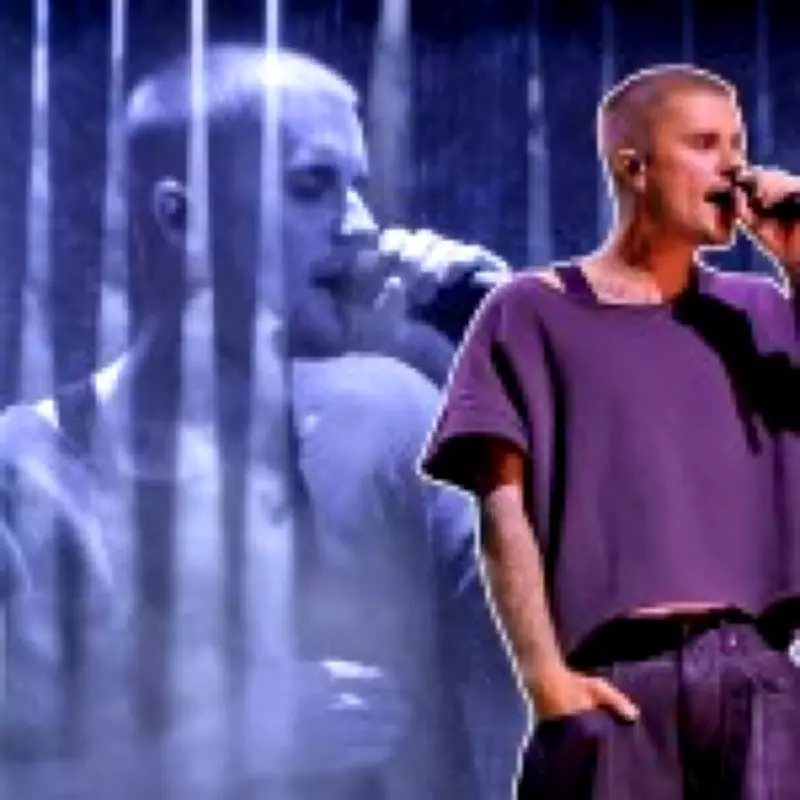
The 32-year-old Canadian pop star, making his major live performance comeback alongside fellow headliners Sabrina Carpenter and Karol G, delivered a set that deliberately challenged traditional concert expectations. Midway through his show at the iconic California festival, Bieber pivoted to an almost absurdly literal presentation of his back catalog: he played his classic music videos directly from YouTube on a laptop, complete with buffering delays, as if dragging his own mythology back through the very technological portal that created it.
Songs like Baby, Sorry, and Never Say Never were not performed conventionally but instead mediated through the technology that originally made them ubiquitous. Bieber even performed covers that led to his discovery—Chris Brown's With You and NeYo's So Sick—harmonizing with the pre-teen version of himself from those early videos. At one particularly meta moment, he mimed the viral "it's not clocking..." paparazzi video word for word as it played behind him, offering commentary on his early-internet celebrity.

The Online Reaction: From Disappointment to Admiration
Social media responses revealed starkly divided opinions. Many fans expressed frustration, with one user declaring, "The way Justin Bieber is just doing karaoke to his own songs at Coachella... I'm so disappointed!!" Another criticized, "Justin Bieber supposedly got paid TEN million dollars to sing at Coachella only for him to show clips on a laptop? This is below bare minimum." Additional comments labeled the performance "lazy" and questioned why he was selected as a headliner given the apparent lack of production value, outfit changes, or backup dancers.
Yet other observers recognized something more profound. One commentator noted, "Justin Bieber currently has a laptop set up on the Coachella main stage, pulling up his own YouTube videos and basically karaokeing whatever comes to mind from his searches. No setlist — just whatever he finds on YouTube. A few videos have even had to buffer. Honestly... kind of incredible to watch." This perspective suggests that what some dismissed as laziness might actually have been intentional artistic commentary.
Why Bieber's Performance Was Actually Brilliant
Those criticizing the performance as mere "YouTube karaoke night" are missing the powerful statement Bieber was making. His career has always been inseparable from the specific technological moment in which he became famous—the late 2000s and early 2010s, when the internet was transitioning from novelty to ubiquity. Bieber's staying power has been less about musical innovation and more about perfect timing, and his Coachella set brilliantly highlighted this reality.
He emerged as a phenomenon in what now feels like the last days of internet innocence—before algorithms mastered manipulating human behavior, before every teenager became a micro-influencer, before democratic institutions faced existential threats. Today's fractured music landscape, mirroring our divided political reality, lacks unifying cultural figures. Festival planners increasingly bank on nostalgia for simpler times, and Bieber's music and persona perfectly encapsulate the early 2010s era that many now romanticize.
Bieber as the Ultimate Symbol of 2010s Internet Culture
Why does Justin Bieber remain so synonymous with the 2010s? His 2010 debut hit Baby serves as a portal to an era when computers still occupied dedicated spaces in homes, and the internet felt more like a playground than an addiction. Many millennials and early Gen Z members recall gathering around family computers with friends after school, dancing to the Baby music video—exactly the communal experience Bieber recreated for the massive Coachella crowd.

Bieber's fandom represented the first truly hyper-online teen phenomenon. In 2013, Twitter reported he was the most-tweeted-about person globally. His fans dominated hashtags, organized mass voting campaigns, and made him the first artist to reach one billion YouTube views (with Baby again). This wasn't just fandom; it was identity formation through digital community building—something no previous teen idol had achieved at this scale.
The internet that created Bieber's career was still novel enough not to be oversaturated with competing content. Today's teenage hyperfixations burn out quickly in niche online spaces, but in the early 2010s, Bieber became inescapable even for those uninterested in his music. He achieved a level of global fame that seems impossible in today's fragmented cultural landscape.
The Nostalgia Economy and Bieber's Place in It
What's particularly striking about Bieber's Coachella performance is how quickly he has become a nostalgia act. While musical nostalgia isn't new, the accelerated cultural turnover of the internet age has compressed these cycles dramatically. In the 1990s, people looked back twenty years to the 1970s; by the 2010s, Tumblr was already rebranding the 1990s just a decade later. Bieber embodies this acceleration perfectly.
His recent albums—Swag and Swag II—aren't attempts at musical evolution but rather Easter eggs for dedicated Beliebers, tributes to the phenomenon that was Bieber Fever. Even his 2021 hit Peaches was hailed by critics as a "grown-up sequel to Baby," proving that his artistic narrative always circles back to his initial cultural impact.
While contemporaries like Taylor Swift, Drake, and Lady Gaga are framed as evolving artists, Bieber is typically discussed in terms of "returns" and "comebacks"—largely because his initial fame was so monumental that there was truly nowhere to go but down. He emerged during what now appears as a historical hinge moment: the optimistic Obama years, before Brexit and Trump reshaped politics, when many genuinely believed in continuous progress.
Why This Performance Resonated Deeply
In our current era of cultural and political anxiety, with modern music offering little escape from contemporary realities, fans increasingly gravitate toward nostalgia rather than new pop stars. The "feral energy" of the Coachella crowd during Bieber's set proved this powerfully. While die-hard Beliebers cheered enthusiastically, they weren't alone—those of us anxious about the present, craving the perceived simplicity of the past, sang along just as loudly.
Bieber's performance acknowledged a difficult truth: few people remain fans of Justin Bieber the current artist; instead, they're fans of 2010—of their own youth, of early internet communities, of a specific cultural moment. By literally playing his old YouTube videos with all their technological imperfections, Bieber didn't just perform his hits; he performed the very mechanism of his fame, offering audiences not just songs but a time capsule to a recently lost era.
As Coachella's second weekend approaches, fans will undoubtedly line up once again for the fleeting chance to feel like it's 2010 again—proving that in our fragmented present, collective nostalgia might be the most powerful cultural force available.