Lisette Oropesa delivers a dazzling performance as Elvira in Richard Jones's new production of Bellini's I Puritani at the Royal Opera House, London, marking the opera's first staging in nearly 35 years. The production, which runs until 19 July, features Francesco Demuro as Arturo and Andrzej Filończyk as Sir Riccardo Forth.
Bellini as Operatic Sport
Bellini's 1835 opera demands extreme vocal gymnastics, with high notes, agility, and endurance akin to Olympic sport. Forget Puccini and Nessun Dorma: Bellini is the composer for a World Cup, as singers spin endless melodies and fire off vocal curlicues. The Royal Opera's production boasts fantastic singing, but it's the orchestral detail that truly shines under conductor Riccardo Frizza, in his house debut. Frizza creates buoyancy and visceral momentum without pushing the voices.
Jones's Production and Design
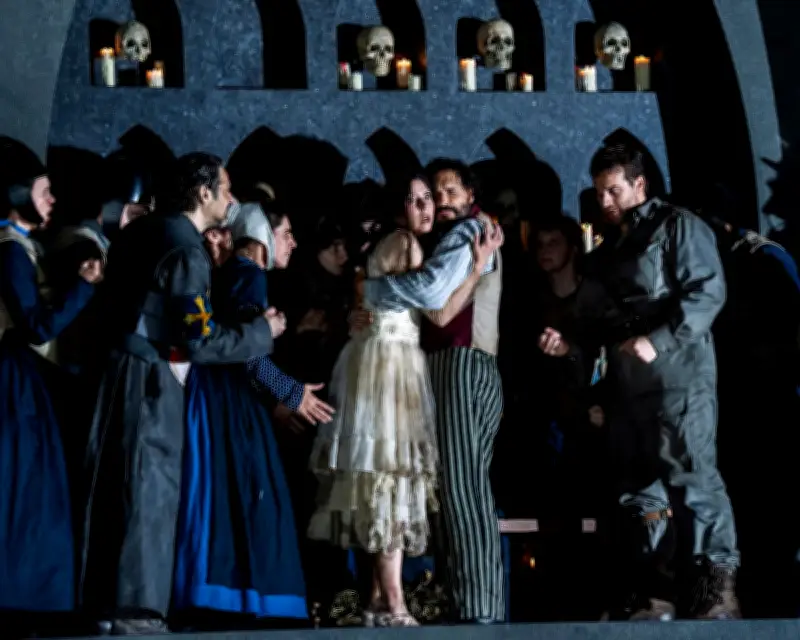
Richard Jones's staging achieves engaging immediacy, though it doesn't hang together neatly. The original story pits Roundhead against Cavalier in 17th-century Plymouth. Jones's interpretation places the action in an uncertain civil war, thanks to Hyemi Shin's allusive sets and Nicky Gillibrand's costumes: Cavaliers resemble straggly-haired cowboys with bandoliers, while Roundheads wear drab attire with iron helmets and modern flak jackets. Granite slabs with pointed arch windows roll across the stage to create Elvira's bedroom or a prison cell. Sasha Balmazi-Owen's video projections add a nice touch, with words of important letters emerging in elegant ribbons.

Ending and Characterisation
Jones avoids the original happy ending, where Elvira, suffering from fiance-induced psychosis, is cured by true love in time for the final chorus—a concept deemed unworkable. However, the characterisation of her unwanted suitor Riccardo, the Roundhead general, as thoroughly dishonourable jars somewhat. Baritone Andrzej Filończyk excels in the role, wrapping a thuggish characterisation in sustained, velvety vocal lines. As hero Arturo, Francesco Demuro fields a laser-focused high tenor, though his grasp at the optional high note in the final scene doesn't fully pay off.
Oropesa's Standout Performance
Lisette Oropesa is the woman of the match, making Elvira a signature role. Her performance is dazzlingly well sung and consistently dramatically involving, providing the best reason for reviving this tricky, fascinating opera. According to the review, Oropesa's portrayal is the highlight of the production, which offers enough fantastic singing to satisfy those who see opera singers as elite athletes.