The Great Concert Phone Debate: To Ban or Not to Ban at Gigs?
In the world of live music, a contentious divide has emerged that pits technology against tradition. The question of whether mobile phones should be banned at concerts has sparked fervent debate among gig-goers, artists, and industry professionals alike. As smartphones become ubiquitous, the concert experience is undergoing a profound transformation, with passionate arguments on both sides of the aisle.
The Case for Phone-Free Concerts
For many concert enthusiasts, the proliferation of phones has fundamentally altered the live music experience. "Phones ruined concerts" has become a common refrain among frequent gig attendees, with many expressing frustration at watching performances through a forest of glowing screens rather than experiencing them directly. Metro reader Steve P. Queen articulated this sentiment powerfully, arguing that bans should "absolutely" be implemented. "There's nothing worse than a sea of phones," he declared, urging fans to "live in the moment."
This perspective finds strong support from artists themselves. Florence Welch of Florence and the Machine has become particularly vocal about the issue, incorporating a dedicated moment during her performances of "Dog Days Are Over" where she explicitly asks audience members to stow their devices. The singer demonstrates remarkable vigilance in spotting cameras in the crowd, promising to call out offenders until they comply. The resulting spectacle of an entire arena with arms raised freely, unencumbered by technology, offers a glimpse of what many feel has been lost in modern concert culture.

Reader Warren James provided a vivid description of the problem: "The last gig I went to was pretty much a solid wall of people in front holding their phones up high enough to see over everyone else holding their phones up in the air." He lamented that unless positioned directly against the barrier, concertgoers now struggle to see the stage through "the sea of glowing phone screens" that has become standard at major events.
The Psychological Dimension
The phone debate extends beyond mere visibility concerns into deeper psychological territory. Dr. Roberta Katz, speaking to the New York Times, highlighted how the fear of being perceived as "cringe"—including dancing uninhibitedly—has made younger generations hesitant to fully engage in live experiences. "Today, that behaviour and responses to behaviour can be at scale, so the significance of what happens changes," she explained, pointing to how social media has created a "surveillance state" where even spontaneous enjoyment at concerts carries the risk of widespread embarrassment.
Graham Dugoni, founder of the Yondr pouch system that physically locks phones away during events, described his awakening moment at a festival: "I saw a man drunk and dancing and a stranger filmed him and immediately posted it online." This incident prompted him to question "what our expectations of privacy should be in the modern world" and develop technology to create intentional phone-free spaces.
The Counterargument: Preserving Memories and Rights
Not all concertgoers agree that phones represent a problem. For many, recording performances is an essential part of the experience. Metro reader Peter Glass framed phone use as "part of making memories" and argued that those who have invested hundreds or even thousands of pounds in tickets have a right to document their experience as they see fit.
Others appreciate the communal aspects that phones enable. Debs Wright noted that "phone lights during slow songs are beautiful," referencing the modern equivalent of holding lighters aloft during ballads—a tradition that dates back decades. Some even argue that removing phones might create safety hazards, as audiences would potentially resort to actual lighters or torches instead.
Reader Sally Buckby offered a practical perspective: "Tbh I see the artist better while recording & taking photos zooming in," suggesting that for some, technology actually enhances rather than detracts from the viewing experience.

Industry Responses and Practical Solutions
The music industry has experimented with various approaches to the phone dilemma. In 2016, Alicia Keys pioneered the use of Yondr pouches, which seal phones in locked cases that can only be opened in designated areas outside the performance space. The system has since been adopted by numerous artists including Madonna and Childish Gambino, creating intentional phone-free environments for their shows.
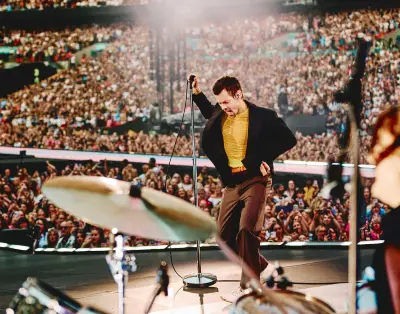
Recently, speculation has swirled around Harry Styles potentially implementing phone restrictions at his Manchester show, though this remains unconfirmed. The mere suggestion provoked significant backlash on social media, with one TikTok from influencer Rachel Lord garnering nearly 150,000 views overnight. Comments ranged from practical concerns about accessing medical information to outright refusal to attend phone-free events.
Finding Middle Ground
As the debate continues, many are advocating for moderation rather than outright bans. The central question becomes: Are we capable of self-regulation? As one perspective suggests, perhaps the solution isn't eliminating phones entirely but encouraging more mindful usage. "Take some pictures or videos, but unless it's your favourite song, maybe be a little more in the moment," represents a compromise position gaining traction.
Graham Dugoni of Yondr frames phones as a "crutch" that might ultimately "undermine what it means to be a productive person" if we're constantly connected. Yet for many fans, particularly those who have saved extensively for concert tickets, the desire to preserve memories remains powerful.
The concert phone debate ultimately reflects broader tensions in our relationship with technology—between documentation and experience, between individual rights and communal enjoyment, between living in the moment and preserving it for posterity. As live music continues to evolve, finding balance between these competing values will likely remain one of the industry's most persistent challenges.