The Birthplace of Punk: CBGB's Legendary Legacy
Fifty years ago, whispers began circulating through New York City's East Village about an unassuming dive bar that would become one of the most influential music venues in history. CBGB, originally opened by folk singer Hilly Kristal and ex-marine Tom Verlaine, started as a humble spot where cheap living was still possible in Manhattan. What emerged from those gritty beginnings was nothing short of a musical revolution that would define generations.
A Sanctuary for Outsiders and Innovators
The club quickly became a "totemic" hub for modern music, attracting artists who felt marginalized by mainstream music scenes. Garth Cartwright's chronicle reveals how CBGB served as a "locus of art and energy" where outsiders laid down blueprints for punk, spoken word, new wave, hardcore, and numerous other genres that would shape popular music for decades to come.
The legendary roster of artists who graced CBGB's stage reads like a who's who of music history:
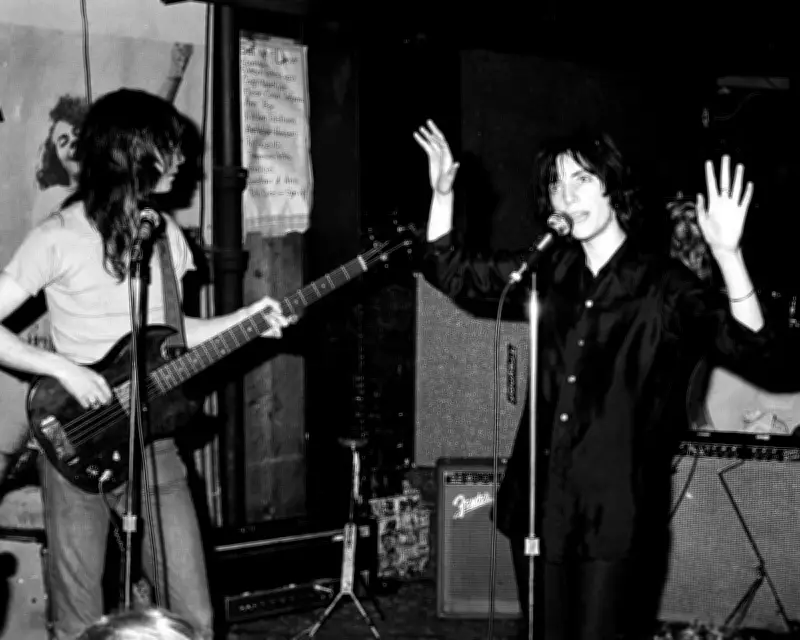
- Patti Smith, whose performances with guitarist Lenny Kaye became iconic moments in rock history
- The Ramones, who defined the punk sound with their rapid-fire, three-chord anthems
- Television, led by Tom Verlaine and Richard Hell, whose experimental approach influenced countless bands
- Talking Heads, who blended art rock with punk sensibilities
- Blondie, who brought pop sensibilities to the punk scene
More Than Just a Music Venue
CBGB wasn't just about the performers on stage. The club attracted an extraordinary collection of cultural figures who would hang out in its dimly lit interior. Lou Reed, Iggy Pop, John Cale, David Bowie (often accompanied by a bodyguard), Brian Eno, and Malcolm McLaren were regular visitors. The literary world was represented too, with figures like Robert Mapplethorpe, William Burroughs, and Allen Ginsberg finding inspiration within CBGB's walls.
Even after the initial punk explosion, CBGB continued to evolve, hosting acts like The Police, AC/DC, Sonic Youth, and the Beastie Boys in later years. The club's ability to adapt while maintaining its gritty authenticity was key to its enduring legacy.
The Gritty Reality Behind the Legend
Despite its cultural significance, CBGB maintained a deliberately unpolished aesthetic. Lenny Kaye, Patti Smith's guitarist and producer, remembers that "the bathrooms were never cleaned" - a detail that speaks to the club's commitment to authenticity over comfort. This "gross, but great" atmosphere became part of CBGB's charm, creating a space where artistic expression mattered more than luxury.
The club represented a "changing-of-the-guard moment" in music history, as Cartwright describes it. When fledgling band Television asked to play at CBGB for their third gig, Patti Smith was in the audience - a symbolic passing of the torch that would characterize the venue's role in nurturing new talent.
A Lasting Cultural Impact
CBGB's influence extended far beyond its physical location at 315 Bowery. The club became synonymous with New York City's downtown music scene and served as a blueprint for independent music venues worldwide. Its ethos of supporting unconventional artists and prioritizing artistic integrity over commercial appeal created a template that countless other venues would follow.
Even after its closure in 2006, CBGB's legacy continues to resonate through music culture. The venue demonstrated how a single space could catalyze artistic movements and change the course of popular music. From punk's raw energy to new wave's artistic experimentation, CBGB provided the stage where these genres could develop and flourish.
The story of CBGB serves as a powerful reminder of how unassuming spaces can become cultural landmarks. In an era of increasing commercialization in the music industry, CBGB's legacy stands as a testament to the power of authentic artistic communities and the enduring impact of venues that dare to be different.