Boy George Addresses Eurovision Backlash Over Israel Controversy
Boy George has publicly defended his involvement in the Eurovision Song Contest after facing significant backlash, as the competition becomes embroiled in political controversy. In an unprecedented move, Ireland, Spain, the Netherlands, Slovenia, and Iceland have announced plans to boycott Eurovision if Israel participates, marking a first in the event's history. This boycott stems from Israel's military actions in Palestine, which the UN Independent International Commission of Inquiry has labeled a genocide.
EBU Decision and Boy George's Role
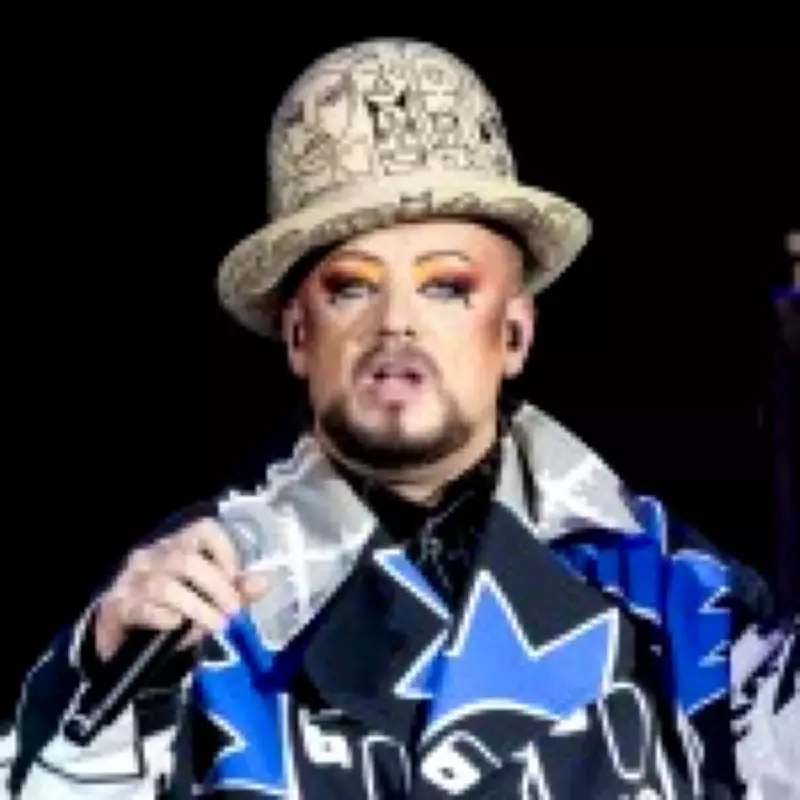
The European Broadcasting Union (EBU) has decided to allow Israel to take part in this year's contest, set to be held in Vienna, Austria. Boy George, who will represent San Marino alongside Italian singer Senhit, recently attracted criticism for his participation. Speaking at the London Eurovision Party, he addressed the uproar, stating, "I have many, many Jewish friends that I've had since I was 15 or 16 years old." The Culture Club singer emphasized his long-standing connections, noting, "From the beginning of my career, I wore a Jewish star. Go back and look at pictures of Culture Club. I am so affiliated with Jewish people."
Clarification on Israel Affiliation
When questioned about Israel specifically, Boy George clarified that he is "not necessarily affiliated" with the country and didn't "really have an opinion on that." However, he previously signed an open letter supporting Israel's continued inclusion in Eurovision, alongside notable figures such as Dame Helen Mirren, Mila Kunis, Gene Simmons, and Sharon Osbourne. Published last Wednesday, the letter referenced the October 7 attacks, describing Israel's response as necessary after "the greatest massacre of Jews since the Holocaust." According to reports, 1,195 people died in the Hamas-orchestrated attacks, including Israelis and non-Israelis at the Nova festival. In the subsequent two years, Israel's military actions in Palestine have resulted in over 67,075 deaths, as reported by the Gaza Ministry of Health.

Defending Music's Unifying Role
Doubling down on his decision to perform at Eurovision, Boy George added, "The job of music is to unite people." He expressed hope that Ireland, his mother's "home country," would not be "too angry" at him, especially after broadcaster RTE withdrew from the competition. RTE stated that participation is "unconscionable given the appalling loss of lives in Gaza and the humanitarian crisis there, which continues to put the lives of so many civilians at risk."
Historical Context and Current Entries
This controversy echoes past Eurovision events, such as in 2022 when Russia was removed following its invasion of Ukraine, who went on to win that year. The UK hosted in 2023 after Sam Ryder placed second. This year, Look Mum No Computer is representing the UK with the experimental track "Eins, Zwei, Drei," marking the first time in the contest's 70-year history that the UK's entry is not sung entirely in English, featuring a chorus in German.
The ongoing debate highlights the intersection of music, politics, and human rights, as artists and nations grapple with their roles in a globally watched event. Boy George's statements underscore the personal and professional dilemmas faced by performers in such charged environments, while the broader boycott reflects growing international concern over geopolitical conflicts.