The Royal Academy of Arts is hosting a landmark exhibition of Michaelina Wautier, a 17th-century Baroque painter whose work was largely forgotten for nearly 300 years. The show brings together some 25 paintings, the most comprehensive display of her art to date.
A Bold Self-Portrait
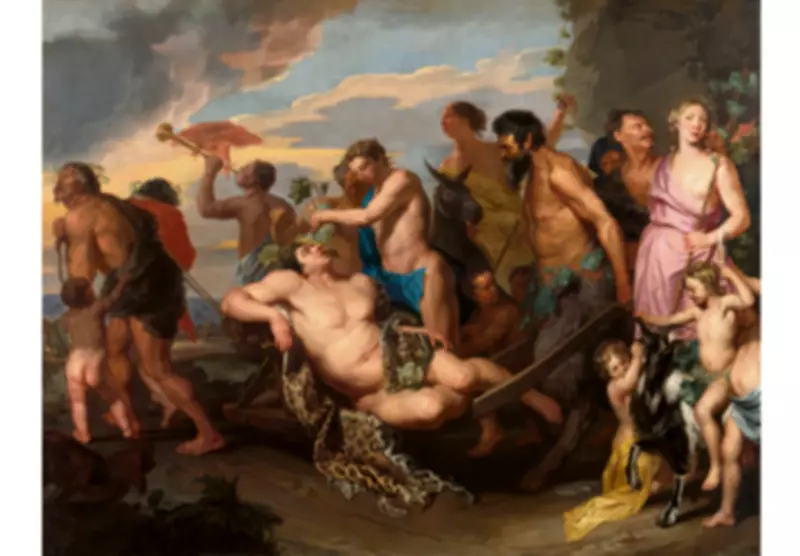
In her monumental work The Triumph of Bacchus (c. 1655-59), Wautier inserted a self-portrait, looking directly at the viewer. This striking gesture underscores her ambition and skill, as she alone among the figures meets our gaze. The painting, an oil on canvas measuring 271.5 x 355.5 cm, is on loan from the Kunsthistorisches Museum Vienna.
Rediscovery of a Forgotten Master
Born in Mons (then in the Spanish Netherlands) around 1614, Wautier lived in Brussels with her painter brother Charles. Her most important patron was Archduke Leopold Wilhelm, yet little is known of her life; no letters or personal documents survive. The RA notes that she is now recognized as one of Europe's most significant artists of the period.
Challenging Conventions
The exhibition, curated by Julien Domercq and Rina Sagoo, highlights how Wautier defied contemporary norms. Her only known drawing, a chalk study of the Medici Ganymede Bust (c. 1640-50), is displayed—a subject typically reserved for male artists. Her self-portrait from about 1650 shows her at an easel with an unpainted canvas and her actual palette, though she is dressed in fine clothing unlikely for studio work.
Portraits and Religious Works
Wautier's oeuvre includes portraits of military figures, such as an engraving of a lost work depicting a commander from the Spanish Netherlands, painted when she was about 28. A strong oil portrait of an unknown soldier from 1646 hangs nearby. A later portrait likely depicts her brother Pierre, a cavalryman. Her talent extends to religious works on a grand scale, including The Mystic Marriage of St Catherine (1649) and Saint John the Evangelist (c. 1656-59).
Lighthearted Depictions
A highlight of the show is her series The Five Senses, which unusually features young boys with humour. In Smell, a child pinches his nose at a rotten egg; in Touch, another has a cut finger. Wautier's ability to produce history paintings and religious works on such a scale was rare for a 17th-century woman.
Misattribution and Mystery
Works like The Triumph of Bacchus were once misattributed because women were denied access to drawing the male nude. Yet Wautier's skill is evident. The RA notes that her last known dated painting is from 1659, leaving over 40 unaccounted-for years before her death in 1689. Whether she stopped painting or undiscovered works exist remains unknown.
The exhibition runs until June 21 at the Royal Academy of Arts, Burlington House, Piccadilly, London.