The Potter Museum of Art in Melbourne is hosting a new exhibition, Ngarn Wa’ngal: Art of the Gum Tree, which translates to 'breathing for us' in Woi Wurrung. The show brings together more than 160 works that celebrate the cultural and ecological significance of the eucalypt, a defining feature of the Australian landscape. Opening on 10 July, admission is free.
Historical Depictions of Eucalypts
The exhibition includes works spanning centuries, beginning with the first European scientific description of eucalyptus in 1788. Pierre Joseph Redouté and Francois Hubert created an engraving of messmate stringybark for Charles-Louis L’Héritier de Brutelle’s book, based on specimens from Cook’s second voyage. This print was the first to depict a eucalypt, and the species became one of the first gums grown in England.
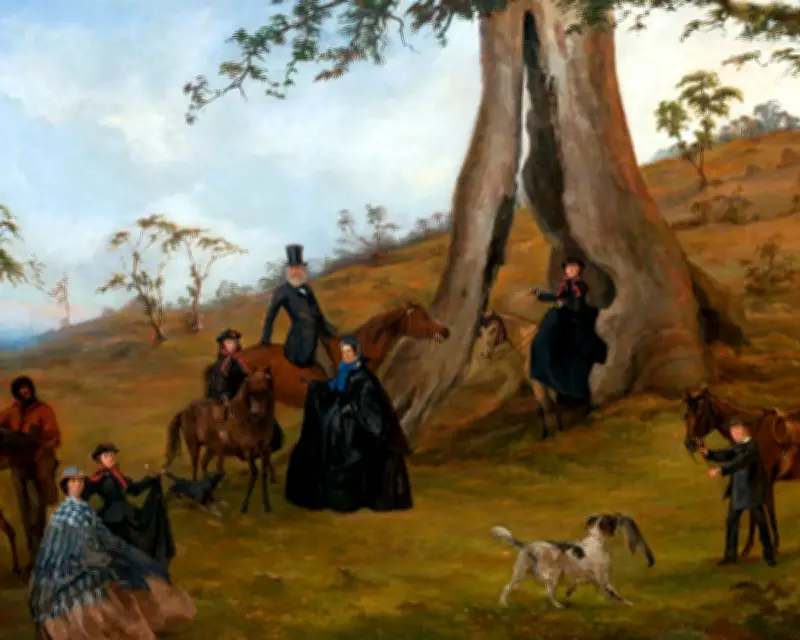
In the 19th century, artists like Alexander Schramm presented giant eucalypts as backdrops for settler-colonist self-imaging. His 1864 painting 'The Gilbert Family' shows the family posed around a massive tree, with an Aboriginal man tending a pony and a dead possum in the dog’s mouth, symbolizing colonial dominance. The tree was later lost to fire.
Artistic Influence and Environmental Activism
Louis Buvelot’s 1875 painting 'Gisborne Hill from the slopes of Mount Macedon' was praised for capturing the eucalyptus’s untidy nature. His ability to depict gums influenced Melbourne artists like Frederick McCubbin and Arthur Streeton. Streeton, after returning from abroad, became an activist against logging old-growth forests, decrying the destruction in a newspaper article.
Hans Heysen’s 1933 work 'Red hills of Aroona, Flinders Ranges' featured river red gums, playing a role in changing public sentiment towards central Australia. His dramatic paintings were a revelation to city dwellers accustomed to softer hues.
Modern and Contemporary Works
Margaret Stones, a botanical artist, depicted the bell-fruited mallee in 1963, now popular for small gardens. Shay Docking’s 1975 drawing 'Angophoras and Hawkesbury' captured the calligraphic shapes of Angophora costata trees. Hossein Valamanesh’s 2005 photograph 'Nesting' shows the artist embodying the challenge of settling in a new land.
Hector Burton’s 2013 painting 'Puṉu-ngura (Tree country)' depicts trees as ancestors, stating, 'The trees are different for Aṉangu. They are the ancestors, they are our family. They are our history and our future.' Mervyn Rubuntja’s 2024 work 'No More Give Away' transforms a road sign into a political statement against dispossession and mining on Indigenous land.
Wendy Hubert’s 2024 painting 'Wirlumarra (Ghost gum)' reflects her devotion to caring for Country. Wanapati Yunupiŋu’s 2025 etched stringybark 'Ŋäṉarr - Tongue of Flame' represents ancestral fire. Jane E Brown’s 2026 photograph 'Corymbia ficifolia' uses eucalyptus oil as a developing agent, titled after the chemical eucalyptol.