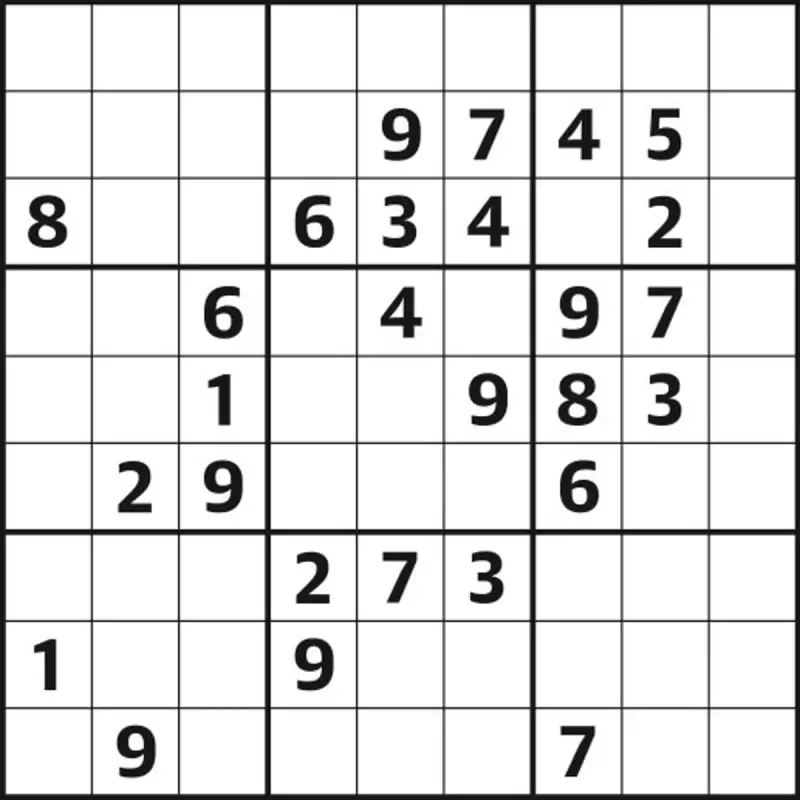
Puzzle enthusiasts and logic lovers were presented with a formidable challenge on Friday 16 January 2026, when The Guardian published its Sudoku 7176 under a 'hard' difficulty rating. This particular grid has since been noted for its intricate design, demanding a sophisticated approach beyond basic number placement.
Deconstructing the Sudoku 7176 Grid
The puzzle follows the classic 9x9 Sudoku structure, divided into nine 3x3 sub-grids or 'boxes'. The initial clues provided a seemingly generous scattering of numbers, but their strategic placement was deliberately crafted to obstruct straightforward deduction. Solvers quickly found that simple 'single candidate' techniques were insufficient to make meaningful progress.
To conquer this grid, players needed to employ more advanced strategies. Key techniques for Sudoku 7176 included scanning for 'hidden pairs' or 'triples' within rows, columns, and boxes, where specific numbers were confined to a few cells, allowing others to be eliminated. Furthermore, 'pointing pairs' and 'box/line reduction' methods were crucial for whittling down possibilities. The puzzle's complexity lay in the sequence required; applying these methods in the wrong order could lead to a dead end, forcing solvers to backtrack and rethink their logic.

The Appeal of the Ultimate Logic Test
Why does a puzzle like Sudoku 7176 captivate so many? It represents a pure test of logic and pattern recognition, free from linguistic or cultural barriers. The satisfaction derived from systematically dismantling such a challenging grid is a significant draw for its dedicated community. Publications like The Guardian curate these puzzles to cater to a growing audience that seeks daily mental calisthenics, with the 'hard' classification serving as a badge of honour for those who successfully complete it.
The enduring popularity of Sudoku, since its global explosion in the early 2000s, underscores a widespread desire for structured cognitive exercise. Puzzles like number 7176 are designed not to be solved quickly through guesswork, but to reward patience, concentration, and deductive reasoning. They function as a workout for the prefrontal cortex, enhancing skills in problem-solving and attention to detail.
Strategies for Future Hard-Level Sudokus
For those looking to improve their skills for the next hard-level challenge, a methodical approach is key. Experts recommend starting with thorough pencil-marking, noting all possible candidates in each empty cell. From there, consistent scanning for the advanced patterns mentioned is essential. It is also advised to avoid guessing, as a single incorrect placement can invalidate the entire solution path. Practice with progressively harder puzzles is, unsurprisingly, the best way to build the intuitive leaps needed for grids like Sudoku 7176.
In conclusion, The Guardian's Sudoku 7176 from January 2026 stands as a testament to the enduring appeal of logical puzzles. It provided a robust and satisfying challenge for solvers, demanding a full arsenal of techniques and focused thought. Whether you solved it in record time or are still contemplating the perfect starting move, it exemplifies the clever design that keeps millions returning to the 9x9 grid day after day.