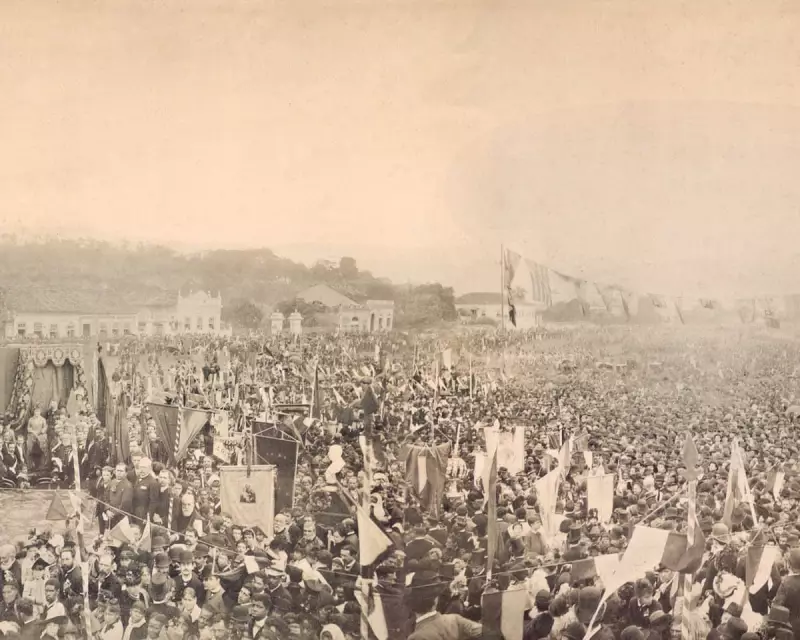
In a powerful new work, historian and author Carrie Gibson challenges the conventional, English-centric narrative of slavery's demise. Her latest book, The Great Resistance: The 400-Year Fight to End Slavery in the Americas, stitches together fragmented histories from across the continent to present a unified, and often harrowing, account of the long fight for freedom.
Beyond the Anglophone Narrative
Gibson, whose previous works explored Caribbean and Hispanic North American history, was driven by a scholarly frustration. She observed that mainstream historiography heavily focuses on the US and British colonies like Jamaica, largely ignoring the vast experiences of the Spanish and Portuguese empires. "There's this whole other story," Gibson explains, pointing to the profound history of slavery in Cuba and Brazil. Her mission was to bridge these linguistically divided academic silos and examine the struggle as a single, continental phenomenon.
The book deliberately shifts focus from white abolitionist movements, long centred in British history, towards the relentless and often desperate acts of resistance by enslaved people themselves. "The road to freedom is lined with bodies," Gibson writes starkly, opening with the 1737 account of enslaved individuals jumping from the ship Prince of Orange near Saint Kitts, choosing death over bondage.

Loud Silences and Forgotten Names
Gibson confronts the profound "archival silences" that haunt this history. While captains and officials recorded numbers—"16 slaves hung"—the names and identities of the rebellious were routinely erased. This erasure, Gibson argues, is a deafening silence in the record. Some names, however, resonate through time: Nanny of the Jamaican Maroons; Denmark Vesey, who revolted in South Carolina in 1822; and Nat Turner in Virginia in 1831.
The narrative also highlights lesser-known but pivotal figures beyond the Anglosphere. These include Lourenço da Silva Mendonça, a Kongo royal who petitioned the Vatican in the 1680s, and Mahommah Gardo Baquaqua, whose 1854 narrative exposed how the power to enslave transcended race. The complex figure of Toussaint Louverture, leader of the Haitian revolution, is also examined, noting his own involvement with slaveholding—a reminder that the fight was never morally simplistic.
The Poisonous Legacy of a Luxury
Gibson draws a direct line from the brutal past to contemporary issues. She identifies a lasting culture of violence in the US, rooted in the suppression of revolts and control of enslaved populations. She provocatively links the founding of institutions like The Citadel military college in South Carolina to the fear sparked by the Denmark Vesey rebellion.
Perhaps one of her most striking arguments centres on sugar, which she calls "the cocaine of its day." She contends that this utterly unnecessary luxury commodity, produced through unimaginable suffering in the Caribbean and South America, is a foundational element of the modern world. Its toxic legacy, she suggests, continues in today's global health crises, a bitter echo of historical exploitation.
Ultimately, Gibson's book refuses a tidy, triumphant conclusion. It ends with the formal abolition of slavery in Brazil in 1888, but stresses that the "afterlives" of the institution—systemic racism, inequality, and violence—remain completely unresolved. The Great Resistance serves as a challenging, essential correction to the historical record, amplifying the long-muted voices of a 400-year struggle.