Cees Nooteboom, Dutch Literary Giant and European Witness, Dies at 92
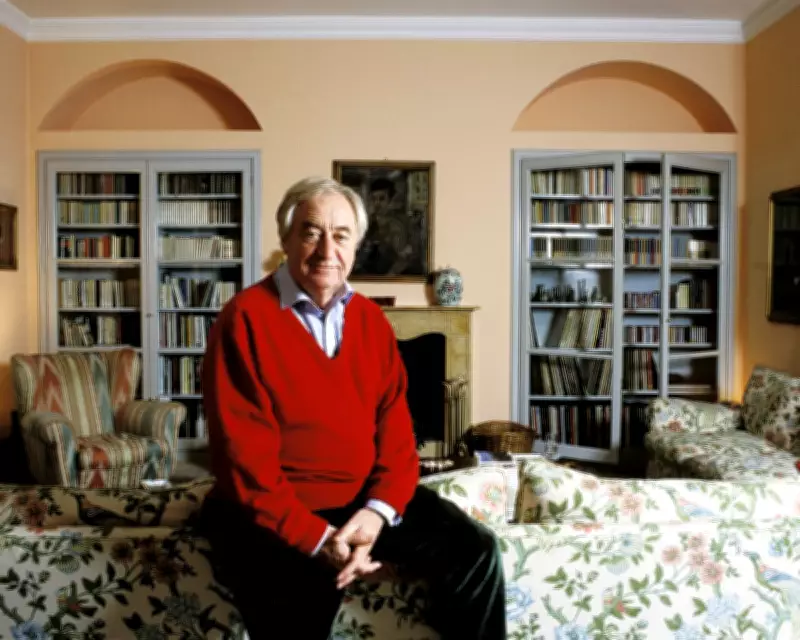
The Dutch writer Cees Nooteboom, a towering figure in European literature known for his novels, poetry, and travel writing, has died at the age of 92. Nooteboom lived as the epitome of the sophisticated, cosmopolitan author, residing in a historic 1731 merchant's house in Amsterdam while spending summers on the island of Menorca. Over his prolific career, he published nearly 60 books across multiple genres, earning numerous prestigious awards, including the Prijs der Nederlandse Letteren in 2009, the highest lifetime honor for Dutch-language writers.
A Childhood Shaped by War and Trauma
Despite his later urbanity, Nooteboom described himself as "a child of the war, and after that the cold war." In 1940, from his family's apartment in The Hague, he watched as nearby Rotterdam burned during air raids. In early 1945, his father was killed by misdirected RAF bombs during the Dutch "hunger winter," a period when over 20,000 people died of starvation. Nooteboom built his serene persona amid this chaos, stating, "I have not remembered chaos. I found my way out of all that in my books."
Born in The Hague, he experienced a turbulent early childhood, moving eight times due to his parents' separation and remarriages. His Catholic stepfather sent him to strict monastic schools, where he rebelled but developed a lifelong love for Latin and Greek literature. After leaving school, he worked in a bank in Hilversum, secretly reading William Faulkner while nurturing a growing passion for travel.
From Journalism to Literary Acclaim
After World War II, Nooteboom felt a deep yearning for the south, describing the Netherlands as "grey, sad, poor." His hitchhiking adventures in Italy and Provence inspired his debut novel, Philip and the Others (1954). Following its success, he moved to Amsterdam and began a career in journalism.
In 1956, with just 10 minutes to pack, he rushed to Budapest to report for the newspaper Het Parool on the Soviet crushing of Hungary's revolution. This marked the beginning of his role as an eyewitness to Europe's defining moments, including Paris in 1968 and Berlin in 1989. His wanderlust also took him globally; in 1957, he worked as a sailor on a freighter to Suriname to fund his marriage to his first wife, Fanny Lichtveld.
As a reporter and editor for publications like Elsevier, De Volkskrant, and Avenue, his career flourished. His 1963 novel, The Knight Has Died, showcased the playful, intricate narrative style that became his hallmark. He also gained acclaim for his poetry, publishing a dozen volumes and believing that poetry "ventures into unknown territory, much more than the novel does."
Travel as a Defining Force
From the mid-1960s, Nooteboom spent half of each year in Menorca, finding solace in its natural and social life away from historical turmoil. Spain and its art became a lifelong passion, with its arid landscapes resonating deeply with this exile from watery Holland. "On the inside, I look just like that," he once remarked. After divorcing in 1964, he had a 15-year relationship with Dutch pop star Liesbeth List before marrying photographer Simone Sassen in 2016, whose images enriched several of his works.
His travels produced a wealth of books and articles, spanning locations from Brazil and Bolivia to Tunisia and Iran. After a 17-year hiatus, he returned to fiction with Rituals (1980), which won prizes and blended Japanese culture with narrative complexity and melancholy lyricism. This novel began a series that boosted his international reputation, including In the Dutch Mountains (1984), The Following Story (1991), All Souls' Day (1998), and Lost Paradise (2004). The Following Story reached over half a million readers when distributed as a free title during Dutch Book Week.
Global Recognition and European Ideals
Despite his worldwide fame—his works are translated into 38 languages, including Chinese and Hebrew—Nooteboom initially faced wariness in the Netherlands. Jane Fenoulhet, emerita professor of Dutch studies at University College London, notes that Dutch readers were cautious of his cosmopolitan style until international acclaim brought recognition at home. His signature travel book, Roads to Santiago (1992), offered a learned, digressive journey through Spain in 25 "detours."
Nooteboom taught at Berkeley and in Berlin, where his reporting on the fall of the Berlin Wall in 1989 highlighted his skill as a frontline historian. He later told The Guardian, "I started travelling in order to find something to write about, and I succeeded." In 2007, Tombs blended cultural memory, global adventures, and visual arts, featuring 80 images of writers' graves by Sassen. Later works like Letters to Poseidon (2012) adopted an elegiac tone, reflecting on his lifelong engagement with European culture. In 2020, he won Spain's Formentor prize for his contribution to the European cultural tradition.
A Critical Eye on Europe's Failures
While Nooteboom championed European ideals, he remained critical of its shortcomings. Commenting on the 2015 photo of a drowned Syrian refugee child, he wrote that "the child was too heavy for Europe." He embodied postwar hopes for a unified Europe but feared the dream was "broken before it was truly whole."
Cees Nooteboom is survived by his wife, Simone Sassen. His legacy endures through his vast literary output, which captures the soul of a continent through decades of change and challenge.