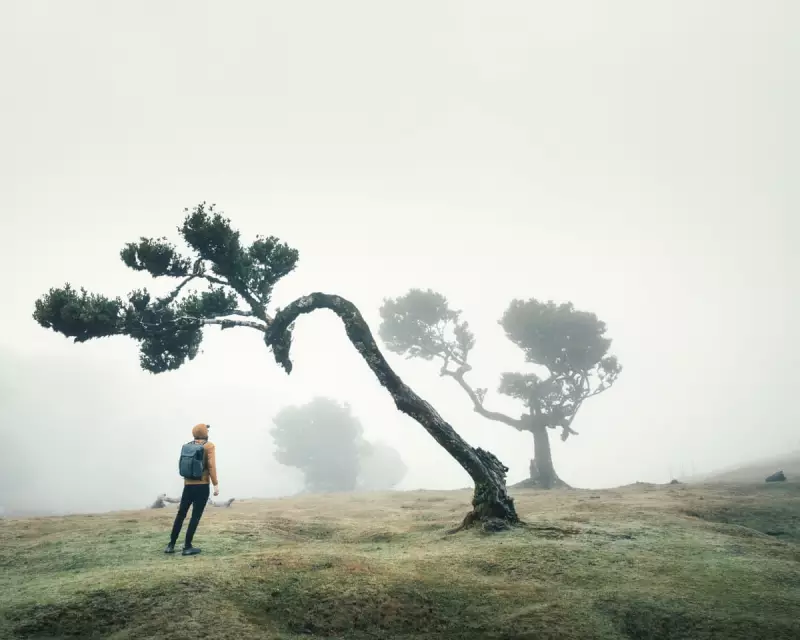
In a unique blend of quiet satire and speculative fiction, author Rhett Davis presents a world grappling with a bizarre phenomenon: people are voluntarily turning into trees. His novel, Arborescence, published by Fleet at £16.99, uses this surreal premise to probe contemporary anxieties about ecology, ageing, and personal purpose.
A World Rooted in Change
The story is narrated by Bren, an everyman initially sceptical of reports about "people standing around believing they’re trees." His partner, Caelyn, embodies the opposite spirit—driven and empirically curious. She transitions from a garden centre job to becoming a globally recognised academic, championing the right of individuals to "arboresce" if they so choose.
Bren’s own life is marked by drift and distraction. He works for a nebulous entity called "The Queue," processes meaningless "work packages," and is haunted by small failures, like a rabbit he didn't save. His world is one of Reuben sandwiches, gin with his mother, and visits to his confused father in a nursing home. This mundane reality is sharply contrasted with the escalating global trend of reforestation through human transformation.

Satire and Ecological Soul-Searching
Davis grounds his strange tale with real-world stakes. References to rising temperatures and an ageing population position mass arborescence as a satirical, Swiftian proposal to solve dual crises. Much like Jonathan Swift’s A Modest Proposal, it presents a radical, logical-seeming solution to profound societal problems, here focused on sustainability and care.
However, the novel acknowledges a core human complication: attachment. Bren’s anger when visiting a tree that was once his best friend underscores the emotional cost. Their bond, forged over a weird comic and TV show called Voidstar, provides a nostalgic counterpoint to Caelyn’s pragmatism. Episodes of Voidstar, describing a shape-shifting entity of "gentlest chaos," punctuate the narrative, mirroring the novel’s own fragmented, disorienting style.
An Insulated Crisis?
Written in brief, punchline-adjacent sections, Arborescence cycles through the familiar moods of Western environmental discourse—cynicism, optimism, grief, and nostalgia. Yet, for a novel about a profound ecological shift, it feels curiously insulated from the raw immediacy of climate crisis. The wider world beyond a near-future Australia remains sketchy, defined by UN statements and expert soundbites.
The book deliberately avoids a definitive reason for the metamorphosis. Caelyn’s research doesn’t pinpoint a cause, and Bren’s own growing despair is only partially explained. One key insight comes from his meditation on gender roles, ruminating on the difficulty of supporting his partner’s dream while forgoing his own in the early 21st century.
Ultimately, Arborescence is a thoughtful, peculiar exploration of escape and transformation. It asks what we are rooted to—be it jobs, relationships, or the soil itself—and what it might mean to fundamentally change our nature in response to a changing world.