Iran's Priceless Cultural Heritage Targeted in Military Strikes
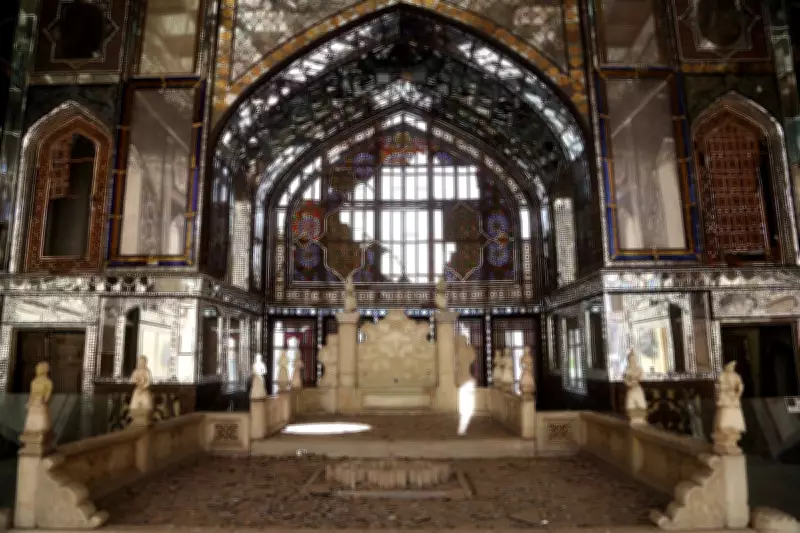
The historic Golestan Palace in Tehran, a UNESCO World Heritage Site dating back to the 14th century, has suffered significant damage to its celebrated Hall of Mirrors, with intricate mirrorwork shattered across the floor. This destruction occurred despite the United Nations cultural body providing geographical coordinates of protected sites to all parties involved in the conflict.
Multiple Historical Sites Impacted Across Iran
In the historic city of Isfahan, Iran's capital during three historical eras, the 17th-century Chehel Sotoon Palace sustained the worst damage from recent explosions. Additional architectural treasures including the Ali Qapu Palace and several mosques around the vast Naqsh-e Jahan Square reported broken windows, damaged doors, and dislodged tilework from shock waves and possible missile debris.
Videos filmed by residents from inside Isfahan's historic square showed plumes of smoke rising from nearby airstrikes, highlighting the proximity of military targets to these irreplaceable cultural landmarks.
Official Condemnation as "Declaration of War on Civilization"
Mehdi Jamalinejad, governor of Isfahan, has accused the United States and Israel of a "declaration of war on a civilization" following the damage to heritage sites. In a speech posted on social media, Jamalinejad emphasized that even during previous conflicts including the Afghan wars, Moghul conquest, and the Iran-Iraq war, such destruction of cultural treasures had never occurred.
"Isfahan is not an ordinary city, it's a museum without a roof," Jamalinejad stated. "An enemy that has no culture pays no heed to symbols of culture. A country that has no history has no respect for signs of history."
UNESCO's Protection Efforts Ignored
UNESCO issued a statement of concern after Golestan Palace was damaged on March 2nd, confirming that the organization had "communicated to all parties concerned the geographical coordinates of sites on the world heritage list." Blue shield signs denoting historical treasures under the 1954 Hague Convention for the Protection of Cultural Objects in War had also been placed on the roofs of important buildings.
The damage to these protected sites represents a significant breach of international agreements designed to safeguard cultural heritage during armed conflicts.
Isfahan's Dual Threat: From Above and Below
An Iranian geologist who worked in Isfahan for many years noted the city faces threats from multiple directions. "Isfahan has long been attacked from below, by land subsidence that is destroying the Safavid-era structures, and now from above, by the Americans," the geologist stated in a message forwarded to the Guardian.
The Safavid dynasty era architecture, dating from the 16th to 18th centuries, represents some of Iran's most significant historical contributions to global culture and architecture.
As the Middle East crisis continues to unfold, the international community faces growing concerns about the protection of cultural heritage in conflict zones, with Iran's historical sites becoming the latest casualties in an escalating regional confrontation.