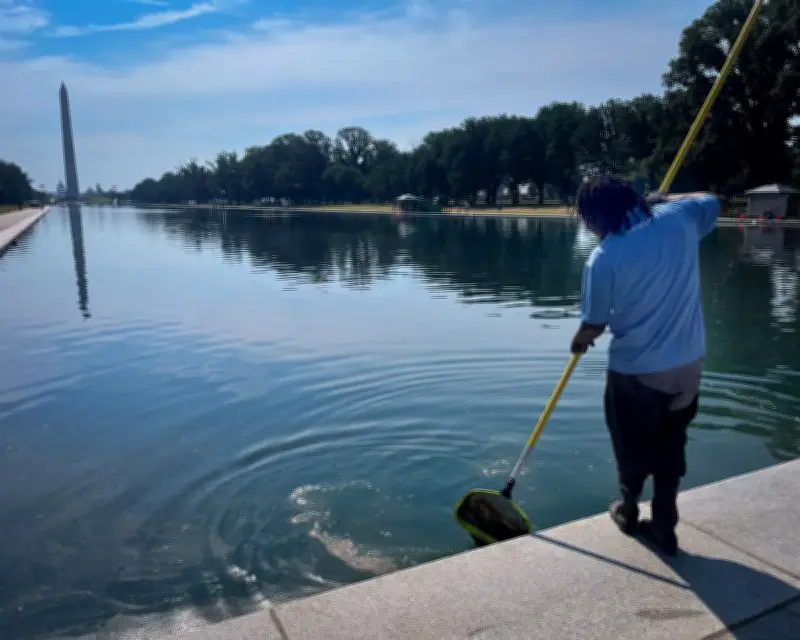
President Donald Trump has ordered the draining of the iconic reflecting pool on the National Mall in Washington D.C., a move that has ignited a fierce debate over the preservation of historic landmarks. The decision, announced on June 22, 2026, was justified by the administration as a necessary step for maintenance and enhanced security measures.
Immediate Action and Rationale
The reflecting pool, which stretches nearly 2,000 feet between the Lincoln Memorial and the Washington Monument, was drained early Tuesday morning. According to White House Press Secretary Sarah Huckabee Sanders, the pool had become a breeding ground for algae and mosquitoes, posing health risks. Additionally, the administration cited the need to install security barriers to prevent potential vehicle attacks, a concern heightened after recent incidents in other cities.
"The President is committed to ensuring the safety of visitors and preserving the beauty of our national treasures," Sanders stated. "Draining the pool allows for a thorough cleaning and the installation of necessary security infrastructure."
Historic Preservation Concerns
Critics, including historians and preservationists, argue that the action damages a symbol of American history. The reflecting pool, completed in 1923, has been a site for countless protests, celebrations, and memorials. "This is a rash decision that disregards the cultural significance of the Mall," said Dr. Emily Thompson, a historian at George Washington University. "The pool is not just a decorative feature; it is a living monument to our nation's collective memory."
The National Park Service, which oversees the Mall, had reportedly proposed a phased renovation plan over two years, but the White House opted for immediate draining. Environmental groups also expressed concern about the disposal of the water, which may contain pollutants from decades of runoff.
Security vs. Heritage
The security argument has been a focal point for the administration. In recent years, vehicle-ramming attacks in cities like Nice and Berlin have prompted authorities worldwide to reassess public space safety. The reflecting pool, with its shallow depth and surrounding walkways, was identified as a potential vulnerability. "We cannot afford to wait when it comes to protecting American lives," Sanders added.
However, critics question the effectiveness of the measure. "Draining the pool does not prevent a determined attacker from driving onto the Mall," said John Mueller, a security expert at the Cato Institute. "There are more comprehensive and less destructive ways to enhance security."
Next Steps and Public Reaction
The water is being treated and will be stored for potential reuse, according to the Army Corps of Engineers, which is overseeing the operation. The timeline for refilling the pool remains unclear, with estimates ranging from several weeks to months, depending on the installation of security features.
Public reaction has been mixed. Some visitors expressed disappointment, noting the pool's role in iconic photographs and gatherings. "It's sad to see it empty," said tourist Maria Gonzalez from Ohio. "It feels like part of the Mall's soul is missing." Others supported the move, citing cleanliness and safety. "I've seen trash and algae in the pool before. It's good they're finally cleaning it up," said D.C. resident James Carter.
The controversy highlights the ongoing tension between preserving historical landmarks and adapting to modern security needs. As the pool remains dry, the debate over its future continues.